What Is the Yield Curve and How Does It Impact Investors?
TL;DR
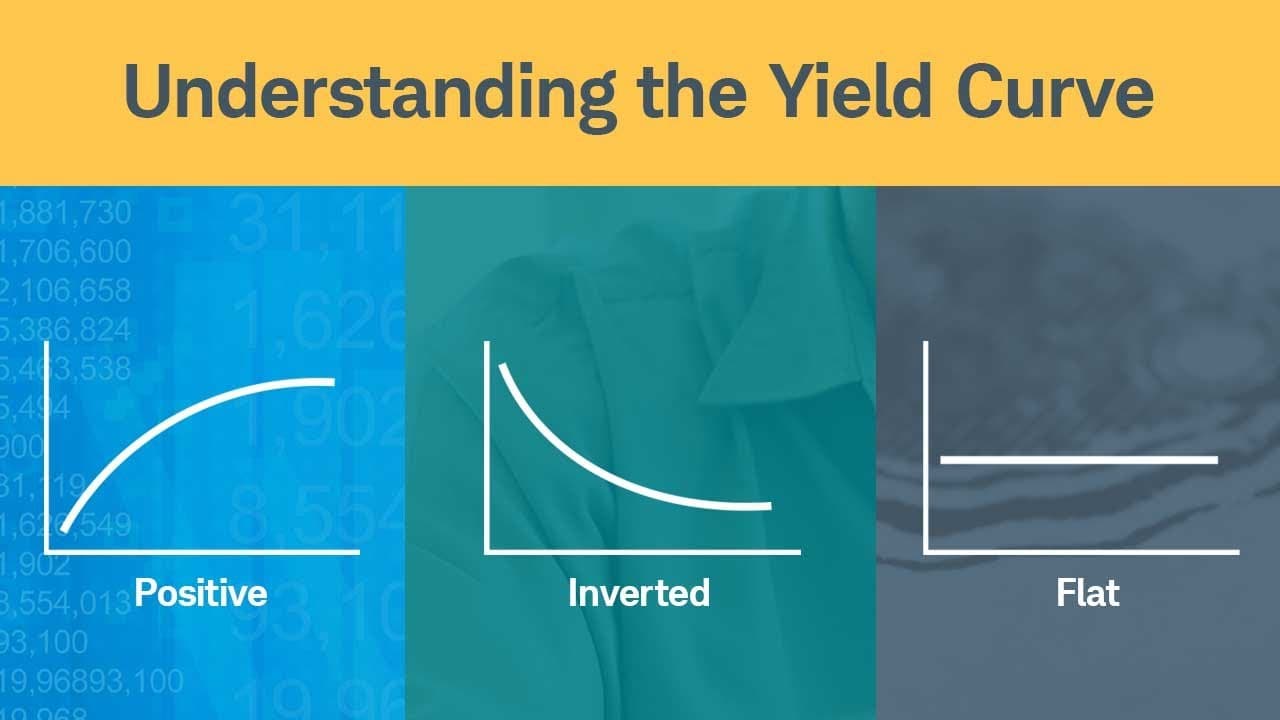
The yield curve is a graphical representation of interest rates on Treasury securities over different maturities, allowing investors to gauge risk and forecast interest rates. It typically has three shapes: upward-sloping (indicating economic growth), inverted (often a predictor of recession), and flat. Understanding these shapes can guide investors in managing their fixed-income portfolios effectively.
Transcript
The yield curve allows fixed-income investors to compare similar Treasury investments with different maturity dates as a means to balance risk and reward. Additionally, investors use its shape to help forecast interest rates. In this video, we’ll discuss how to calculate the yield curve, identify its different shapes, and explain what thes... Read More
Key Insights
- ☠️ The yield curve allows fixed-income investors to compare Treasury investments, balance risk and reward, and forecast interest rates.
- ☠️ The shape of the yield curve can indicate economic conditions and future interest rate expectations.
- 🥺 Inverted yield curves have historically been leading indicators of recessions.
- 💱 To manage changes in the yield curve, diversifying a fixed-income portfolio across maturities and issuers is recommended.
- 💨 Aligning time horizons and risk tolerances with appropriate investments is another way to manage changes in the yield curve.
- ☠️ Laddering bonds can dynamically adjust to changes in interest rates and help manage risk.
- ☠️ Speculating about the future of interest rates based on the yield curve is risky, and investors should focus on their investment goals.
Install to Summarize YouTube Videos and Get Transcripts
Explore YouTube Video Summarizer or Get YouTube Transcript Extractor
Questions & Answers
Q: What is the purpose of the yield curve for fixed-income investors?
The yield curve allows fixed-income investors to compare Treasury investments with different maturity dates, balance risk and reward, and forecast interest rates. It helps measure the risks and potential rewards of Treasuries and other fixed-income investments.
Q: How is the yield curve calculated?
The yield curve is calculated by plotting Treasuries according to their maturity date and yield. Any combination of maturity dates can be used to form a yield curve. For example, a yield curve can include maturities ranging from three months to 30 years.
Q: What are the three shapes of the yield curve?
The yield curve can be upward-sloping (positive), downward-sloping (inverted), or flat. An upward-sloping curve occurs when shorter maturities have lower yields than longer maturities. An inverted curve happens when shorter maturities have higher yields than longer maturities. A flat curve occurs when yields for short and long-term maturities are roughly equal.
Q: How can the shape of the yield curve provide insight into the future of interest rates?
The shape of the yield curve can provide insight into the future of interest rates. An upward-sloping curve suggests economic growth and potential inflation, leading to higher interest rates. An inverted curve indicates expectations of economic growth slowdown and lower interest rates.
Summary & Key Takeaways
-
The yield curve allows investors to compare Treasury investments with different maturity dates and helps forecast interest rates.
-
The yield curve can be calculated by plotting Treasuries based on maturity date and yield.
-
The yield curve has three shapes: upward-sloping (positive), downward-sloping (inverted), and flat.
Read in Other Languages (beta)
Share This Summary 📚
Summarize YouTube Videos and Get Video Transcripts with 1-Click
Try YouTube Summary with ChatGPT & Claude or YouTube Transcript Generator
Explore More Summaries from Charles Schwab 📚





Summarize YouTube Videos and Get Video Transcripts with 1-Click
Try YouTube Summary with ChatGPT & Claude or YouTube Transcript Generator