Why Is China Dismantling Its Border With Hong Kong?
TL;DR
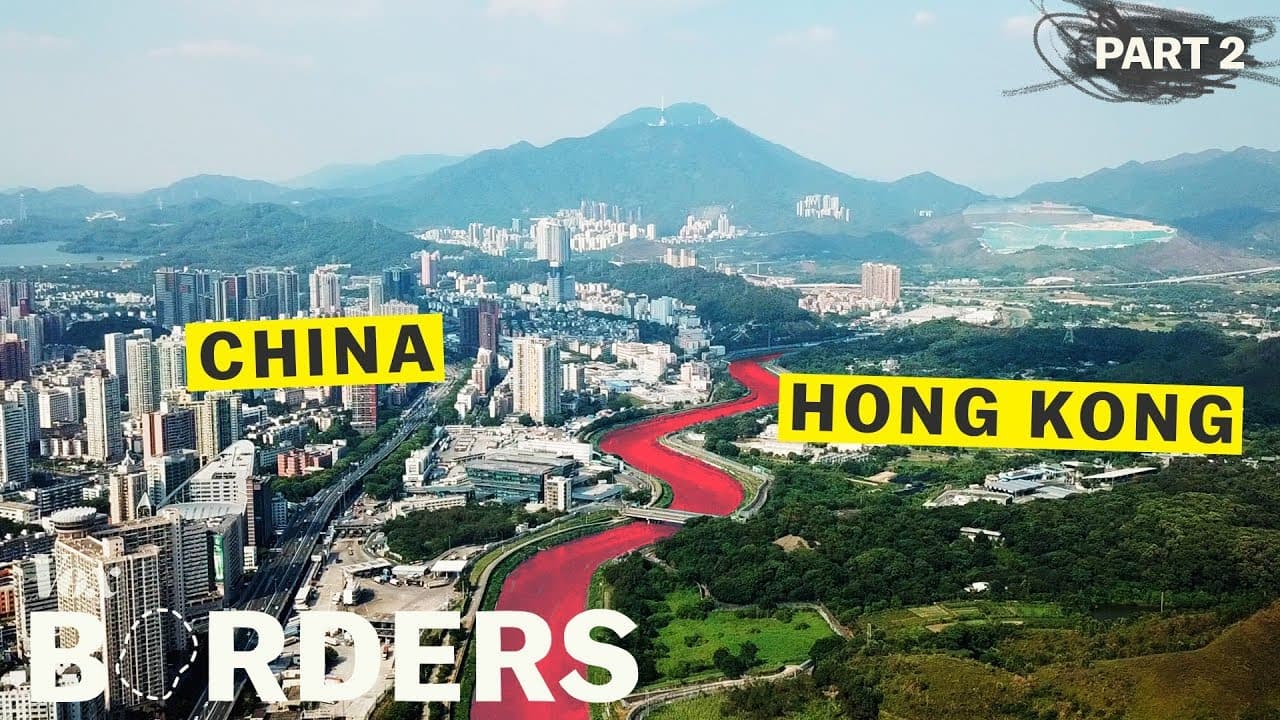
China is accelerating efforts to integrate Hong Kong by constructing infrastructure like the world's largest sea crossing bridge and exerting political control, despite a promise of autonomy until 2047. Rising economic power in mainland cities has diminished Hong Kong's significance, prompting increased Chinese influence and a local resistance exemplified by movements like the Umbrella Movement.
Transcript
This is me in the middle of crossing one of the weirdest borders I've ever crossed. It's this one. It divides China from China. And it took me two hours to get through. This border is weird not only because it separates the same country into two, but also because it has an expiration date: July 1st 2047. Until then China has promised to stay out, t... Read More
Key Insights
- The border between China and Hong Kong is unique because it separates the same country and has an expiration date of July 1, 2047.
- China is actively working to erase the border with Hong Kong, exemplified by the construction of the world's largest sea crossing bridge connecting Hong Kong, Macau, and mainland China.
- Hong Kong's autonomy was guaranteed under the 'One country, two systems' model, allowing it to retain its legal and economic systems until 2047.
- Hong Kong's economic significance has diminished as Chinese cities like Shenzhen have rapidly developed, reducing China's incentive to respect Hong Kong's autonomy.
- The Umbrella Movement in 2014 was a significant protest against China's attempts to influence Hong Kong's electoral process, sparking a political awakening in the city.
- The Chinese government has increased its influence in Hong Kong through media, language, education, and censorship, challenging Hong Kong's distinct identity.
- The annual vigil in Hong Kong commemorating the Tiananmen Square massacre is a symbol of resistance against China's growing influence.
- The disappearance of bookstore staff selling banned books in China highlights the risks faced by those opposing Chinese influence in Hong Kong.
Install to Summarize YouTube Videos and Get Transcripts
Explore YouTube Video Summarizer or Get YouTube Transcript Extractor
Questions & Answers
Q: What is the significance of the bridge connecting Hong Kong and mainland China?
The bridge connecting Hong Kong, Macau, and mainland China is significant as it symbolizes China's efforts to physically and psychologically integrate Hong Kong into the mainland. As the world's largest sea crossing bridge, it serves as a tangible reminder of China's influence and its desire to erase the border, challenging Hong Kong's autonomy.
Q: How did the 'One country, two systems' model come about?
The 'One country, two systems' model was established during negotiations between China and Great Britain before the 1997 handover of Hong Kong. It was agreed that Hong Kong would retain its legal, economic, and political systems for 50 years post-handover, allowing it to operate semi-independently while still being part of China, a unique and unprecedented arrangement.
Q: What triggered the Umbrella Movement in Hong Kong?
The Umbrella Movement was triggered in 2014 when the Chinese government attempted to control who could run for Hong Kong's elections, aiming to ensure a pro-China candidate. This move violated the promise of democratic processes, sparking widespread protests as Hong Kong residents took to the streets to defend their rights and autonomy against Chinese interference.
Q: Why has Hong Kong's economic relevance diminished in recent years?
Hong Kong's economic relevance has diminished due to the explosive growth of Chinese mega cities like Shenzhen, which have developed into major economic hubs. Once a significant portion of China's GDP, Hong Kong's share has decreased significantly, reducing China's incentive to maintain Hong Kong's autonomy, as other cities now drive economic growth.
Q: How has China's influence manifested in Hong Kong's media and language?
China's influence in Hong Kong's media is evident as the evening news now features the Chinese national anthem and promotes traditional Chinese customs. Additionally, the use of Mandarin, China's official language, is emphasized over Cantonese, Hong Kong's native language, reflecting efforts to integrate Hong Kong culturally and linguistically into the mainland.
Q: What role does the annual Tiananmen Square vigil play in Hong Kong?
The annual Tiananmen Square vigil in Hong Kong serves as a powerful symbol of resistance against Chinese influence. It commemorates the pro-democracy protesters killed in 1989 and highlights the ongoing struggle for democracy and autonomy in Hong Kong, as residents resist the erosion of freedoms and assert their distinct identity against mainland China's control.
Q: What was the impact of the Umbrella Movement on Hong Kong's political landscape?
The Umbrella Movement had a significant impact on Hong Kong's political landscape by awakening a new generation of politically active citizens. It galvanized widespread support for democratic rights and increased voter turnout for opposition parties, challenging pro-China forces and reinforcing the city's commitment to maintaining its autonomy and resisting Chinese influence.
Q: How has China responded to the Umbrella Movement and its aftermath?
In response to the Umbrella Movement, China intensified efforts to exert influence over Hong Kong, including media control, educational reforms, and censorship. This included the disappearance of bookstore staff selling banned books, highlighting the risks faced by those opposing Chinese influence. Despite these efforts, Hong Kongers continue to resist, asserting their identity and autonomy.
Summary & Key Takeaways
-
The border between China and Hong Kong is set to expire in 2047, but China is already working to integrate Hong Kong more fully. This is symbolized by the construction of a massive bridge connecting Hong Kong to mainland China, reflecting China's desire to erase the border.
-
Hong Kong was promised autonomy under the 'One country, two systems' model until 2047, but China's rapid economic growth has reduced Hong Kong's relative importance, leading to increased Chinese influence and efforts to control Hong Kong's political and cultural landscape.
-
The Umbrella Movement in 2014 was a reaction to China's interference in Hong Kong's electoral process, sparking a broader political awakening. Despite increased Chinese influence, Hong Kongers continue to resist, as seen in annual vigils and protests, highlighting the ongoing struggle for autonomy and identity.
Read in Other Languages (beta)
Share This Summary 📚
Summarize YouTube Videos and Get Video Transcripts with 1-Click
Try YouTube Summary with ChatGPT & Claude or YouTube Transcript Generator
Explore More Summaries from Vox 📚


Summarize YouTube Videos and Get Video Transcripts with 1-Click
Try YouTube Summary with ChatGPT & Claude or YouTube Transcript Generator