Why American farmers are throwing out tons of milk
TL;DR
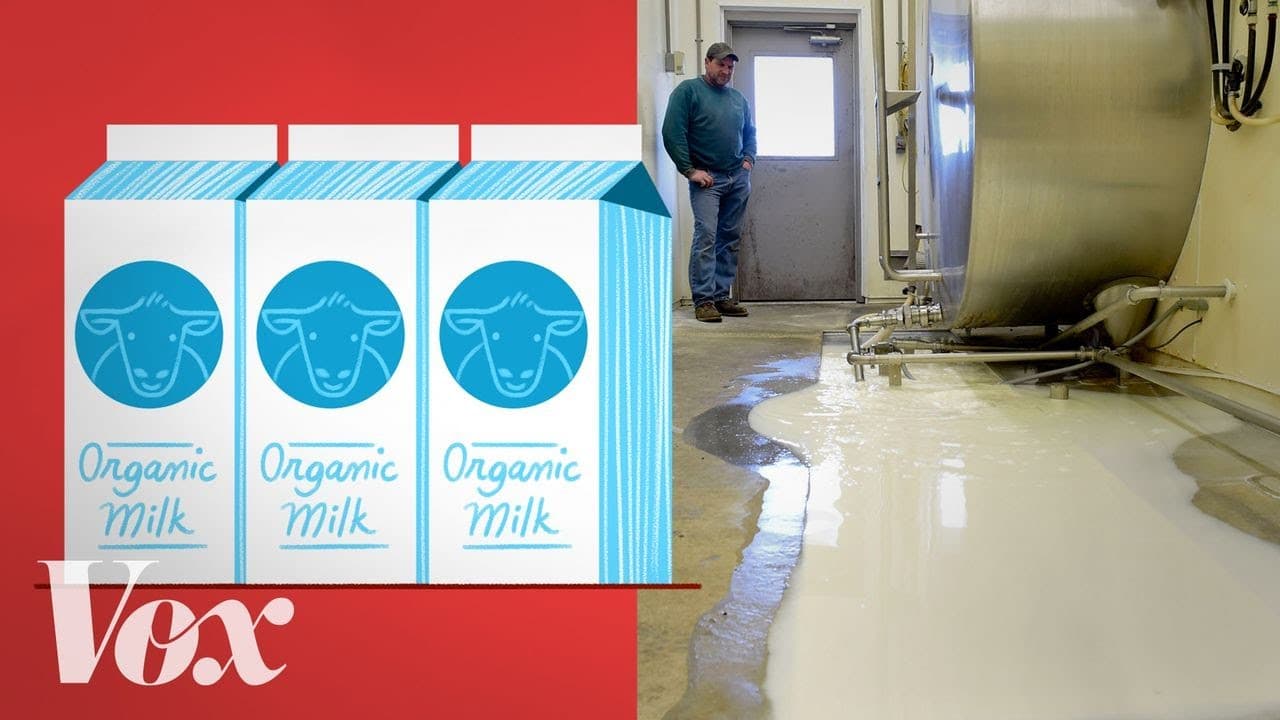
COVID-19 disrupted the US dairy supply chain, causing massive milk waste.
Transcript
In South Florida, the cars stretched out for nearly two miles, as thousands of people waited for hours to reach their local food bank. The same thing happened in California, Pennsylvania, and New York City. Food banks across the US are seeing a massive rise in the number of residents in need because of the coronavirus. But on American farms, the ec... Read More
Key Insights
- The COVID-19 pandemic has significantly disrupted the US food supply chain, leading to a surplus of perishable goods like milk that cannot be redirected easily.
- Dairy farmers are forced to dump millions of gallons of milk due to a drop in demand from closed schools and restaurants, despite increased grocery store sales.
- The specialized nature of the dairy supply chain makes it challenging to redirect surplus products, as packaging and processing differ for various end-users.
- Food banks, although experiencing increased demand, lack the capacity to handle and distribute the surplus perishable goods efficiently.
- The economic impact on dairy farmers is severe, with milk prices plummeting, leading to financial losses and potential farm closures.
- Long-term declines in milk prices have been exacerbated by the pandemic, with many small dairy farms already struggling to survive.
- Government interventions aim to support farmers and food banks, but there are concerns about the effectiveness and fairness of these measures.
- Innovative solutions, such as lobbying for increased cheese use in pizzas, and federal production limits, are being considered to stabilize the dairy market.
Install to Summarize YouTube Videos and Get Transcripts
Explore YouTube Video Summarizer or Get YouTube Transcript Extractor
Questions & Answers
Q: Why are dairy farmers dumping milk during the pandemic?
Dairy farmers are dumping milk because the COVID-19 pandemic has led to a significant drop in demand from schools and restaurants, which typically consume a large portion of dairy products. While grocery store demand has increased, the supply chain is not equipped to redirect surplus milk efficiently, resulting in waste.
Q: How has the pandemic affected the dairy supply chain?
The pandemic has disrupted the dairy supply chain by closing schools and restaurants, which are major consumers of dairy products. This has created a surplus of milk that cannot be easily redirected to other markets due to specialized processing and packaging requirements, leading to significant waste and financial losses for farmers.
Q: What challenges do food banks face with surplus dairy products?
Food banks face challenges with surplus dairy products due to limited refrigeration capacity and manpower to handle and distribute large quantities of perishable goods. While there is increased demand from food-insecure populations, the logistical difficulties in managing the surplus prevent efficient distribution.
Q: What long-term impacts could the pandemic have on dairy farms?
The pandemic could exacerbate long-term challenges for dairy farms, including financial instability due to low milk prices and reduced demand. Many small farms may face closure, while larger corporate farms might benefit disproportionately from government aid, potentially leading to further consolidation in the industry.
Q: How are dairy farmers trying to adapt to the current crisis?
Dairy farmers are adapting by enacting production quotas, selling off cows, and considering alternative markets for their products. Some are lobbying for increased cheese use in pizzas or advocating for federal production limits to stabilize supply and prices, but these solutions face practical and economic challenges.
Q: What role does government intervention play in the dairy crisis?
Government intervention aims to support dairy farmers through financial aid and purchasing surplus products for food banks. However, there are concerns about the adequacy and distribution of this support, as it may favor larger farms and not provide immediate relief for smaller, struggling operations.
Q: Why is it difficult to redirect surplus dairy products to grocery stores?
Redirecting surplus dairy products to grocery stores is difficult because the supply chain is highly specialized, with different processing and packaging requirements for various markets. Products intended for schools or restaurants cannot be easily repackaged for consumer sale without significant investment in new equipment and processes.
Q: What innovative solutions are being considered to address the dairy surplus?
Innovative solutions being considered include lobbying pizza chains to use more cheese, setting federal milk production limits, and exploring new markets for dairy products. These solutions aim to stabilize supply and demand, but they require cooperation from industry stakeholders and may involve complex logistical and regulatory challenges.
Summary & Key Takeaways
-
The COVID-19 pandemic has caused a severe disruption in the US food supply chain, particularly affecting dairy farmers who are forced to waste millions of gallons of milk due to a sudden drop in demand from schools and restaurants.
-
The specialized nature of dairy production makes it difficult to redirect surplus milk to consumers, as processing and packaging differ significantly for various market segments, leading to increased food waste.
-
Government measures aim to alleviate the financial burden on farmers and address food insecurity, but there are concerns about their effectiveness in supporting small farms and ensuring long-term market stability.
Read in Other Languages (beta)
Share This Summary 📚
Summarize YouTube Videos and Get Video Transcripts with 1-Click
Try YouTube Summary with ChatGPT & Claude or YouTube Transcript Generator
Explore More Summaries from Vox 📚



Summarize YouTube Videos and Get Video Transcripts with 1-Click
Try YouTube Summary with ChatGPT & Claude or YouTube Transcript Generator