Conversion of Fischer Projection Formula of Fructose into Haworth Projection Formula - Biomolecules
TL;DR
Learn how to convert the Fischer projection formula for fructose into the Haworth position formula in this video.
Transcript
click the bell icon to get latest videos from equator health and see the base topic you may have discussed about that is how we can convert the Fischer projection formula for glucose into the house position formula and now in this topic we are going to talk about that is how we can convert the official position formula for photos into the house pos... Read More
Key Insights
- 💨 The Fischer projection formula is a way to represent the structure of fructose, with the different carbon atoms and functional groups labeled.
- 🧘 Converting the Fischer projection formula into the Haworth position formula requires considering the position of hydrogen and functional groups and drawing the structure accordingly.
- 💁 Fructose can react with an acidic group, resulting in the formation of different forms, such as alpha and beta fructose furanose.
Install to Summarize YouTube Videos and Get Transcripts
Explore YouTube Video Summarizer or Get YouTube Transcript Extractor
Questions & Answers
Q: What is the Fischer projection formula for fructose?
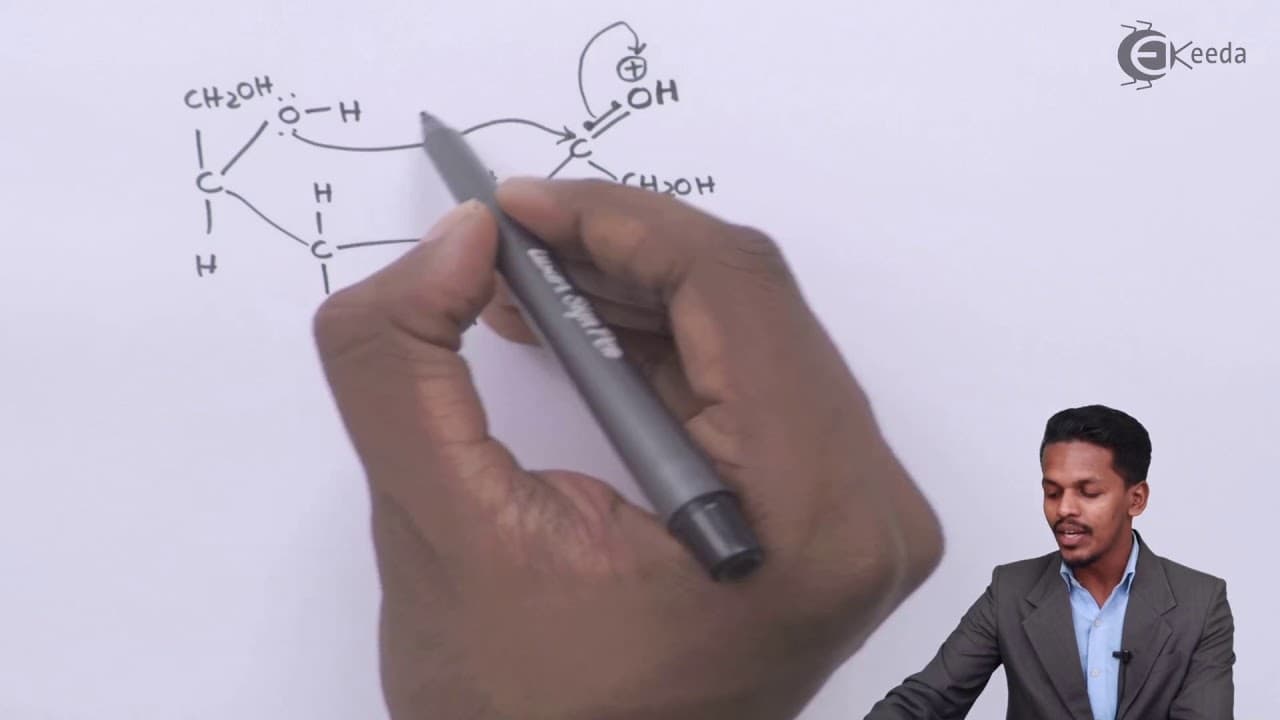
The Fischer projection formula for fructose consists of 6 carbon atoms, with a carbonyl group on the second carbon atom and various hydrogen and functional groups on the remaining carbon atoms.
Q: How do you convert the Fischer projection formula for fructose into the Haworth position formula?
To convert the Fischer projection formula into the Haworth position formula, you need to consider the position of each hydrogen and functional group and draw the structure accordingly. The video provides step-by-step instructions for this conversion.
Q: What happens when fructose reacts with an acidic group?
When fructose reacts with an acidic group, such as H+ ions, the carbonyl carbon becomes partially positive, while the oxygen becomes partially negative. The hydrogen ion approaches the oxygen and forms a bond, resulting in the formation of different forms of fructose.
Q: What are the different forms of fructose?
The different forms of fructose include alpha and beta fructose furanose. The orientation and position of the OH group and CH2OH group on the second carbon atom determine whether it is alpha or beta fructose furanose.
Summary & Key Takeaways
-
The video explains the structure of fructose using the Fischer projection formula, which consists of 6 carbon atoms and a carbonyl group.
-
It demonstrates how to convert the Fischer projection formula into the Haworth position formula, taking into account the position of hydrogen and functional groups.
-
The video also discusses the formation of a product when fructose reacts with an acidic group, resulting in the formation of different forms of fructose, such as alpha and beta fructose furanose.
Read in Other Languages (beta)
Share This Summary 📚
Summarize YouTube Videos and Get Video Transcripts with 1-Click
Try YouTube Summary with ChatGPT & Claude or YouTube Transcript Generator
Explore More Summaries from Ekeeda 📚

Summarize YouTube Videos and Get Video Transcripts with 1-Click
Try YouTube Summary with ChatGPT & Claude or YouTube Transcript Generator