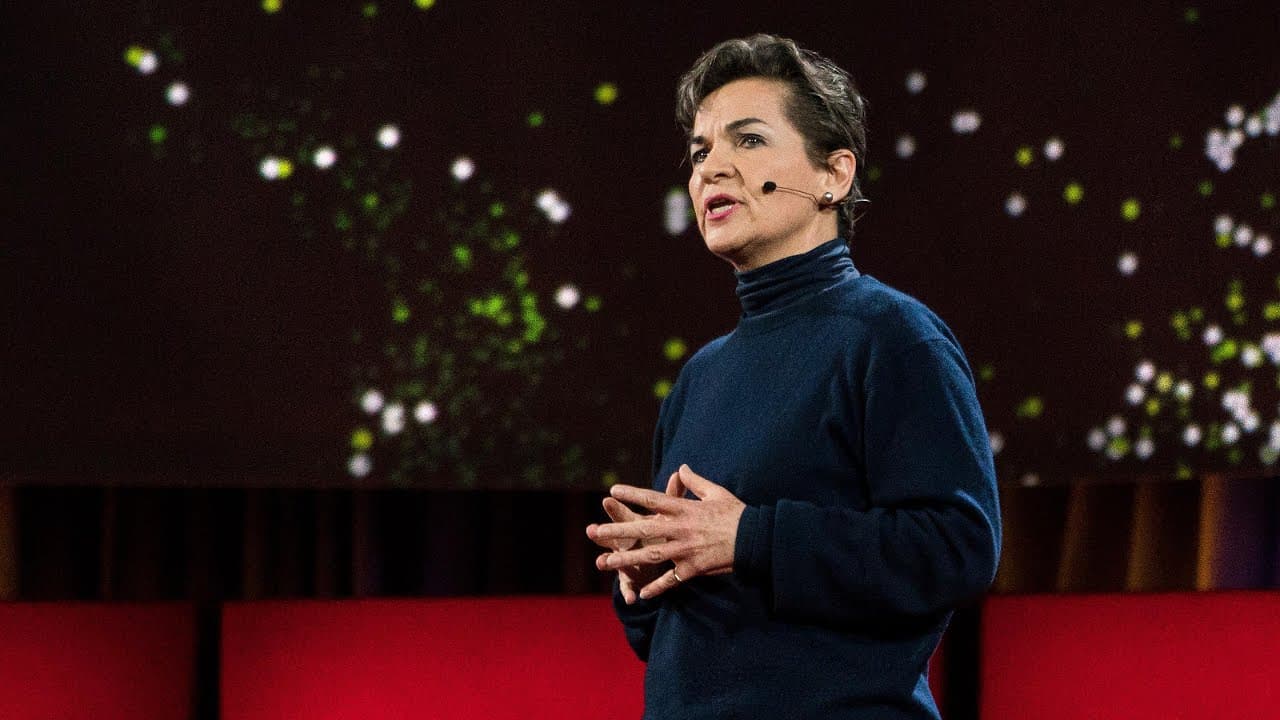
The inside story of the Paris climate agreement | Christiana Figueres
TL;DR
In this content, the speaker discusses the remarkable shift in global attitudes and actions towards climate change, highlighting the progress made and the importance of optimism in driving meaningful change.
Transcript
I have one more reason for optimism: climate change. Maybe you don't believe it, but here is the fact. On December 12, 2015, in Paris, under the United Nations, 195 governments got together and unanimously -- if you've worked with governments, you know how difficult that is -- unanimously decided to intentionally change the course of the global eco... Read More
Key Insights
- 😌 The Paris Agreement in 2015 was a remarkable achievement, with 195 governments unanimously deciding to change the course of the global economy for the betterment of all.
- 😰 The Copenhagen climate negotiations in 2009 failed due to the deep divide between the global North and global South, leading to a pessimistic global mood on climate change.
- 😊 Optimism is key in addressing climate change, as it brings courage, hope, trust, solidarity, and belief in humanity's ability to come together for a better future.
- 🌍 Clean and renewable energy technologies have seen significant advancements, with dropping prices and increased capacity. This shift in technology has also led to a shift in the economic equation, recognizing the advantages and benefits of clean technologies.
- 🌐 Injections of optimism have resulted in changes in various sectors, including nonnational governments, the private sector, insurance companies, investors, and faith communities. Many now understand that addressing climate change can be in their own interest.
- 📈 When countries were allowed to contribute to global climate change efforts based on their national interest, 189 out of 195 countries submitted their plans, reflecting a convergence onto a common path towards decarbonization and resilience.
- 👥 The widespread adoption of the Paris Agreement showcases the power of collaboration and a shift towards a common goal with environmental integrity.
- 🌱 The success in addressing climate change can serve as inspiration and a model for tackling other global issues such as food security, water security, home security, and forced migration. It requires a shift from a zero-sum mentality to understanding that we are interconnected and interdependent, where we can all be winners or losers depending on our actions.
Install to Summarize YouTube Videos and Get Transcripts
Explore YouTube Video Summarizer or Get YouTube Transcript Extractor
Questions & Answers
Q: What significant event took place in Paris in 2015 regarding climate change?
In December 2015, 195 governments gathered in Paris under the United Nations and unanimously decided to intentionally change the global economy in order to protect the most vulnerable and improve the lives of all people.
Q: What was the outcome of the climate change negotiations in Copenhagen in 2009?
The climate change negotiations in Copenhagen in 2009 failed miserably primarily due to the deeply entrenched divide between the global North and the global South.
Q: How did Christiana Figueres feel when she was called in to assume the responsibility of the global climate change negotiations?
Christiana Figueres panicked when she was called in to assume the responsibility of the global climate change negotiations because she realized she had no idea how to solve the problem.
Q: What did Christiana Figueres realize was necessary in order to solve the climate change problem?
Christiana Figueres realized that in order to solve the climate change problem, the tone of the conversation needed to change and optimism was necessary. She believed that delivering victory without optimism was impossible.
Q: What was the first area where remarkable change was seen regarding climate change?
The first area where remarkable change was seen regarding climate change was in technology, particularly in renewable energy technologies. The price of clean technologies, including renewable energy, dropped while their capacity increased.
Q: What economic advantages and intrinsic benefits are associated with the dissemination of clean technologies?
The dissemination of clean technologies brings economic advantages and intrinsic benefits such as cleaner air, better health, better transportation, more livable cities, more energy security, and increased energy access to the developing world.
Q: What is the significance of the national contributions made by countries towards global efforts in addressing climate change?
The national contributions made by countries towards global efforts in addressing climate change are the first step towards a common goal. These contributions, although currently insufficient, will improve over time. The measurement, reporting, and verification of these efforts are legally binding, and the path towards a decarbonized and more resilient economy is also legally binding.
Q: How did the shift in understanding and broader support contribute to the adoption of the Paris agreement?
With a shift in understanding and broader support from various sectors, national governments realized that addressing climate change was in their national interest. This led to 189 countries submitting comprehensive climate change plans based on their national interest and sustainable development plans. As a result, the Paris agreement was adopted.
Summary & Key Takeaways
-
In 2015, 195 governments unanimously agreed to intentionally change the global economy to protect vulnerable populations and improve life for all.
-
Despite a failed attempt in 2009, the global climate change negotiations saw a shift in optimism due to advancements in technology and recognition of the economic advantages of clean technologies.
-
National governments have submitted comprehensive climate change plans based on their national interests, contributing to a common goal of a decarbonized and resilient economy. The Paris agreement was adopted, signifying progress in addressing climate change.
Read in Other Languages (beta)
Share This Summary 📚
Summarize YouTube Videos and Get Video Transcripts with 1-Click
Try YouTube Summary with ChatGPT & Claude or YouTube Transcript Generator
Explore More Summaries from TED 📚





Summarize YouTube Videos and Get Video Transcripts with 1-Click
Try YouTube Summary with ChatGPT & Claude or YouTube Transcript Generator