What Are 30 Common Phrasal Verbs for Daily Use?
TL;DR
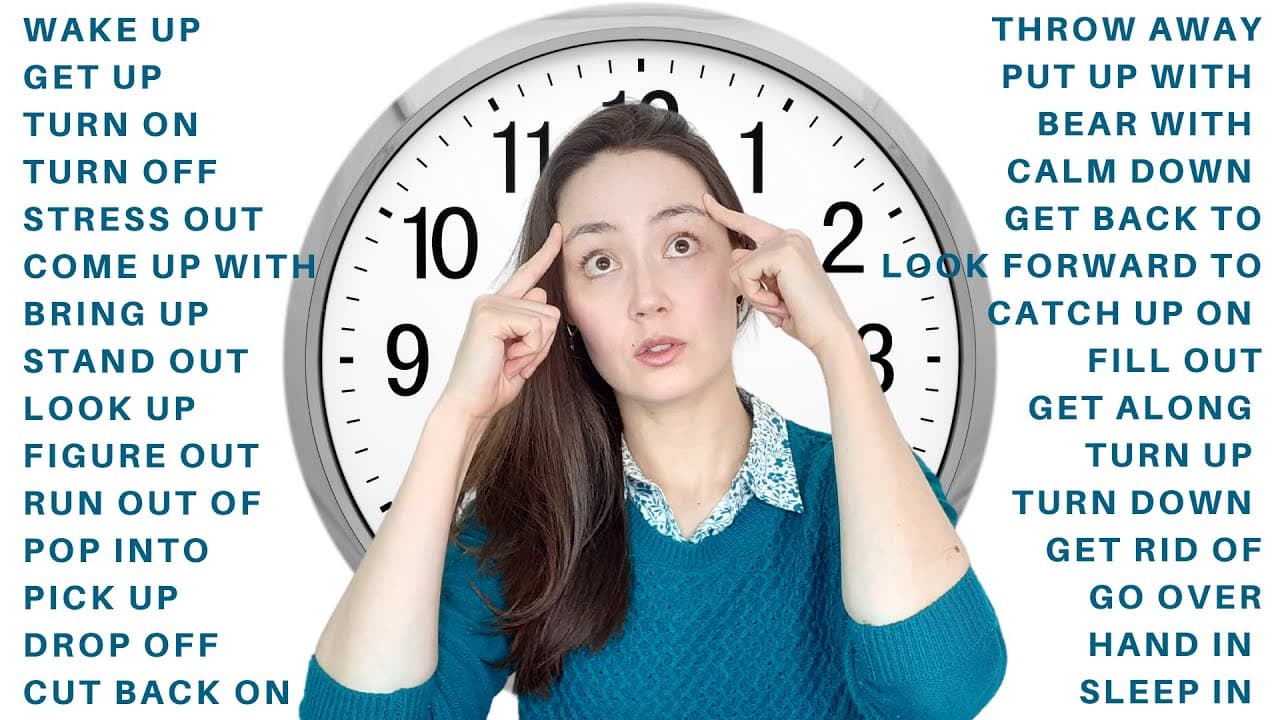
The video introduces 30 everyday phrasal verbs, emphasizing their meanings and usage in common conversations. Key examples include 'wake up,' 'get up,' and 'look up.' Understanding the rules for using objects and pronouns with these verbs is essential for effective communication.
Transcript
Hi everyone, I'm Arnel. Today we're gonna look at 30 super common phrasal verbs you can use every day! Before we start there are a couple things you need to remember. One: Some phrasal verbs need an object. If a phrasal verb needs an object, I'll underline it for you. Some phrasal verbs are separable. Again, if a phrasal verb is separable... Read More
Key Insights
- 🪡 Phrasal verbs have different rules regarding objects, separability, and the need for an object.
- 🥇 Pronouns should be placed in the middle of separable phrasal verbs.
- 👀 Some common phrasal verbs discussed in the video include "wake up," "get up," "turn on," "turn off," "stress out," "come up with," "bring up," "stand out," "look up," "figure out," "run out of," "pop into," "pick up," "drop off," "throw away," "cut back on," "put up with," "bear with," "calm down," "get back to," "look forward to," "catch up on," "fill out," "get along with," "get rid of," "go over," and "hand in."
- ☄️ Pronouns should not come after phrasal verbs.
Install to Summarize YouTube Videos and Get Transcripts
Explore YouTube Video Summarizer or Get YouTube Transcript Extractor
Questions & Answers
Q: What is the difference between "wake up" and "get up"?
"Wake up" refers to the action of stopping sleeping, while "get up" means to physically leave the bed or rise from sleep. They can sometimes be used interchangeably, but there may be slight nuances in their usage.
Q: How should pronouns be used with separable phrasal verbs?
Pronouns should be placed in the middle of a separable phrasal verb. For example, "Stress me out" and not "Stress out me." The object can also come after the phrasal verb, but the pronoun should not come after it.
Q: What does it mean to "come up with something"?
To "come up with something" means to think of something to say or to come up with an idea. It is often used when someone is looking for input or suggestions on a particular topic.
Q: How can one "stand out" in an interview?
To "stand out" means to be noticeable or more impressive than others. In the context of an interview, it means making a positive impression by showcasing unique qualities, skills, or experiences.
Key Insights:
- Phrasal verbs have different rules regarding objects, separability, and the need for an object.
- Pronouns should be placed in the middle of separable phrasal verbs.
- Some common phrasal verbs discussed in the video include "wake up," "get up," "turn on," "turn off," "stress out," "come up with," "bring up," "stand out," "look up," "figure out," "run out of," "pop into," "pick up," "drop off," "throw away," "cut back on," "put up with," "bear with," "calm down," "get back to," "look forward to," "catch up on," "fill out," "get along with," "get rid of," "go over," and "hand in."
- Pronouns should not come after phrasal verbs.
- Phrasal verbs are commonly used in everyday conversation and can enhance language proficiency.
Summary & Key Takeaways
-
The video introduces 30 common phrasal verbs for everyday use.
-
It explains the different rules for phrasal verbs that require an object, are separable, or do not require an object.
-
The video provides definitions and examples for each phrasal verb, highlighting their usage and pronunciation.
Read in Other Languages (beta)
Share This Summary 📚
Summarize YouTube Videos and Get Video Transcripts with 1-Click
Try YouTube Summary with ChatGPT & Claude or YouTube Transcript Generator
Explore More Summaries from Arnel's Everyday English 📚


Summarize YouTube Videos and Get Video Transcripts with 1-Click
Try YouTube Summary with ChatGPT & Claude or YouTube Transcript Generator