PAST PERFECT | HAD GONE | HAD DONE | HAD HAD - English Grammar
TL;DR
Learn how to form and use the past perfect tense, and understand its purpose in expressing actions that occurred in the past before another past action.
Transcript
Hi guys! I'm Arnel and today we're going to look at the past perfect and I'll answer some of the most common questions you have about this tense. You know, we can't speak about the past perfect without looking at the past simple. So in today's lesson you're going to see a lot of both. So let's start with the basics, and i will get more spe... Read More
Key Insights
- 🎯 The verb forms for the past simple and past perfect never change, regardless of the subject. Contracting them will make your speech sound more natural.
- 🤔 "I'd" can mean both "I had" and "I would," depending on the context. "Hadn't" is more commonly contracted, but "I'd not" is also correct. ⏳ The past perfect is used to describe an action that happened before another action in the past. It can come before or after the second action.
- 🤝 A past reference point, such as the past continuous, is needed to use the past perfect. It cannot be used alone.
- 💡 The past perfect is often used to show surprise or to explain a past situation using an earlier past.
- 🔁 In sentences with words like "after," "before," and "then," the sequence of events is already clear, and the past perfect is optional.
- 💭 The past perfect is used in reported speech, the third conditional, and to express regrets in wish statements.
- 🍽️ When the sequence of events is clear, such as in a restaurant order, the past perfect is not needed. The past simple can be used instead.
Install to Summarize YouTube Videos and Get Transcripts
Explore YouTube Video Summarizer or Get YouTube Transcript Extractor
Questions & Answers
Q: When do we use the past perfect tense?
The past perfect tense is used to express an action that occurred in the past before another past action, often indicated by words like "before," "after," and "then."
Q: Can the past perfect tense be used alone, without another action?
No, the past perfect tense must be used with another action. It cannot be used alone.
Q: How is the past perfect tense formed?
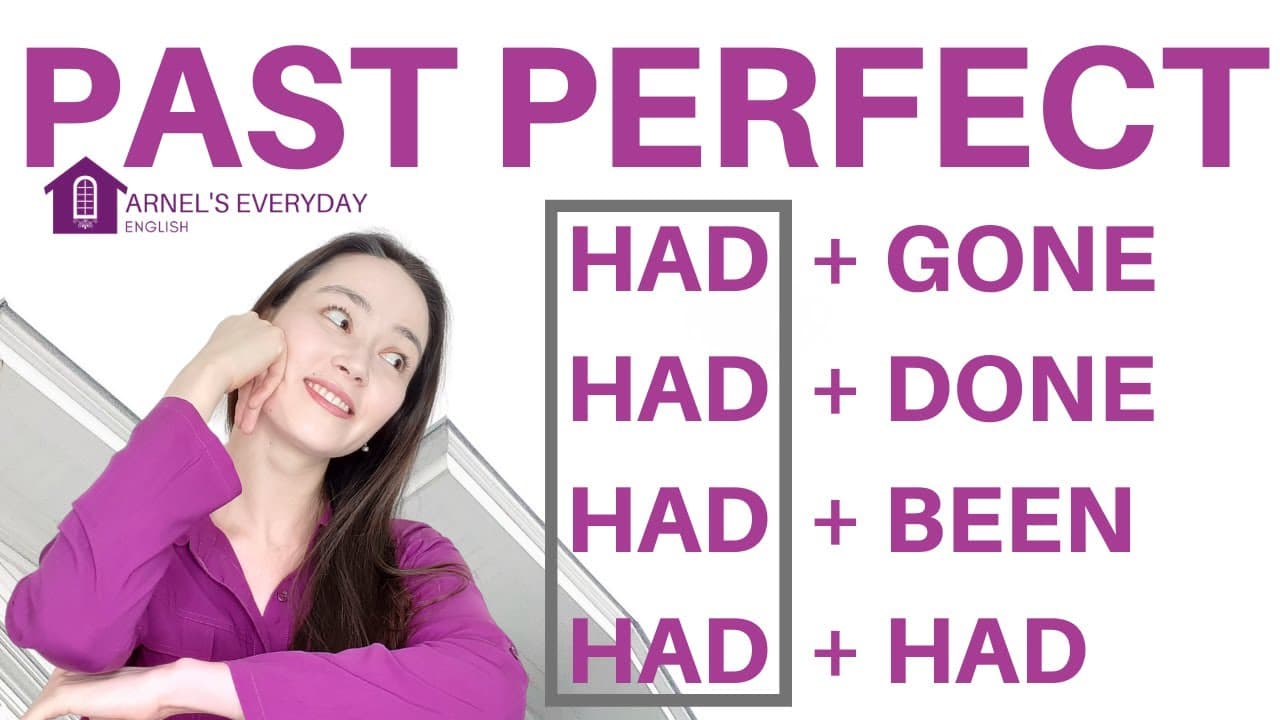
The past perfect tense is formed by using the auxiliary verb "had" + the past participle of the verb. For example, "I had walked to work."
Q: Can the past perfect tense be contracted?
Yes, the past perfect tense can be contracted. For example, "I'd walked to work" is a contraction of "I had walked to work."
Summary & Key Takeaways
-
The past perfect tense is formed by using "had" + the past participle of the verb, and it is used to show an action that occurred before another past action.
-
The past perfect is often used with words like "before," "after," and "then" to indicate the sequence of events.
-
The past perfect is not always necessary if the sequence of events is already clear, and it can also be used in reported speech, the third conditional, and to express regrets using "wish."
Read in Other Languages (beta)
Share This Summary 📚
Summarize YouTube Videos and Get Video Transcripts with 1-Click
Try YouTube Summary with ChatGPT & Claude or YouTube Transcript Generator
Explore More Summaries from Arnel's Everyday English 📚

Summarize YouTube Videos and Get Video Transcripts with 1-Click
Try YouTube Summary with ChatGPT & Claude or YouTube Transcript Generator