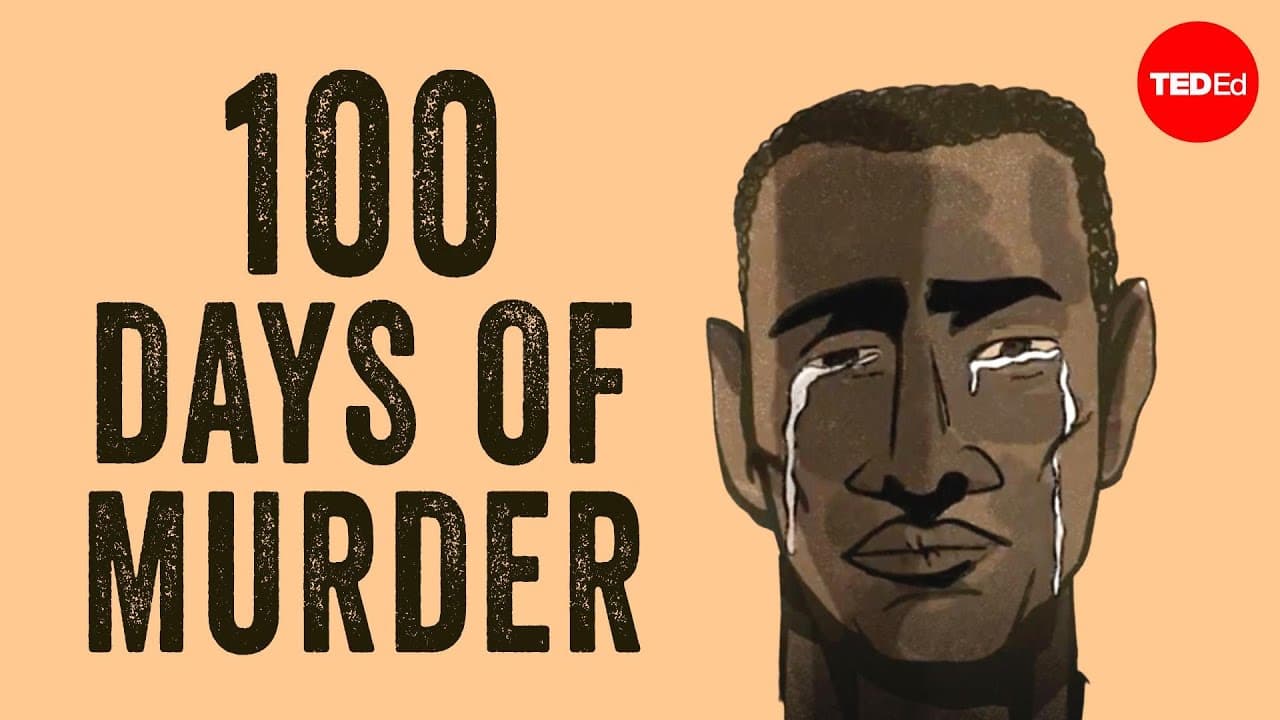
What caused the Rwandan Genocide? - Susanne Buckley-Zistel
TL;DR
Colonial powers fueled Rwandan ethnic tensions leading to genocide, followed by innovative justice using traditional gacaca courts.
Transcript
For 100 days in 1994, the African country of Rwanda suffered a horrific campaign of mass murder. Neighbor turned against neighbor as violence engulfed the region, resulting in the deaths of over one-tenth of the country’s population. The seeds of this conflict were planted a century earlier, first when German, and later Belgian, colonizers arrived ... Read More
Key Insights
- ✊ Colonial powers sowed seeds of division in Rwandan society between the Hutu and Tutsi ethnic groups.
- ❓ The Rwandan genocide in 1994 resulted in the deaths of over 800,000 individuals due to ethnic violence.
- 🥹 The post-genocide justice system adopted traditional gacaca courts to hold perpetrators accountable.
- 😀 Gacaca courts faced challenges of witness intimidation, incomplete justice for all victims, and a mixed societal response.
- 👨⚖️ The gacaca courts sought to expedite justice but focused only on cases with Tutsi victims, excluding Hutu casualties.
- 👨⚖️ The traditional gacaca courts highlighted the importance of community-based justice in Rwandan society.
- 👨⚖️ By 2012, the gacaca courts had convicted 1.7 million individuals, contributing to discussions on reconciliation and justice in Rwandan society.
Install to Summarize YouTube Videos and Get Transcripts
Explore YouTube Video Summarizer or Get YouTube Transcript Extractor
Questions & Answers
Q: What were the factors that led to the Rwandan genocide in 1994?
The Rwandan genocide was fueled by a century of ethnic tension manipulated by Belgian and German colonial powers, leading to a violent campaign between the majority Hutu and minority Tutsi groups.
Q: How did the post-genocide Rwandan government approach justice for the perpetrators?
The Rwandan government established gacaca courts to expedite justice for the perpetrators by adapting traditional community-based justice mechanisms, leading to the conviction of 1.7 million individuals over a decade.
Q: What were the criticisms surrounding the gacaca courts in post-genocide Rwanda?
The gacaca courts faced criticism for their limited focus on cases with Tutsi victims, ignoring the Hutu casualties, and the intimidation of witnesses, leading to mixed opinions and challenges in achieving comprehensive justice.
Q: How did the gacaca courts impact Rwandan society post-genocide?
The gacaca courts played a crucial role in bringing closure to families of genocide victims, restoring dignity, and initiating conversations around reconciliation while also highlighting the complexities and limitations of traditional justice systems.
Summary & Key Takeaways
-
In 1994, Rwanda experienced a brutal genocide fueled by colonial powers' divisive tactics between the Hutu and Tutsi ethnic groups.
-
After the genocide, Rwanda adopted traditional gacaca courts to bring justice to the perpetrators, resulting in mixed opinions and outcomes.
-
The gacaca courts reviewed cases with Tutsi victims only, convicting 1.7 million individuals and sparking discussions on reconciliation and justice.
Read in Other Languages (beta)
Share This Summary 📚
Summarize YouTube Videos and Get Video Transcripts with 1-Click
Try YouTube Summary with ChatGPT & Claude or YouTube Transcript Generator
Explore More Summaries from TED-Ed 📚




Summarize YouTube Videos and Get Video Transcripts with 1-Click
Try YouTube Summary with ChatGPT & Claude or YouTube Transcript Generator