Practice determining oxidation states | Chemistry | Khan Academy
TL;DR
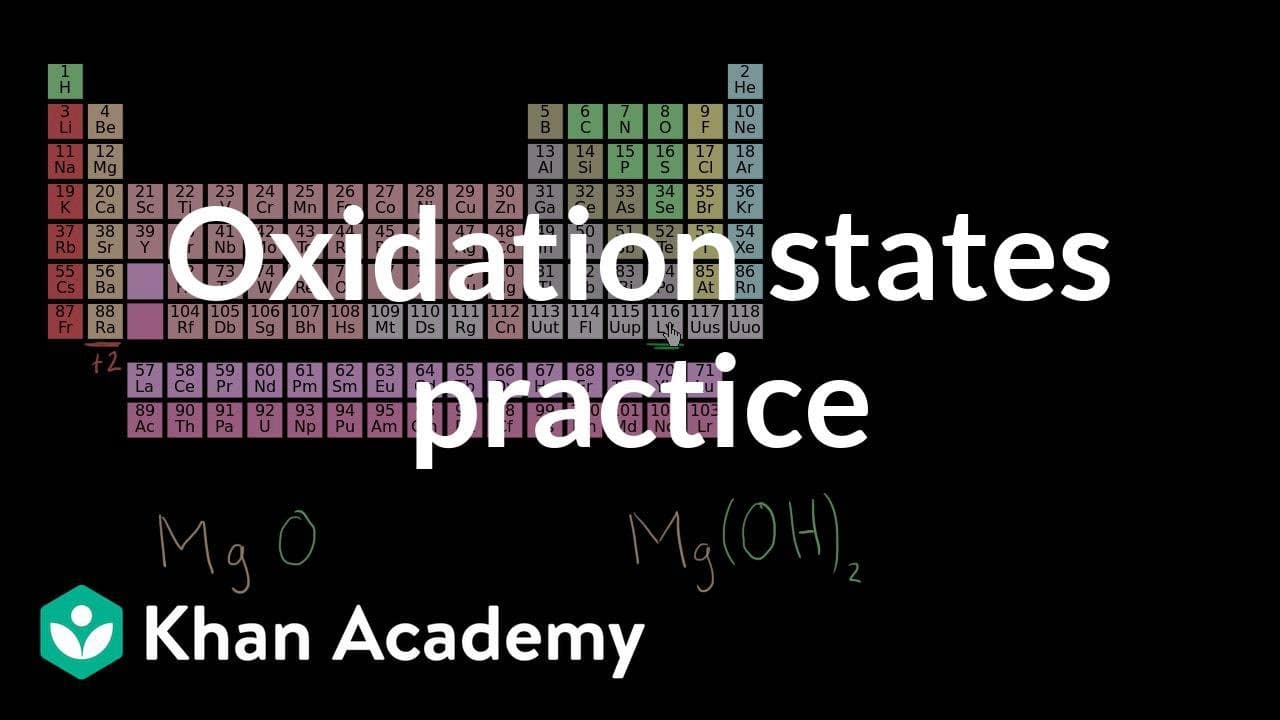
This video explains how to determine the oxidation states of elements in compounds using examples of magnesium oxide and magnesium hydroxide.
Transcript
Now that we know a little bit about oxidation and reduction, what I want to do is really just do an exercise to just make sure that we can at least give our best shot at figuring out the oxidation states for the constituent atoms that make up a compound. So, for example, here I have magnesium oxide, which is used in cement. It has other application... Read More
Key Insights
- 😚 Oxidation states in compounds can be determined based on the positions of the elements in the periodic table and their tendencies to gain or lose electrons.
- ❓ Magnesium typically has a +2 oxidation state, while oxygen often has a -2 oxidation state.
- 😐 The sum of the oxidation states of the constituent elements in a neutral compound is always zero.
Install to Summarize YouTube Videos and Get Transcripts
Explore YouTube Video Summarizer or Get YouTube Transcript Extractor
Questions & Answers
Q: How do you determine the oxidation state of magnesium in compounds?
Magnesium typically has a +2 oxidation state because it is an alkaline earth metal with two valence electrons, which it tends to lose in ionic bonds.
Q: Why does oxygen often have a -2 oxidation state in compounds?
Oxygen is highly electronegative and tends to take two electrons from other elements, resulting in a -2 oxidation state. This is particularly common in compounds like magnesium oxide.
Q: What is the overall charge of a neutral molecule?
In a neutral molecule, the overall charge is 0. Therefore, the sum of the oxidation states of the constituent elements should equal zero.
Q: How do you determine the oxidation state of hydroxide in magnesium hydroxide?
Each hydroxide in magnesium hydroxide has a -1 oxidation state. Since there are two hydroxides in the compound, their charges (net oxidation states) will cancel out the +2 oxidation state of magnesium, resulting in a neutral compound.
Summary & Key Takeaways
-
The video introduces magnesium oxide and magnesium hydroxide as examples and asks viewers to determine the oxidation states of the elements in these compounds.
-
Magnesium is likely to have a +2 oxidation state because it belongs to group two, has two valence electrons, and tends to give them away.
-
Oxygen is likely to have a -2 oxidation state because it belongs to group seven, is highly electronegative, and tends to take two electrons.
Read in Other Languages (beta)
Share This Summary 📚
Summarize YouTube Videos and Get Video Transcripts with 1-Click
Try YouTube Summary with ChatGPT & Claude or YouTube Transcript Generator
Explore More Summaries from Khan Academy 📚



Summarize YouTube Videos and Get Video Transcripts with 1-Click
Try YouTube Summary with ChatGPT & Claude or YouTube Transcript Generator