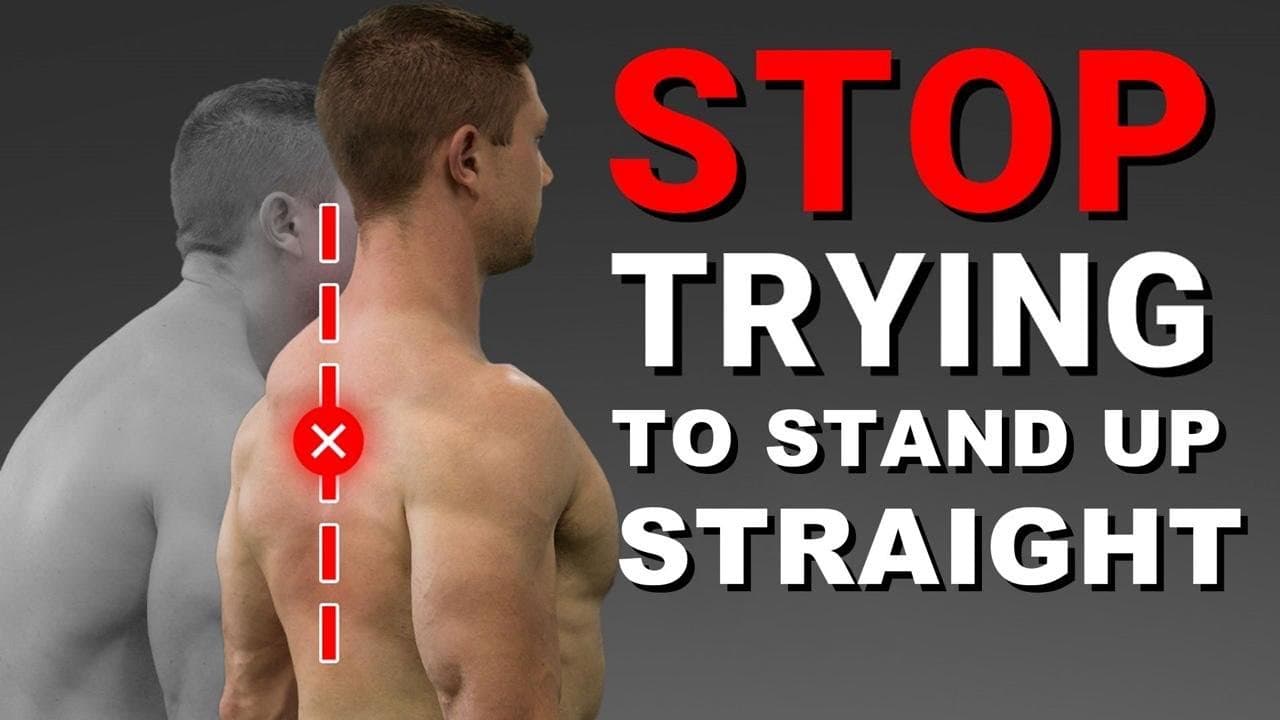
“Standing Up Straight” WON’T Fix Your Posture! (but this will)
TL;DR
Standing up straight isn't the best for posture.
Transcript
if you have crappy posture you were probably told at some point or growing up by your parents to stand up straight and maybe even pull your shoulders back as you do it but here's why that's not ideal for your posture the idea of trying to stand taller with our shoulders back makes sense on the surface but once we take a closer look ... Read More
Key Insights
- Pulling shoulders back to stand tall can actually increase lower back arch and flatten the upper back, which is not ideal for posture.
- The human spine has natural curves; altering these excessively can cause postural issues and affect shoulder movement.
- Standing tall often leads to anterior pelvic tilt, a common posture problem affecting a large portion of the population.
- Improper posture can compromise breathing, limiting diaphragm function and causing compensatory muscle overuse, leading to neck pain and tension.
- There is no perfect posture; the best posture is one that allows for movement and adjustment.
- To feel taller, focus on aligning the head, rib cage, pelvis, and midfoot for optimal weight distribution and spine curvature.
- Exercises can help open the chest and promote hip extension, improving posture and making one feel taller.
- Effective posture exercises include using a towel under the neck, broomstick stretches, and hanging from a bar with proper rib cage alignment.
Install to Summarize YouTube Videos and Get Transcripts
Explore YouTube Video Summarizer or Get YouTube Transcript Extractor
Questions & Answers
Q: Why is pulling shoulders back not ideal for posture?
Pulling shoulders back to stand tall increases the lower back arch and flattens the upper back. This disrupts the natural curves of the spine, which are essential for optimal posture. It also affects the shoulder blades' ability to glide properly over the back, leading to compromised shoulder movement and potential discomfort.
Q: What is the impact of anterior pelvic tilt on posture?
Anterior pelvic tilt is a posture issue where the pelvis tilts forward, often exacerbated by attempts to stand tall. It affects a large portion of the population and can lead to a forward-oriented pelvis, disrupting the natural alignment of the spine and contributing to posture-related discomfort and movement inefficiencies.
Q: How does poor posture affect breathing?
Poor posture, such as a flared rib cage, can compromise breathing by limiting diaphragm function. This leads to compensatory muscle activity, such as in the neck, to assist in breathing. Over time, this can cause neck pain, tension, and headaches, as the body struggles to maintain adequate respiratory function.
Q: What is the best posture according to the video?
The video emphasizes that there is no perfect posture. The best posture is one that allows for movement and adjustment. It should involve aligning the head, rib cage, pelvis, and midfoot for optimal weight distribution and natural spine curvature, enabling a more balanced and comfortable stance that can adapt to different activities.
Q: How can one feel taller while maintaining good posture?
To feel taller, focus on aligning the spine in a neutral position with the head stacked over the rib cage, pelvis, and midfoot. This alignment helps distribute weight evenly and maintains natural spine curves. Additionally, promoting hip extension and opening the chest can contribute to a taller and more confident posture.
Q: What exercises are recommended for improving posture?
The video suggests exercises such as using a towel under the neck for support, broomstick stretches to guide shoulder positioning, and hanging from a bar with feet on a bench to maintain proper rib cage alignment. These exercises aim to improve posture by promoting natural spine curves and enhancing breathing mechanics.
Q: Why is it important to avoid rib cage flaring during exercises?
Avoiding rib cage flaring during exercises is crucial because it helps maintain proper diaphragm function and prevents compensatory muscle overuse. Flared ribs can lead to improper breathing mechanics, where the neck and other muscles overcompensate, potentially causing tension, pain, and reduced breathing efficiency.
Q: What is the role of breathing in posture correction exercises?
Breathing plays a vital role in posture correction exercises by guiding proper body alignment and muscle engagement. A full exhale helps engage side abs, stabilizing the core, while a gentle inhale promotes natural chest expansion without engaging the neck. Proper breathing ensures effective diaphragm function and supports overall posture improvement.
Summary & Key Takeaways
-
Standing up straight and pulling shoulders back is a common advice for better posture, but it can lead to increased lower back arch and flattened upper back, disrupting natural spine curves and shoulder movement.
-
Improper posture can lead to anterior pelvic tilt and compromised breathing, causing neck pain and tension due to overuse of compensatory muscles.
-
There is no perfect posture, but exercises focusing on aligning the spine and promoting hip extension can improve posture and make one feel taller.
Read in Other Languages (beta)
Share This Summary 📚
Summarize YouTube Videos and Get Video Transcripts with 1-Click
Try YouTube Summary with ChatGPT & Claude or YouTube Transcript Generator
Explore More Summaries from Conor Harris 📚
Summarize YouTube Videos and Get Video Transcripts with 1-Click
Try YouTube Summary with ChatGPT & Claude or YouTube Transcript Generator