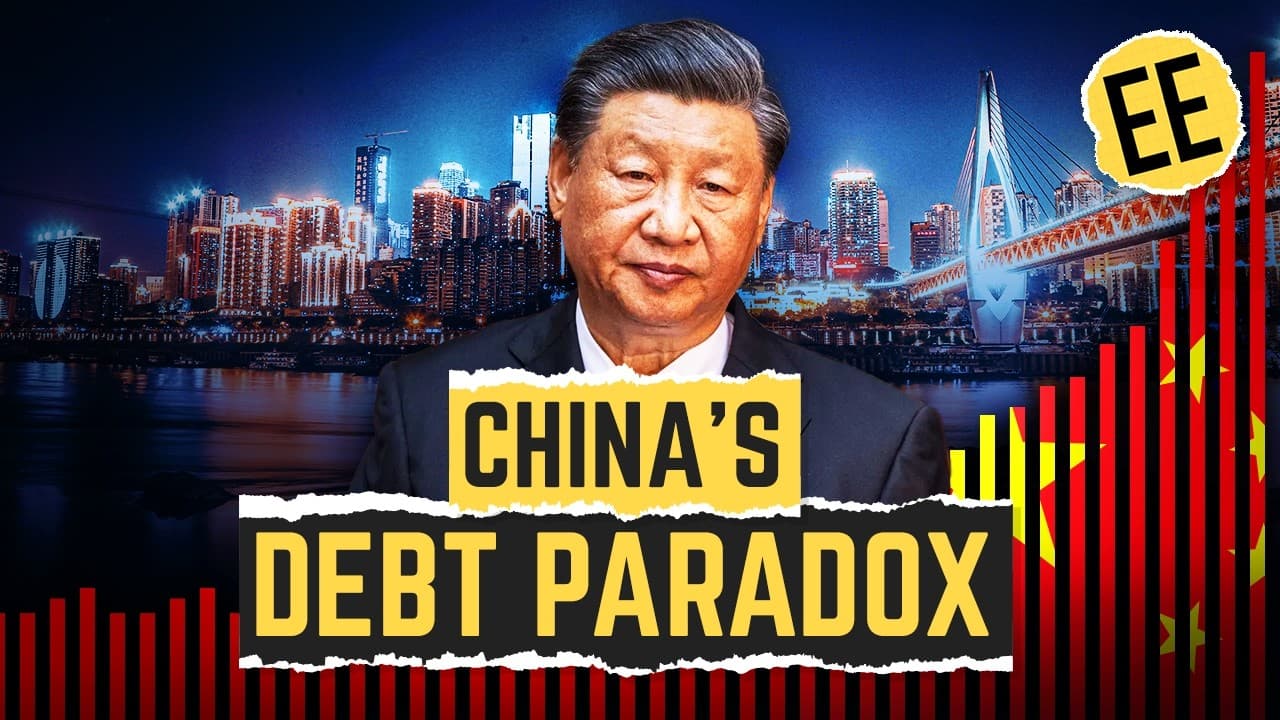
China’s Debt Problem Is 300% Bigger Than America’s
TL;DR
China's debt is more complex and larger than it appears.
Transcript
Over the last few years there has understandably been a lot of attention paid to the ballooning government debt in the USA. Interest repayments alone are now one of the largest government expenditures in the country and it only looks to be getting worse. New legislation is projected to only further widen the deficit between government income and sp... Read More
Key Insights
- China's debt is significantly higher than reported, potentially over 300% of its GDP, due to hidden liabilities in state-owned enterprises and provincial governments.
- Unlike the US, China's debt is spread across various government levels and state-owned entities, making it less transparent and harder to manage.
- China's economic structure allows for massive debt creation without immediate inflation due to low consumer spending and strict capital controls.
- The Chinese government owns significant assets, including land and state enterprises, which could offset its debt, unlike many Western countries.
- Real estate speculation has driven up property prices, creating a potential bubble that could destabilize the economy if it bursts.
- China's low household consumption and investment alternatives limit domestic economic growth, relying heavily on exports.
- The Chinese financial system's unique structure, with state control and limited investment options, keeps borrowing costs artificially low.
- Despite high debt levels, China's economic model differs fundamentally from Western economies, making direct comparisons challenging.
Install to Summarize YouTube Videos and Get Transcripts
Explore YouTube Video Summarizer or Get YouTube Transcript Extractor
Questions & Answers
Q: How does China's debt compare to that of the USA?
China's debt, when considering hidden liabilities in state-owned enterprises and provincial governments, is potentially over 300% of its GDP, significantly higher than the USA's. While the US federal government is the primary borrower, China's debt is spread across various government levels, making it less transparent and harder to manage.
Q: Why hasn't China's massive debt led to inflation?
China's massive debt hasn't led to inflation due to low consumer spending and strict capital controls. The Chinese economy has a high savings rate, with consumers being frugal and the government controlling capital outflows, preventing the excess money supply from causing inflation in consumer prices.
Q: What role do state-owned enterprises play in China's debt situation?
State-owned enterprises in China are heavily leveraged and play a significant role in the country's debt situation. These enterprises borrow extensively to fund government-directed projects, keeping debt off the central government's books. Their debt is a hidden liability that contributes to China's high overall debt levels.
Q: How does China's economic structure affect its borrowing costs?
China's economic structure, characterized by state control and limited investment options, keeps borrowing costs low despite high debt levels. The government can borrow at lower rates because of strict capital controls, which limit domestic investors' options, and the state ownership of banks, which facilitates favorable lending conditions.
Q: What are the risks associated with China's real estate market?
China's real estate market is a significant risk due to speculative investments driving up property prices, creating a potential bubble. With real estate being the primary asset class for savings, a market correction could lead to economic instability, affecting household wealth and broader financial stability.
Q: How do China's assets impact its debt situation?
China's government owns significant assets, including land and state enterprises, which could offset its debt. This ownership provides a buffer against the high debt levels, as these assets can be liquidated or leveraged to manage financial obligations, unlike many Western countries with fewer state-owned assets.
Q: Why is China's household consumption so low?
China's household consumption is low due to cultural and economic factors, including a high savings rate and limited investment alternatives. The government has historically prioritized exports and investment over domestic consumption, leading to a lower proportion of GDP being driven by consumer spending compared to other countries.
Q: What challenges does China's economic model face?
China's economic model faces challenges such as reliance on exports, limited domestic consumption, and potential real estate bubbles. The unique structure, with state control and limited investment options, creates vulnerabilities in adapting to global economic changes and managing domestic economic growth sustainably.
Summary & Key Takeaways
-
China's debt levels are potentially much higher than reported, with hidden liabilities in provincial governments and state-owned enterprises. The country's unique economic structure allows for massive debt creation without immediate inflation, but this comes with risks of a real estate bubble and limited domestic consumption.
-
The Chinese government owns significant assets, including land and state enterprises, which could offset its debt. However, the economy relies heavily on exports due to low household consumption and limited investment alternatives, creating potential vulnerabilities if global trade tensions rise.
-
China's financial system, characterized by state control and limited investment options, keeps borrowing costs low despite high debt levels. This unique structure makes direct comparisons with Western economies difficult, highlighting the complexities of China's economic situation.
Read in Other Languages (beta)
Share This Summary 📚
Summarize YouTube Videos and Get Video Transcripts with 1-Click
Try YouTube Summary with ChatGPT & Claude or YouTube Transcript Generator
Explore More Summaries from Economics Explained 📚





Summarize YouTube Videos and Get Video Transcripts with 1-Click
Try YouTube Summary with ChatGPT & Claude or YouTube Transcript Generator