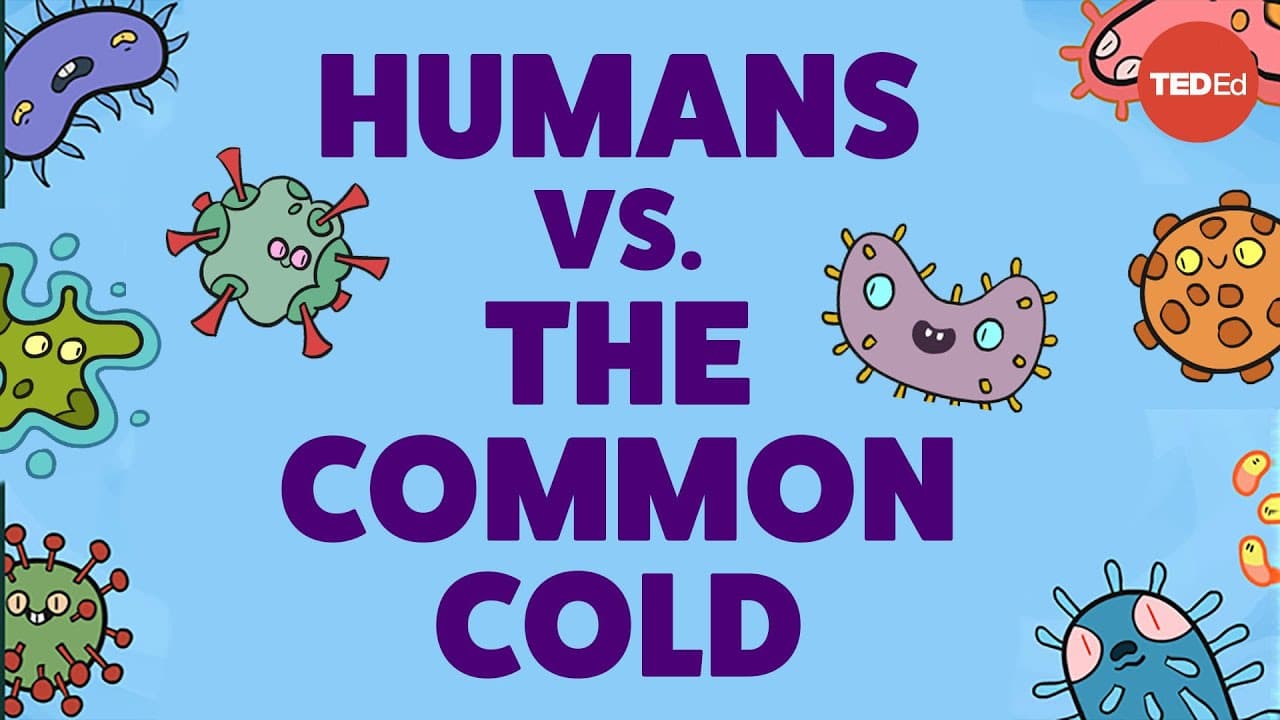
Why is Curing the Common Cold So Difficult?
TL;DR
Curing the common cold is challenging primarily due to the rapid mutation of viruses, especially the rhinovirus, which accounts for 30-50% of colds. Previous vaccine trials failed because rhinovirus has numerous subtypes, making it hard to create a universal solution. Despite advancements in antiviral treatments and technologies like mRNA and CRISPR, effective remedies for the common cold remain elusive.
Transcript
In 2000, a company called ViroPharma ran clinical trials of pleconaril, a new pill designed to treat the common cold. In many patients, the pill helped. But in 7 of them, just a few days into the treatment, researchers found mutated virus variants that were almost completely resistant to pleconaril. Viruses are always mutating, but this one mutat... Read More
Key Insights
- 💅 Viruses mutate rapidly to outsmart treatments, posing challenges for developing cures.
- 🤩 Rhinovirus is a major cause of the common cold, making it a key target for vaccine development.
- 🍝 Past vaccine trials for rhinovirus failed due to the virus's diverse subtypes, highlighting the need for broader protection.
- 😀 Antiviral drugs face challenges in targeting viruses without harming human cells and avoiding mutation evasion.
- 😷 Medical advancements like mRNA vaccines and CRISPR offer hope for better antiviral treatments in the future.
- 👨🔬 Research on CRISPR as an antiviral agent shows promise in degrading coronavirus and influenza genomes.
- ❓ The eradication of diseases like smallpox demonstrates the effectiveness of vaccines in combating viral infections.
Install to Summarize YouTube Videos and Get Transcripts
Explore YouTube Video Summarizer or Get YouTube Transcript Extractor
Questions & Answers
Q: Why do viruses mutate so quickly, making it challenging to develop cures?
Viruses mutate rapidly as part of their survival strategy, allowing them to quickly adapt to changing environments and treatments, making it difficult to develop effective cures.
Q: What are the main challenges in developing a vaccine for the common cold?
Developing a vaccine for the common cold is challenging due to the presence of multiple virus families and subtypes, like rhinovirus, which can mutate and evade immune responses.
Q: How do antiviral drugs work, and why are they difficult to develop for viruses like the common cold?
Antiviral drugs target specific viral mechanisms to inhibit replication, but viruses can mutate to evade these drugs, making it challenging to develop effective and long-lasting treatments.
Q: What recent medical breakthroughs hold promise for developing treatments for viral infections like the common cold?
Breakthrough technologies like mRNA vaccines and CRISPR show potential for creating antiviral treatments, offering new strategies to combat viral infections more effectively.
Summary & Key Takeaways
-
Viruses mutate quickly, leading to challenges in developing cures for illnesses like the common cold.
-
Rhinovirus is responsible for a significant percentage of colds, posing a major obstacle to developing an effective vaccine.
-
Past vaccine trials for rhinovirus were unsuccessful due to the virus's multiple subtypes, highlighting the difficulty in finding a universal cure.
Read in Other Languages (beta)
Share This Summary 📚
Summarize YouTube Videos and Get Video Transcripts with 1-Click
Try YouTube Summary with ChatGPT & Claude or YouTube Transcript Generator
Explore More Summaries from TED-Ed 📚





Summarize YouTube Videos and Get Video Transcripts with 1-Click
Try YouTube Summary with ChatGPT & Claude or YouTube Transcript Generator