Mona Qianmeng Li, MBA ’21: Changing Destiny, One Neighborhood at a Time

TL;DR
Growing up in certain neighborhoods can greatly impact a person's long-term prospects, affecting factors such as education, income, and even life expectancy.
Transcript
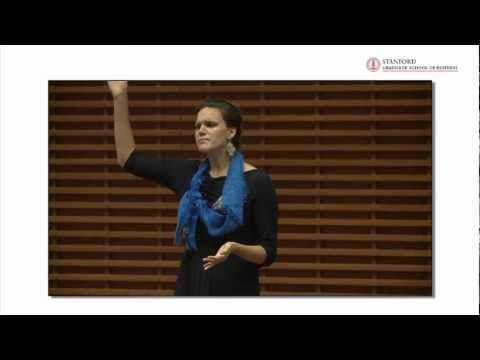
have you ever thought about how each of us got to where we are today i've often asked myself what are all the things that i did right to get into an ivy league college and then earn a six figure salary as a 21 year old well turns out all i really had to do right was to be born into the right household and right neighborhood from then on the odds we... Read More
Key Insights
- 🤑 Poverty is intergenerational, with children born poor having a limited chance of becoming rich.
- 🤽 Neighborhoods play a crucial role in shaping a person's long-term prospects, with some enabling upward mobility, while most trap individuals in poverty.
- ◾ Access to opportunities is unequal, particularly for black children, with only a small percentage growing up in neighborhoods that improve their prospects.
- 🛟 Neighborhoods impact more than just economic outcomes; they also affect life expectancy and overall well-being.
- 💦 Disparities in neighborhoods can perpetuate the cycle of poverty, and it is essential to work together to address these inequalities.
- 💱 Individual choices and actions, such as supporting community development and reevaluating our own biases, can contribute to creating positive change in disadvantaged neighborhoods.
- ✌️ The preservation of peace and character in affluent neighborhoods may inadvertently shut out and deprive opportunities for less privileged individuals.
Install to Summarize YouTube Videos and Get Transcripts
Explore YouTube Video Summarizer or Get YouTube Transcript Extractor
Questions & Answers
Q: How does growing up in poverty affect a child's chances of success?
Children born into poverty face significant challenges in terms of education, income, and overall life outcomes. Limited access to resources and opportunities makes it difficult for them to escape the cycle of poverty.
Q: What are the common characteristics of neighborhoods that foster upward mobility?
According to Chetty's research, neighborhoods that improve long-term prospects have a mix of incomes and races, better schools, greater social capital, and more stable family structures.
Q: How does neighborhood impact life expectancy?
Studies have shown that life expectancy can differ drastically between neighborhoods. Factors such as access to healthcare, quality of housing, and levels of crime and violence can contribute to significant differences in life expectancy.
Q: What can individuals do to address the disparities caused by neighborhood effects?
Individuals can contribute by supporting after-school programs, advocating for better community infrastructure, and volunteering their time and resources to uplift underserved neighborhoods.
Summary & Key Takeaways
-
The story of Tashana Murphy, a promising young basketball player who was killed in her neighborhood due to gang violence, highlights the challenges faced by children in poverty.
-
Harvard economist Raj Chetty's research shows that poverty is intergenerational, and children born into poverty are significantly affected by the neighborhood in which they grow up.
-
Access to opportunities is unequal, with fewer than 5% of black children growing up in neighborhoods that improve their long-term prospects.
Read in Other Languages (beta)
Share This Summary 📚
Summarize YouTube Videos and Get Video Transcripts with 1-Click
Try YouTube Summary with ChatGPT & Claude or YouTube Transcript Generator
Explore More Summaries from Stanford Graduate School of Business 📚




Summarize YouTube Videos and Get Video Transcripts with 1-Click
Try YouTube Summary with ChatGPT & Claude or YouTube Transcript Generator