Interest as rent for money | The monetary system | Macroeconomics | Khan Academy
TL;DR
This video explains the relationship between money supply, demand for money, and interest rates in both microeconomics and macroeconomics.
Transcript
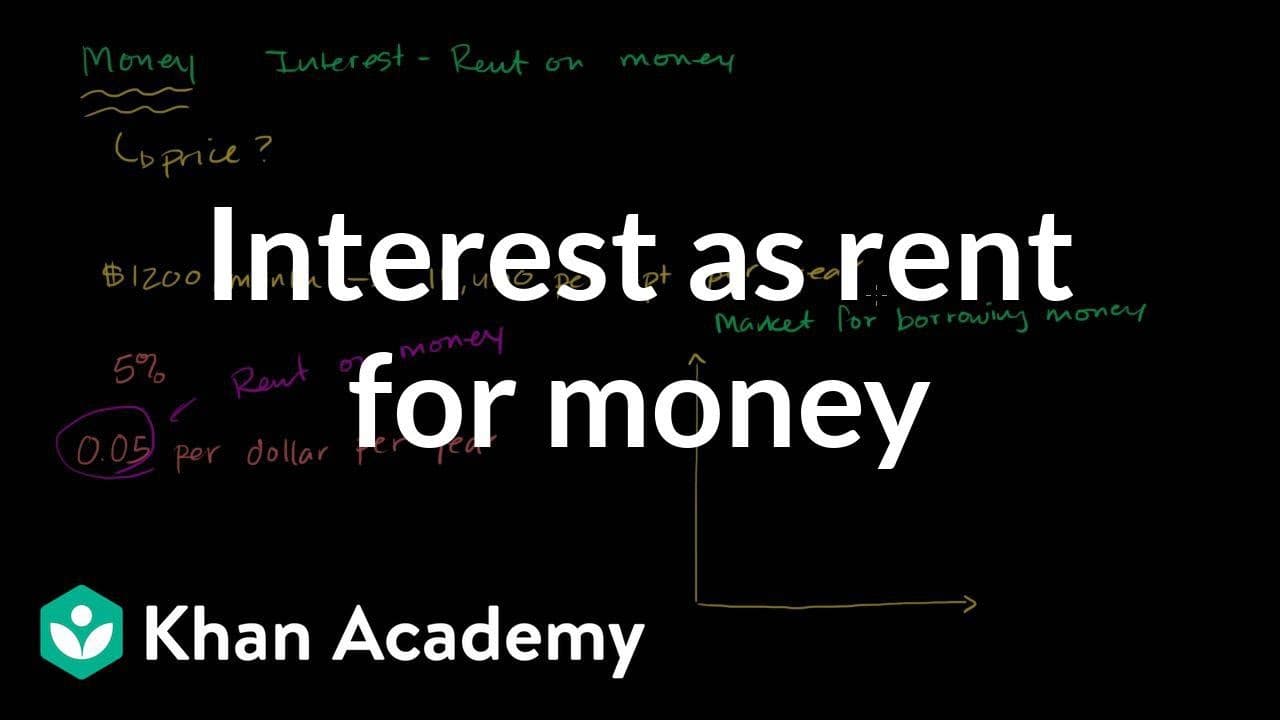
Voiceover: What I want to do in this video is talk a little bit about money and interest rates and do it in kind of a microeconomic framework, so that we understand the relationship between the supply of money and demand for money and the price of money, which we'll see is what interest rates actually are. Once we do that, then we'll be able to be ... Read More
Key Insights
- 🤑 The price of money is reflected in the interest rate, which represents the cost of borrowing or renting money.
- 🤑 Supply and demand graphs can be utilized to analyze the market for borrowing money.
- 🤑 Changes in money supply and demand can cause shifts in the interest rate.
- 🤑 The equilibrium interest rate is determined by the intersection of the supply and demand curves for money.
- ☠️ An increase in money supply leads to a lower interest rate, while a decrease in supply raises the interest rate.
- 🤑 Changes in money demand, influenced by factors like consumer spending and investment opportunities, can also impact the interest rate.
- 🤑 The understanding of microeconomics concepts helps in discussing money and interest rates in a macroeconomic context.
Install to Summarize YouTube Videos and Get Transcripts
Explore YouTube Video Summarizer or Get YouTube Transcript Extractor
Questions & Answers
Q: How is the price of money related to the interest rate?
The price of money is essentially the interest rate, which represents the cost of borrowing or renting money. It is determined by the supply and demand for money.
Q: How does a change in money supply affect the interest rate?
An increase in money supply, such as when the government prints more money, will lead to a higher supply of money in the market. This shift in supply curve lowers the equilibrium interest rate.
Q: What factors influence the demand for money?
The demand for money is influenced by various factors, including consumer spending, investment opportunities, and individuals' desire to save. Changes in these factors can shift the demand curve for money.
Q: How does the equilibrium interest rate change when money supply and demand shift?
If there is a decrease in money supply or an increase in money demand, the equilibrium interest rate will rise. Conversely, if there is an increase in money supply or a decrease in money demand, the equilibrium interest rate will decrease.
Summary & Key Takeaways
-
The price of money is the interest rate, which is essentially the cost of renting money.
-
Supply and demand graphs can be used to analyze the market for borrowing money for a specific period.
-
Changes in money supply and demand can impact the equilibrium interest rate.
Read in Other Languages (beta)
Share This Summary 📚
Summarize YouTube Videos and Get Video Transcripts with 1-Click
Try YouTube Summary with ChatGPT & Claude or YouTube Transcript Generator
Explore More Summaries from Khan Academy 📚



Summarize YouTube Videos and Get Video Transcripts with 1-Click
Try YouTube Summary with ChatGPT & Claude or YouTube Transcript Generator