The BIGGEST Accidents In War
TL;DR
Military operations can lead to catastrophic unintended disasters due to human error and equipment failures.
Transcript
the worst accidents in war so we've all had bad days where things just don't go right well the military's no different but the stakes can be even higher for those in uniform the enemy isn't the only thing to worry about dangers can be unintentional whether it's from your fellow soldiers faulty equipment or just being at the wrong place at the wrong... Read More
Key Insights
- 🥺 Military operations are inherently fraught with potential for human error, often leading to unintended and tragic consequences.
- 👷 The sinking of the USS Thresher spurred major changes in submarine construction and operational protocols, emphasizing the importance of oversight in military engineering.
- ⬛ Operation Cobra illustrates the devastating impact of lack of precise communication and coordination during large-scale military operations.
- 🎖️ The failure of Operation Eagle Claw demonstrated the challenges of joint operations involving multiple branches of the military and the importance of cohesive training and planning.
- 🛟 The Sultana disaster serves as a stark reminder of the consequences of greed and negligence, prioritizing profits over passenger safety during wartime.
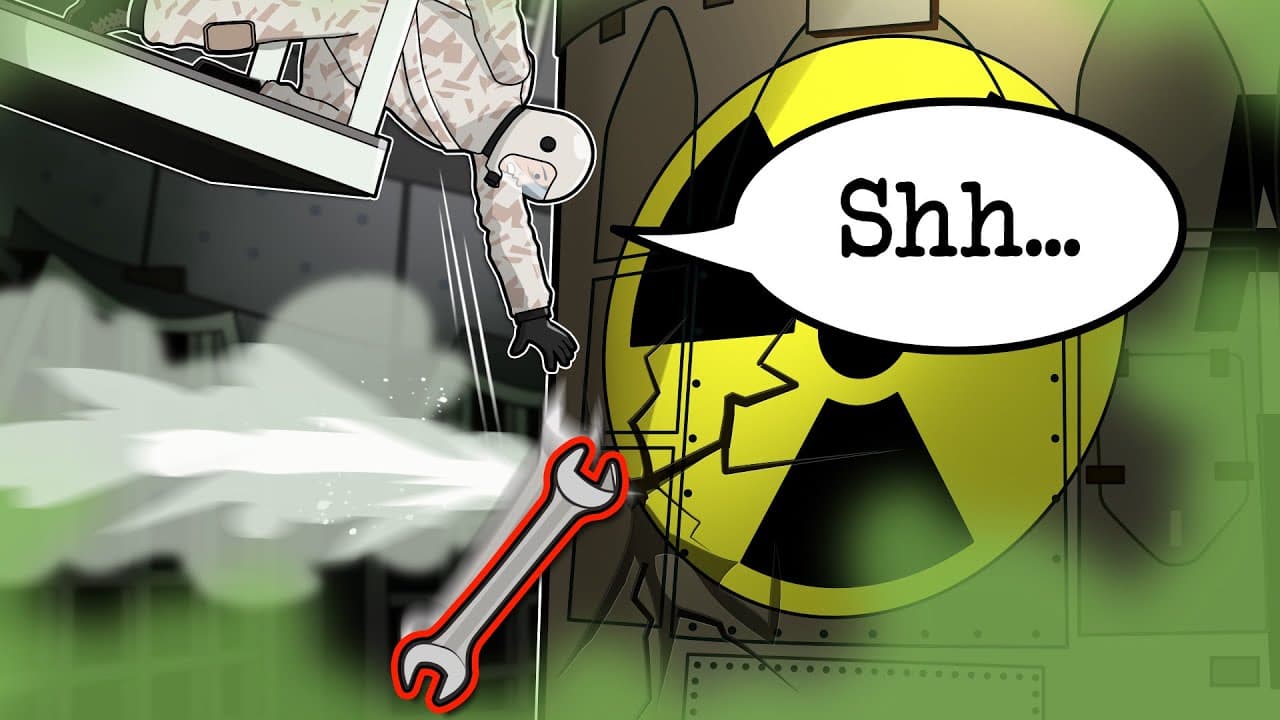
- 🍵 The Titan 2 missile disaster highlights how even the most advanced military systems can be susceptible to simple mistakes, prompting a reevaluation of safety protocols in handling nuclear capabilities.
- 🎖️ Emotional and psychological impacts from military accidents can extend beyond the direct consequences, affecting families of the personnel involved and public perception of military operations.
Install to Summarize YouTube Videos and Get Transcripts
Explore YouTube Video Summarizer or Get YouTube Transcript Extractor
Questions & Answers
Q: What was the USS Thresher, and what happened to it?
The USS Thresher was a nuclear submarine commissioned in the early 1960s, known for its advanced technology. Unfortunately, during dive tests in April 1963, it suffered a catastrophic failure, leading to the loss of all 129 crew members after it sank 8,400 feet offshore, believed to be caused by a piping failure and subsequent flooding in the engine compartment.
Q: What was Operation Cobra, and what went wrong during it?
Operation Cobra was an Allied plan during WWII aimed at breaking the stalemate in Normandy through heavy air bombardment. However, the operation resulted in accidental bombing of American troops due to poor visibility and miscommunication, leading to 111 American deaths and about 500 wounded while still achieving some success against German forces.
Q: What led to the failure of Operation Eagle Claw in 1980?
Operation Eagle Claw aimed to rescue hostages in Iran but was hampered by logistical issues, varying levels of training among troops, and a lack of coordination between different military branches. Compounding these failures were mechanical problems with helicopters, resulting in the mission's abandonment and a deadly accident during retreat, with eight personnel killed.
Q: What was the Sultana disaster, and why was it so significant?
The Sultana disaster occurred in 1865 when a steamboat carrying over 1,900 passengers, far exceeding its capacity, exploded on the Mississippi River due to poorly maintained boilers. It is considered the worst maritime tragedy in U.S. history, with casualty estimates ranging from 1,200 to 1,800, and highlighted the dangers of neglecting safety regulations during wartime transport.
Summary & Key Takeaways
-
The content explores several significant military disasters, emphasizing the notion that mistakes in military contexts can lead to tragic outcomes. It highlights how both human error and equipment failures contribute to unintended consequences in operations.
-
Historical events like the sinking of the USS Thresher and the crash during Operation Eagle Claw demonstrate how complex missions can result in fatal problems, often due to coordination issues or equipment malfunctions.
-
The accidents illustrate the need for reform in military protocols and procedures, ensuring better oversight and coordination to mitigate risks of catastrophic failures in operations involving lives and critical equipment.
Read in Other Languages (beta)
Share This Summary 📚
Summarize YouTube Videos and Get Video Transcripts with 1-Click
Try YouTube Summary with ChatGPT & Claude or YouTube Transcript Generator
Explore More Summaries from Simple History 📚
Summarize YouTube Videos and Get Video Transcripts with 1-Click
Try YouTube Summary with ChatGPT & Claude or YouTube Transcript Generator