Elements of a Procrastivity Task for an ADHD Brain (with J. Russell Ramsay, Ph.D.)
TL;DR
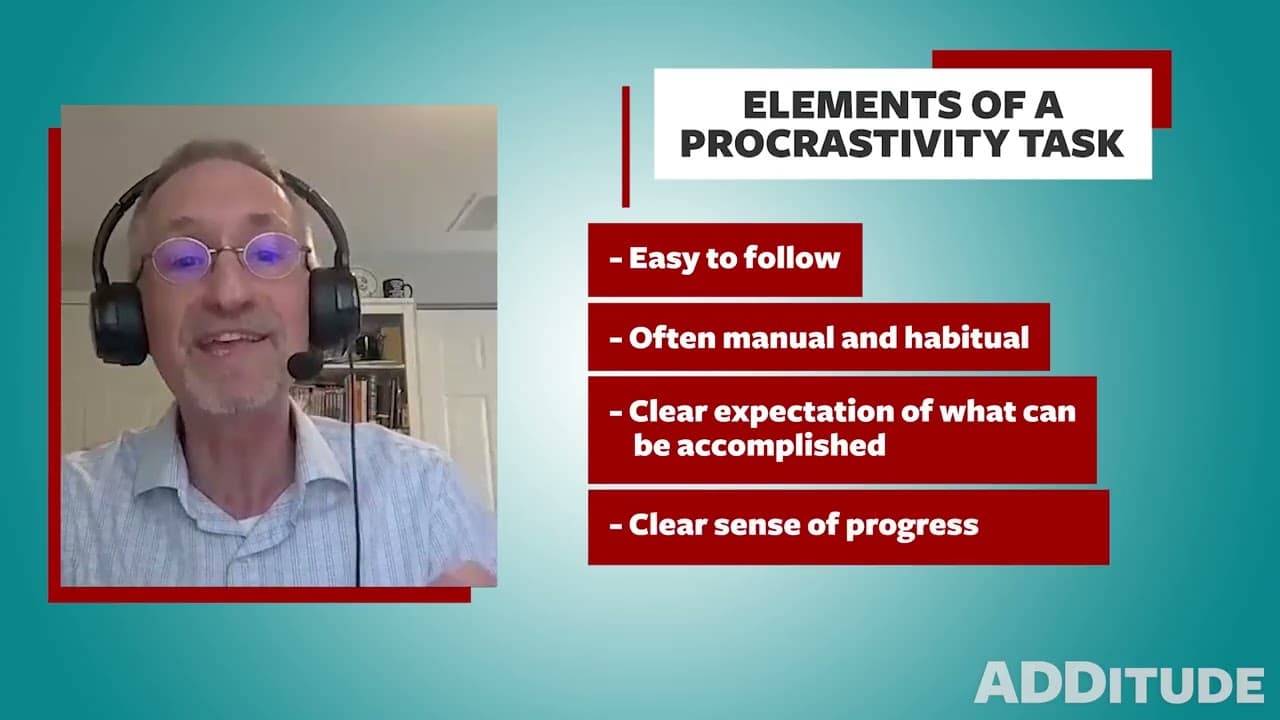
ADHD brains prefer hands-on tasks with clear steps and timeframes.
Transcript
procrasti task what are some elements of them one is they tend to be more manual Hands-On pushing the lawn mower rather than working on taxes baking the cake rather than uh navigating through a scientific article there's generally an existing template or recipe of steps that we already know how to do to get started so if you're mowi... Read More
Key Insights
- ADHD individuals often prefer manual, hands-on tasks like mowing the lawn or baking a cake over complex tasks such as taxes or presentations.
- Procrastivity tasks usually come with a clear template or set of steps, making it easier for ADHD individuals to start and complete them.
- Tasks like mowing the lawn have a definitive timeframe, providing a sense of accomplishment, unlike more ambiguous tasks like preparing for meetings.
- Manual tasks offer a clear sense of progress, which is motivating for ADHD individuals, whereas complex tasks often feel never-ending.
- The completion of procrastivity tasks is satisfying due to the clear endpoint, unlike tasks that require multiple sessions or adjustments.
- ADHD individuals may spend more time on procrastivity tasks because they align better with their perceived self-efficacy.
- The preference for procrastivity tasks is due to the predictable nature and the assurance of completion, which is less stressful for ADHD brains.
- ADHD individuals might prioritize tasks that are in harmony with their abilities, even if they take more time than necessary tasks.
Install to Summarize YouTube Videos and Get Transcripts
Explore YouTube Video Summarizer or Get YouTube Transcript Extractor
Questions & Answers
Q: Why do ADHD individuals prefer hands-on tasks?
ADHD individuals prefer hands-on tasks because they come with a clear set of instructions and a predictable timeframe for completion. This predictability provides a sense of accomplishment and progress, which is motivating and comforting for ADHD brains, reducing stress and increasing self-efficacy.
Q: What is a procrastivity task?
A procrastivity task is a task that is manual and hands-on, like mowing the lawn or baking a cake, which is preferred by ADHD individuals. These tasks have a clear template or set of steps, a definitive timeframe, and an obvious sense of progress and completion, making them appealing.
Q: How do procrastivity tasks differ from priority tasks?
Procrastivity tasks differ from priority tasks in that they offer a clear sense of progress and a definitive endpoint. Priority tasks, such as preparing for a meeting or doing taxes, are often ambiguous, with unclear progress and completion, making them less appealing and more stressful for ADHD individuals.
Q: Why is the sense of progress important for ADHD individuals?
The sense of progress is crucial for ADHD individuals because it provides motivation and a feeling of accomplishment. Tasks with clear progress markers, like mowing a lawn, are more rewarding and less stressful, whereas tasks without clear progress can feel endless and overwhelming, leading to procrastination.
Q: What role does self-efficacy play in task preference for ADHD individuals?
Self-efficacy plays a significant role in task preference for ADHD individuals. Tasks that align with their perceived ability to complete them successfully are more appealing. Procrastivity tasks offer a higher sense of self-efficacy due to their predictability and clear completion, making them preferable over ambiguous priority tasks.
Q: How does the predictability of a task affect ADHD individuals?
The predictability of a task greatly affects ADHD individuals by reducing anxiety and providing motivation. Tasks with predictable steps and timeframes, like procrastivity tasks, are less stressful and more rewarding. This predictability helps ADHD individuals to engage more effectively, as opposed to unpredictable tasks which can lead to avoidance.
Q: Why might ADHD individuals spend more time on procrastivity tasks?
ADHD individuals might spend more time on procrastivity tasks because these tasks align better with their capabilities and provide a higher sense of accomplishment. Even if these tasks take longer, the assurance of completion and the reduced stress associated with them make them more appealing than priority tasks.
Q: What makes the completion of procrastivity tasks satisfying for ADHD individuals?
The completion of procrastivity tasks is satisfying for ADHD individuals because these tasks have a clear endpoint, offering a tangible sense of accomplishment. This contrasts with more complex tasks that may require multiple sessions and adjustments, leaving ADHD individuals feeling less fulfilled and more stressed.
Summary & Key Takeaways
-
ADHD individuals tend to gravitate towards tasks that are manual and hands-on, such as mowing the lawn or baking, because these tasks offer a clear set of instructions and a definitive timeframe for completion, which is comforting and motivating for them.
-
Procrastivity tasks, unlike more complex tasks such as taxes or presentations, have a clear sense of progress and completion, making them more appealing to those with ADHD. This preference is rooted in the predictability and assurance of finishing the task.
-
ADHD brains often choose procrastivity tasks over priority tasks due to the alignment with their self-efficacy and the reduced stress associated with these tasks. The clear endpoint and sense of accomplishment are key factors in their preference.
Read in Other Languages (beta)
Share This Summary 📚
Summarize YouTube Videos and Get Video Transcripts with 1-Click
Try YouTube Summary with ChatGPT & Claude or YouTube Transcript Generator
Explore More Summaries from ADDitude Magazine 📚


Summarize YouTube Videos and Get Video Transcripts with 1-Click
Try YouTube Summary with ChatGPT & Claude or YouTube Transcript Generator