Why Is Luxembourg The Richest Country In Europe? | Economics Explained
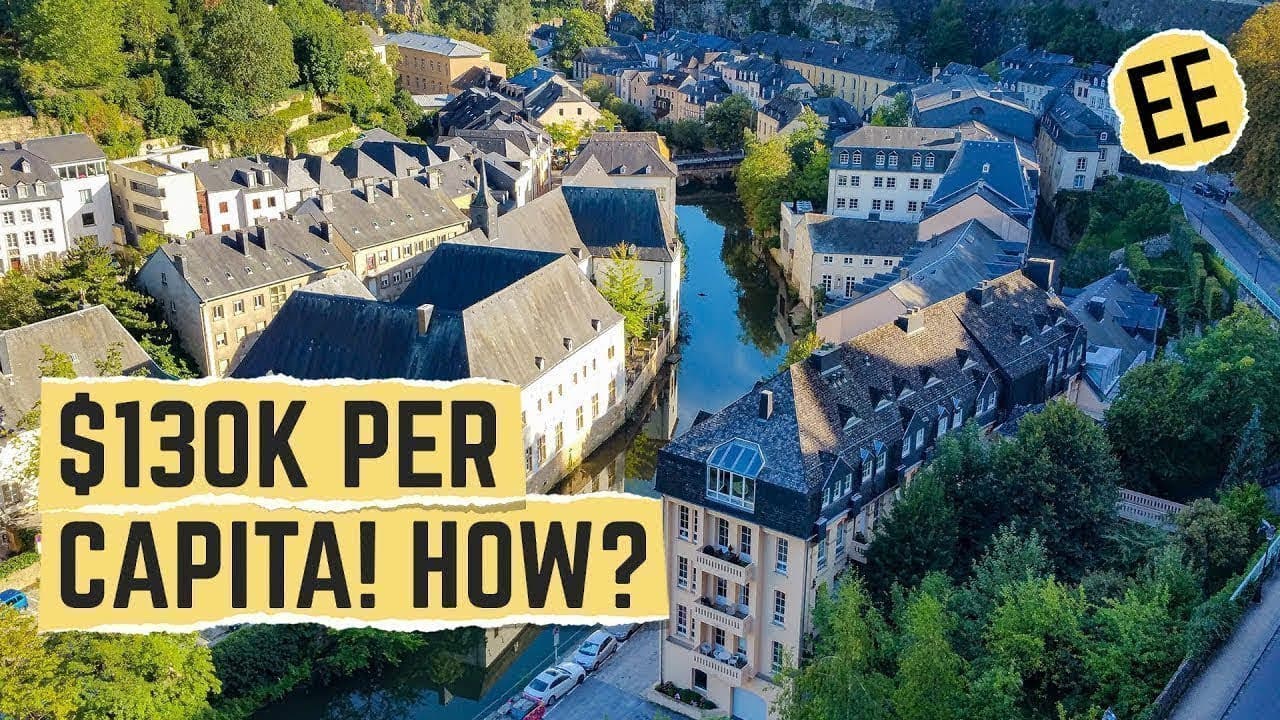
TL;DR
Luxembourg thrives with strategic industries and cross-border workforce.
Transcript
this is Luxembourg or officially the grand duy of Luxembourg a small landlock country wedged between Belgium France and Germany which is home to by many metrics the most successful economy in the world the economy of Luxembourg is actually somewhat of a personal nuisance to me if I'm being perfectly honest countless times on this channel I try to t... Read More
Key Insights
- Luxembourg is not a micronation but a small country with a highly successful economy, often leading in GDP per capita metrics.
- The country achieves its wealth through productive industries and workers, rather than tax haven policies, unlike Monaco.
- Luxembourg's key industries include banking, steel production, and tourism, with banking accounting for over half of its GDP.
- Its banking sector benefits from being in the EU, offering services in multiple languages and managing international clients' finances.
- Luxembourg has a high labor force participation rate, with nearly half of its workforce commuting from neighboring countries daily.
- The country's GDP per capita calculations are influenced by its significant non-resident workforce, boosting its economic output metrics.
- Luxembourg's economy benefits from hosting the European Investment Bank, enhancing its financial sector's credibility and influence.
- Despite its small size, Luxembourg's strategic industry choices and skilled workforce contribute to its economic prosperity.
Install to Summarize YouTube Videos and Get Transcripts
Explore YouTube Video Summarizer or Get YouTube Transcript Extractor
Questions & Answers
Q: What makes Luxembourg's economy unique compared to other wealthy nations?
Luxembourg's economy is unique due to its combination of high GDP per capita and regular economic structure. Unlike other wealthy nations that may rely on tax haven policies, Luxembourg thrives through productive industries such as banking, steel, and tourism. It also benefits from a significant non-resident workforce commuting from neighboring countries, enhancing its economic output without increasing resident numbers.
Q: How does Luxembourg's banking industry contribute to its economic success?
Luxembourg's banking industry is a cornerstone of its economy, accounting for more than half of its GDP. The country's strategic location in the EU, use of the Euro, and multilingual capabilities make it an attractive destination for international banking. Luxembourg's banks manage global wealth, offering services that navigate multiple legal jurisdictions and language barriers, thus attracting multinational corporations and wealthy individuals.
Q: Why is Luxembourg's GDP per capita so high?
Luxembourg's GDP per capita is high due to its highly productive industries and strategic workforce dynamics. The country has a high labor force participation rate, with a significant portion of its workforce commuting daily from neighboring countries. This boosts economic output without increasing resident numbers, resulting in a high GDP per capita. Additionally, Luxembourg's industries, particularly banking, contribute significantly to its economic success.
Q: What role does the European Investment Bank play in Luxembourg's economy?
The European Investment Bank (EIB), headquartered in Luxembourg City, plays a significant role in the country's economy. While it is not the same as the European Central Bank, the EIB raises its own funds to provide loans for large projects across the EU. Its presence in Luxembourg enhances the country's financial sector, providing credibility and influence, and contributes to the overall economic prosperity by attracting skilled professionals and facilitating major infrastructure projects.
Q: How does Luxembourg manage such a high labor force participation rate?
Luxembourg manages a high labor force participation rate by leveraging its strategic location in Europe. It allows for easy cross-border commuting from neighboring countries like Belgium, France, and Germany. Nearly half of Luxembourg's workforce consists of non-residents who travel daily to work in its industries. This arrangement boosts the country's economic output without increasing its resident population, contributing to its high GDP per capita.
Q: What challenges does Luxembourg face in maintaining its economic prosperity?
Luxembourg faces challenges in maintaining its economic prosperity, including potential scrutiny over its banking practices. The country has previously been on the G20's gray list for questionable banking arrangements, which could have led to restrictions on its financial sector. Additionally, its reliance on a non-resident workforce and specific industries like banking and steel may pose risks if global economic conditions change or if regulatory pressures increase.
Q: How does Luxembourg's economic output compare to other countries?
Luxembourg's economic output is exceptionally high, with a GDP per capita of $133,500, nearly double that of the United States. Its output is 13 times the global average, making it the wealthiest country in the EU and the world in terms of GDP per capita. The country's strategic industry choices, skilled workforce, and unique cross-border employment dynamics contribute to this impressive economic performance, setting it apart from other nations.
Q: What industries are most prominent in Luxembourg's economy?
The most prominent industries in Luxembourg's economy are banking, steel production, and tourism. Banking is the largest sector, accounting for over half of the country's GDP, with Luxembourg serving as a major financial hub in Europe. The steel industry also plays a significant role, with Luxembourg hosting the global headquarters of ArcelorMittal, the world's second-largest steel producer. These industries, along with tourism, contribute to Luxembourg's economic success and high GDP per capita.
Summary & Key Takeaways
-
Luxembourg, a small European country, boasts one of the most successful economies globally, with a GDP per capita of $133,500. Its wealth stems from productive industries, particularly banking, steel, and tourism. Unlike Monaco, Luxembourg is not a tax haven but a regular economy with high income taxes.
-
The country's banking industry is a major contributor to its economy, serving international clients due to its EU membership and multilingual capabilities. Luxembourg's financial services are highly competitive, attracting multinational corporations and managing significant global wealth.
-
Luxembourg's economic success is partly due to its unique workforce dynamic, where nearly half of its workers commute from neighboring countries. This cross-border workforce boosts GDP per capita without increasing resident numbers, highlighting Luxembourg's strategic positioning in Europe.
Read in Other Languages (beta)
Share This Summary 📚
Summarize YouTube Videos and Get Video Transcripts with 1-Click
Try YouTube Summary with ChatGPT & Claude or YouTube Transcript Generator
Explore More Summaries from Economics Explained 📚






Summarize YouTube Videos and Get Video Transcripts with 1-Click
Try YouTube Summary with ChatGPT & Claude or YouTube Transcript Generator