Molecular structure of DNA | Macromolecules | Biology | Khan Academy
TL;DR
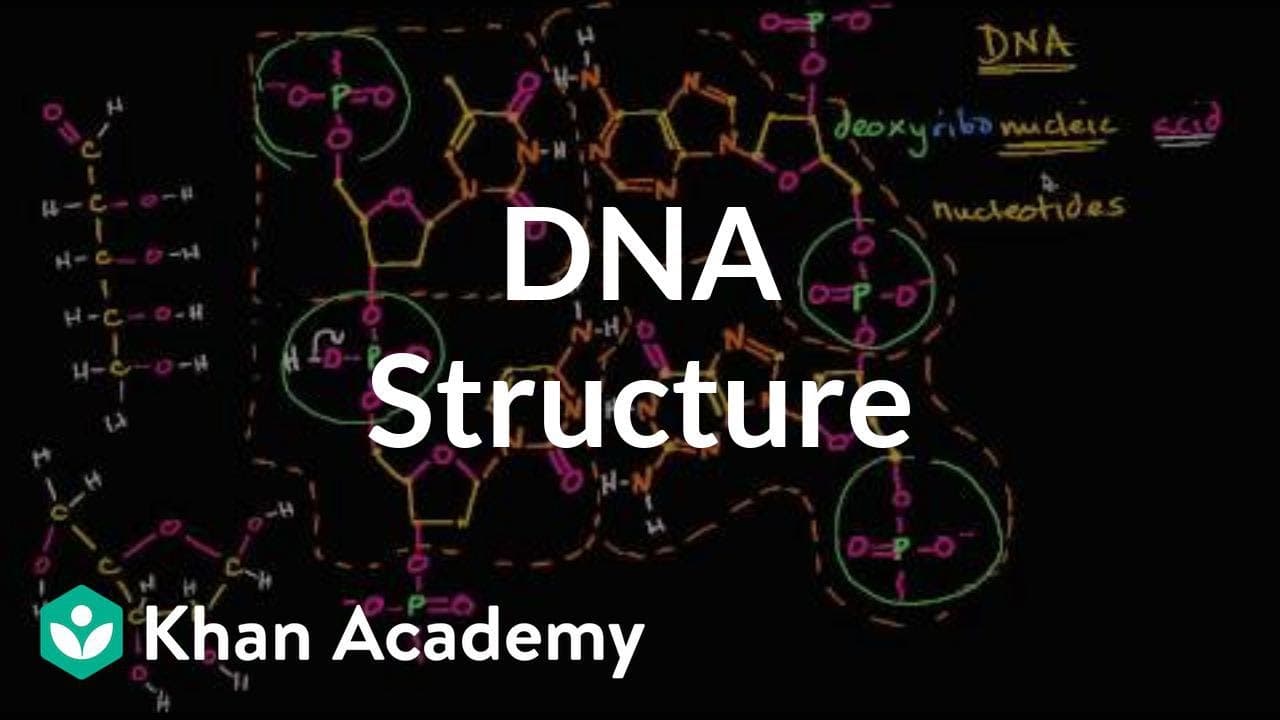
This video explores the molecular structure of DNA, including its components and how they relate to the name deoxyribonucleic acid.
Transcript
- [Voiceover] We already have an overview video of DNA and I encourage you to watch that first. What I want to do in this video is dig a little bit deeper. Actually get into the molecular structure of DNA. This is a starting point. Let's just remind ourselves what DNA stands for. I'm gonna write the different parts of the word in different colors. ... Read More
Key Insights
- 🧍 DNA stands for deoxyribonucleic acid and is located in the nucleus of eukaryotic cells.
- 👥 Each DNA molecule consists of nucleotides with a phosphate group, deoxyribose sugar, and one of four nitrogenous bases.
- 🖤 The deoxyribose sugar in DNA differs from ribose in RNA by lacking an oxygen atom on the 2' carbon.
- 😋 Nitrogenous bases in DNA are categorized as purines (two rings) or pyrimidines (one ring).
Install to Summarize YouTube Videos and Get Transcripts
Explore YouTube Video Summarizer or Get YouTube Transcript Extractor
Questions & Answers
Q: Why is DNA called an acid?
DNA is considered an acid due to the presence of phosphate groups in its nucleotides. These phosphate groups can release hydrogen protons, making the molecule acidic.
Q: How is deoxyribose different from ribose?
Deoxyribose is a sugar found in DNA that lacks an oxygen atom on the 2' carbon. In contrast, ribose, found in RNA, has the oxygen atom present on the 2' carbon.
Q: What are purines and pyrimidines?
Purines are nitrogenous bases with two rings, such as adenine and guanine, while pyrimidines have a single ring, including thymine, cytosine, and uracil in RNA.
Q: How do hydrogen bonds contribute to DNA structure?
Hydrogen bonds form between complementary nitrogenous bases (adenine-thymine, guanine-cytosine) and hold the two DNA strands together in the double helix structure.
Summary & Key Takeaways
-
DNA stands for deoxyribonucleic acid, with 'nucleic' referring to its location in the nucleus of eukaryotic cells.
-
Each DNA molecule is comprised of nucleotides, which are made up of a phosphate group, a sugar (deoxyribose), and a nitrogenous base (adenine, thymine, guanine, or cytosine).
-
The structure of DNA involves hydrogen bonds between complementary nitrogenous bases, forming the famous double helix.
Read in Other Languages (beta)
Share This Summary 📚
Summarize YouTube Videos and Get Video Transcripts with 1-Click
Try YouTube Summary with ChatGPT & Claude or YouTube Transcript Generator
Explore More Summaries from Khan Academy 📚



Summarize YouTube Videos and Get Video Transcripts with 1-Click
Try YouTube Summary with ChatGPT & Claude or YouTube Transcript Generator