What Is an Audio Computer and How Does It Work?
TL;DR
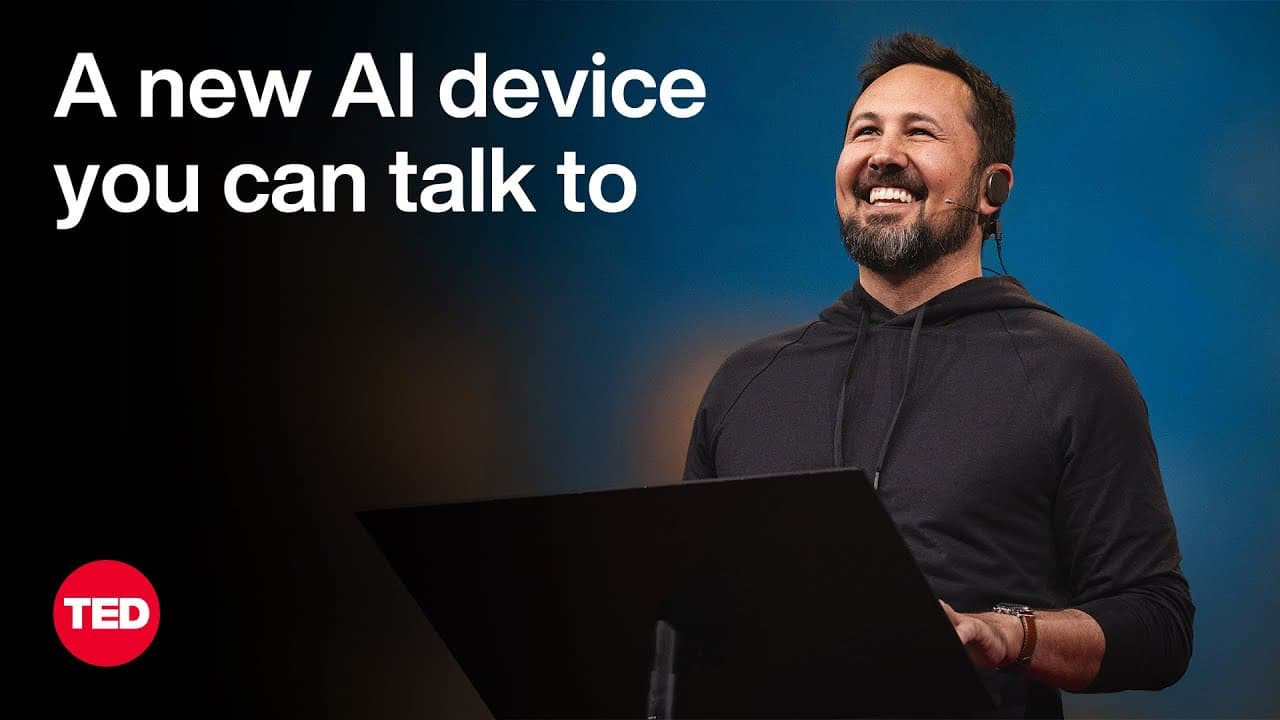
An audio computer is a new type of wearable device designed to facilitate natural conversations by using voice as input and auditory space as output. Unlike traditional visual computers, it offers hands-free interaction, enhancing user experience across various applications such as education and entertainment while promoting a healthier relationship with technology.
Transcript
You know, when I was a kid, dreaming about the amazing future that computers could bring, I never thought it would look like this. I snapped this photo in line at a Chipotle, thinking, "Man, what has the world come to?" You know, everyone's stuck in their phones all the time. And then I almost doubled over laughing at myself because there I am, stu... Read More
Key Insights
- 👶 A new kind of computer in the form of audio earbuds is introduced, aiming to create a natural and intuitive computing experience through conversation-based interactions.
- 👾 The audio-based user interface relies on natural language input and auditory space as the output, offering a more genuine and engaging conversation feel.
- 💻 The audio computer can replace visual computers for various applications, providing a hands-free, heads-up computing experience.
- 🈸 The possibilities for audio computers are endless, allowing for personalized education apps, fitness coaches, and other creative applications.
- 💁 It taps into the ancient and highly efficient form of human communication, spoken language, to create a more efficient and emotionally robust computing experience.
- 👨🔬 The audio computer incorporates mixed-audio reality and psychoacoustic research to enhance the user's auditory experience and control their personal soundscape.
- 🧡 Developers have the freedom to explore and create a wide range of applications and possibilities using audio computers.
Install to Summarize YouTube Videos and Get Transcripts
Explore YouTube Video Summarizer or Get YouTube Transcript Extractor
Questions & Answers
Q: How does the audio computer differ from traditional voice assistants?
Unlike structured voice assistants, the audio computer aims to create genuine conversations and build context about users' lives over time, delivering a more natural and personalized experience.
Q: What are some potential applications of the audio computer?
The possibilities for audio computers are vast, ranging from education apps with personalized teaching styles to fitness coaches providing motivation and gamification through conversation. Developers have the freedom to explore endless opportunities.
Q: How does the audio computer enhance the computing experience for tasks like email and searching?
With the audio computer, tasks like email can be transformed into conversations, providing a more relaxed and engaging experience. It also allows users to search by simply speaking out loud, making it feel more natural and convenient.
Q: How does the audio computer enhance the experience of ambient acoustics?
The audio computer incorporates mixed-audio reality, allowing users to modify their ambient acoustics and create virtual soundscapes. Through psychoacoustic research and software algorithms, it can precisely position sounds in space, providing an immersive auditory experience.
Summary & Key Takeaways
-
A new prototype "audio computer" in the form of earbuds is introduced as a replacement for traditional visual computers.
-
The audio-based user interface relies on natural language input and auditory space as the output, aiming to create a more intuitive and genuine conversation-like interaction.
-
The goal is to create a healthier relationship with technology, offering hands-free and heads-up computing and enhancing various applications through natural language conversations.
Read in Other Languages (beta)
Share This Summary 📚
Summarize YouTube Videos and Get Video Transcripts with 1-Click
Try YouTube Summary with ChatGPT & Claude or YouTube Transcript Generator
Explore More Summaries from TED 📚





Summarize YouTube Videos and Get Video Transcripts with 1-Click
Try YouTube Summary with ChatGPT & Claude or YouTube Transcript Generator