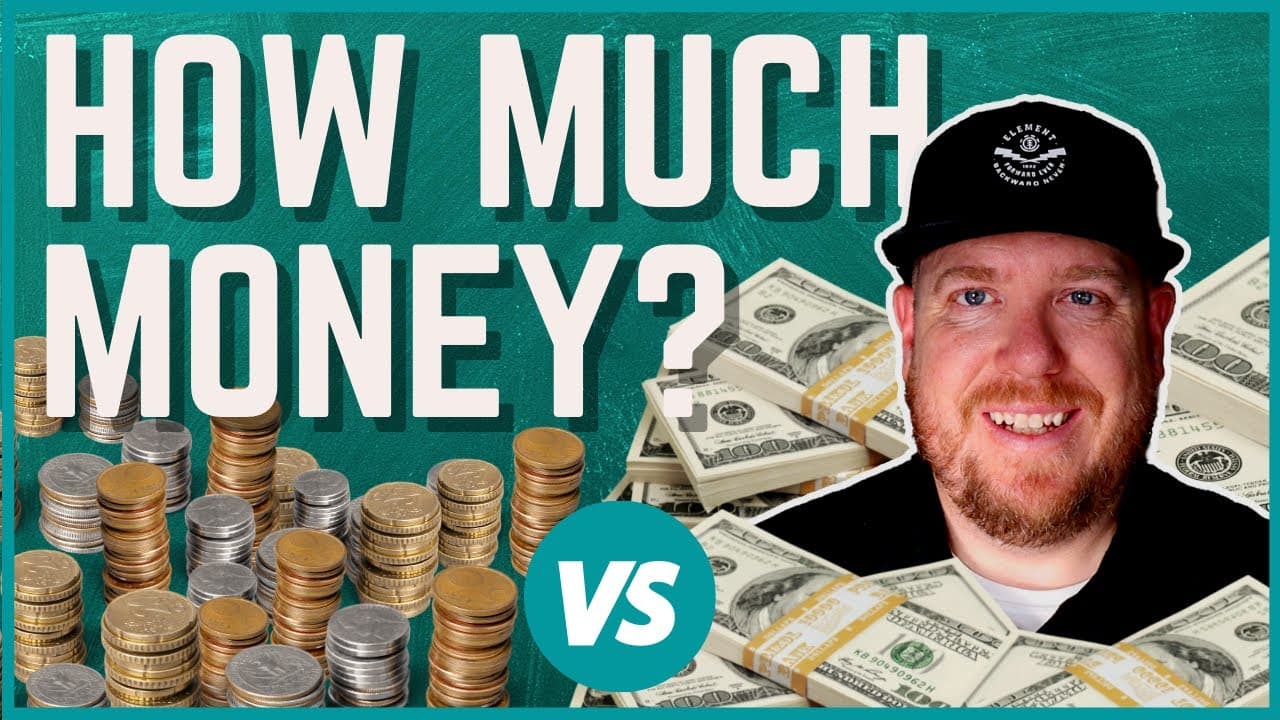
Real Estate Agent Salary vs. Real Estate Investor Salary (2021)
TL;DR
Real estate agents and investors earn differently, with diverse income opportunities.
Transcript
i know we should totally use that scene from jerry maguire the one where he's like show me the money wait what we can't use that all right show me the money in this video i'm gonna show you exactly that how much an average investor in an average real estate agent makes in 2021 and some of the different income opportunities in each field so let's go... Read More
Key Insights
- Real estate professionals, both agents and investors, primarily earn through commissions, with no fixed salaries or benefits like paid vacations.
- Agents can work independently or join a team, impacting their commission share. Team members often pay a portion of their earnings for leads.
- Agent income varies widely based on location, transaction volume, and property prices, with average earnings ranging from $43,000 to $60,000 annually.
- Investors have numerous income streams, including wholesaling, fix and flips, and rentals, each offering varying profit margins.
- Wholesalers typically earn between $5,000 and $15,000 per deal, with successful ones closing multiple deals monthly.
- Fix and flippers average around $37,000 per project, with active flippers completing several annually depending on their capacity.
- Landlords earn $150 to $250 per unit monthly, excluding property appreciation and tax benefits, while short-term rentals often yield higher profits.
- Investors can diversify income by stacking methods, reinvesting profits, and leveraging tax advantages, often surpassing agent earnings.
Install to Summarize YouTube Videos and Get Transcripts
Explore YouTube Video Summarizer or Get YouTube Transcript Extractor
Questions & Answers
Q: How do real estate agents and investors get paid?
Both real estate agents and investors are primarily paid through commissions. Agents earn commissions by closing property deals, while investors make money through various activities like wholesaling, fix and flips, and rentals. Unlike salaried employees, they do not receive traditional benefits such as paid vacations or pensions.
Q: What factors influence a real estate agent's income?
A real estate agent's income is influenced by several factors, including the number of transactions they close, the property prices in their area, and whether they work independently or as part of a team. Location also plays a significant role, with agents in high-value markets like New York potentially earning much more than those in smaller towns.
Q: What are the average earnings for real estate agents?
Average earnings for real estate agents vary widely, with estimates ranging from $43,000 to $60,000 annually. This variation is due to differences in transaction volume, property prices, and geographic location. Some agents earn significantly more, especially in high-value markets, while others may earn less if they close fewer deals.
Q: How do investors make money in real estate?
Investors make money through various strategies, including wholesaling, fix and flips, and rentals. Wholesalers earn a fee for facilitating property sales, fix and flippers profit from renovating and selling properties, and landlords generate income from renting out properties. Each method offers different profit margins and requires specific skills and knowledge.
Q: What is the average profit for a fix and flipper?
The average profit for a fix and flipper is around $37,000 per project. However, this figure can vary widely depending on factors such as the property's location, the cost of renovations, and market conditions. Successful flippers can complete multiple projects annually, significantly increasing their overall earnings.
Q: How do short-term rentals compare to long-term rentals in terms of profit?
Short-term rentals often generate higher monthly profits compared to long-term rentals. While long-term landlords typically earn $150 to $250 per unit monthly, short-term rentals can yield much higher returns. However, short-term rentals may require more management and incur additional costs, such as cleaning and marketing expenses.
Q: What are some additional income opportunities for real estate investors?
Real estate investors can diversify their income by stacking different methods, such as using profits from one strategy to fund another. They can also leverage tax advantages and reinvest earnings into new projects. For example, an investor might use wholesale profits to purchase a rental property or invest in a commercial property.
Q: Which is more lucrative, being a real estate agent or an investor?
The potential for higher earnings generally favors real estate investors due to the diverse income streams and opportunities for passive income. Investors can leverage various strategies and tax advantages to maximize profits, whereas agents primarily rely on commissions from property sales. However, success in either field depends on individual skills, market conditions, and strategic decisions.
Summary & Key Takeaways
-
Real estate agents and investors earn primarily through commissions, with no fixed salary or traditional employment benefits. Agents can either work independently or join a team, affecting their earnings.
-
Agent income varies significantly by location and transaction volume, with averages between $43,000 and $60,000 annually. Investors have diverse income streams, including wholesaling, fix and flips, and rentals.
-
Wholesalers earn $5,000 to $15,000 per deal, while fix and flippers average $37,000 per project. Landlords make $150 to $250 per unit monthly, with short-term rentals often yielding higher profits.
Read in Other Languages (beta)
Share This Summary 📚
Summarize YouTube Videos and Get Video Transcripts with 1-Click
Try YouTube Summary with ChatGPT & Claude or YouTube Transcript Generator
Explore More Summaries from BiggerPockets 📚





Summarize YouTube Videos and Get Video Transcripts with 1-Click
Try YouTube Summary with ChatGPT & Claude or YouTube Transcript Generator