And if you don't know what to say, what then?

TL;DR
Effective communication in sales relies on practice and confidence.
Transcript
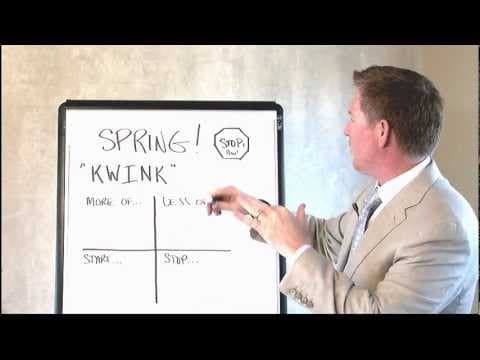
[Applause] hey it's coach Tom fery happy Wednesday so we've been talking about conversion you're back at Life by Design I appreciate you being here check it out I've been talking you about conversion what to say what to say what to say how to say it let me give you a little insight there's two kinds of sales people on this planet there's people tha... Read More
Key Insights
- Sales success hinges on knowing what to say, which builds confidence and prepares you for objections.
- There are two types of salespeople: those who know their scripts and those who improvise.
- Effective sales communication involves asking questions that naturally lead to a mutual end result.
- Practice is crucial; memorizing scripts ensures your tonality and body language align with your message.
- Real communication is only 7% words; 38% is tonality, and 55% is body language.
- Practicing dialogues helps internalize messages, enhancing overall communication effectiveness.
- Without preparation, salespeople risk being 93% ineffective due to poor tonality and body language.
- Investing 15-20 minutes in preparation before presentations boosts confidence and conversion rates.
Install to Summarize YouTube Videos and Get Transcripts
Explore YouTube Video Summarizer or Get YouTube Transcript Extractor
Questions & Answers
Q: Why is knowing what to say important in sales?
Knowing what to say is crucial in sales because it builds confidence and prepares salespeople for handling objections effectively. When salespeople are confident in their scripts, they can anticipate and address objections smoothly, leading to more successful sales interactions and ultimately higher conversion rates.
Q: What are the two types of salespeople mentioned in the video?
The video identifies two types of salespeople: those who know their scripts and those who improvise. Salespeople who know their scripts are better prepared for interactions and can handle objections confidently, while those who improvise may struggle with consistency and effectiveness in their communication.
Q: How does effective sales communication work according to Tom Ferry?
Effective sales communication, according to Tom Ferry, involves asking a series of questions that naturally lead both the salesperson and the prospect to a mutually desired end result. This approach focuses on guiding the conversation through inquiry rather than simply talking, fostering a collaborative and persuasive dialogue.
Q: What is the breakdown of real communication as discussed in the video?
Real communication, as discussed in the video, consists of 7% words, 38% tonality, and 55% body language. This breakdown emphasizes the importance of not just the words used but also how they are delivered and the accompanying physical cues, which together significantly influence the effectiveness of communication.
Q: Why is practice emphasized so heavily in the video?
Practice is emphasized because it helps salespeople internalize their scripts, ensuring their tonality and body language align with their message. Without practice, salespeople risk being 93% ineffective due to misaligned communication elements. Regular practice leads to more confident and effective sales interactions.
Q: What risk do salespeople face without preparation?
Without preparation, salespeople face the risk of being 93% ineffective due to poor alignment of tonality and body language with their message. This misalignment can lead to misunderstandings and reduced persuasion, ultimately affecting their ability to convert prospects into clients effectively.
Q: How can salespeople boost their confidence before presentations?
Salespeople can boost their confidence before presentations by investing 15-20 minutes in preparation. This involves planning their dialogues, questions, and delivery, which helps them internalize their message and approach the presentation with greater assurance and effectiveness, leading to higher conversion rates.
Q: What is the impact of planning dialogues and delivery on sales outcomes?
Planning dialogues and delivery positively impacts sales outcomes by enhancing the salesperson's confidence and effectiveness. By knowing what to say and how to say it, salespeople can better manage conversations, handle objections, and guide prospects towards a mutually beneficial conclusion, ultimately improving conversion rates.
Summary & Key Takeaways
-
Coach Tom Ferry emphasizes the importance of knowing what to say in sales, as it builds confidence and prepares salespeople for objections. Effective communication is about asking questions that lead to a mutual end result. Practice and preparation are key to aligning tonality and body language with the intended message.
-
Real communication is broken down into 7% words, 38% tonality, and 55% body language. Practicing scripts helps internalize messages, making salespeople more effective. Without preparation, salespeople risk being 93% ineffective due to poor tonality and body language, highlighting the need for practice.
-
Investing 15-20 minutes in preparation before presentations significantly boosts confidence and conversion rates. Coach Tom Ferry encourages salespeople to plan their dialogues, questions, and delivery to enhance their communication skills and achieve better sales outcomes.
Read in Other Languages (beta)
Share This Summary 📚
Summarize YouTube Videos and Get Video Transcripts with 1-Click
Try YouTube Summary with ChatGPT & Claude or YouTube Transcript Generator
Explore More Summaries from Tom Ferry 📚





Summarize YouTube Videos and Get Video Transcripts with 1-Click
Try YouTube Summary with ChatGPT & Claude or YouTube Transcript Generator