Machine Learning Fundamentals A - TensorFlow 2.0 Course
TL;DR
This content explains the differences between artificial intelligence, neural networks, and machine learning, highlighting their definitions and relationship to data.
Transcript
So in this first section, I'm going to spend a few minutes discussing the difference between artificial intelligence, neural networks and machine learning. And the reason we need to go into this is because we're gonna be covering all of these topics throughout this course. So it's vital that you guys understand what these actually mean. And you can... Read More
Key Insights
- 🤖 Artificial intelligence (AI) is the effort to automate intellectual tasks normally performed by humans, and it includes simulating intellectual human behavior in tasks such as playing games like Tic Tac Toe or Pac Man. AI does not necessarily need to be complex or super complicated.
- 🧠 Machine learning is a type of AI that uses data to generate rules and make predictions, rather than being pre-programmed. It requires a lot of data and examples to train a good model, and the goal is to maximize accuracy by minimizing mistakes.
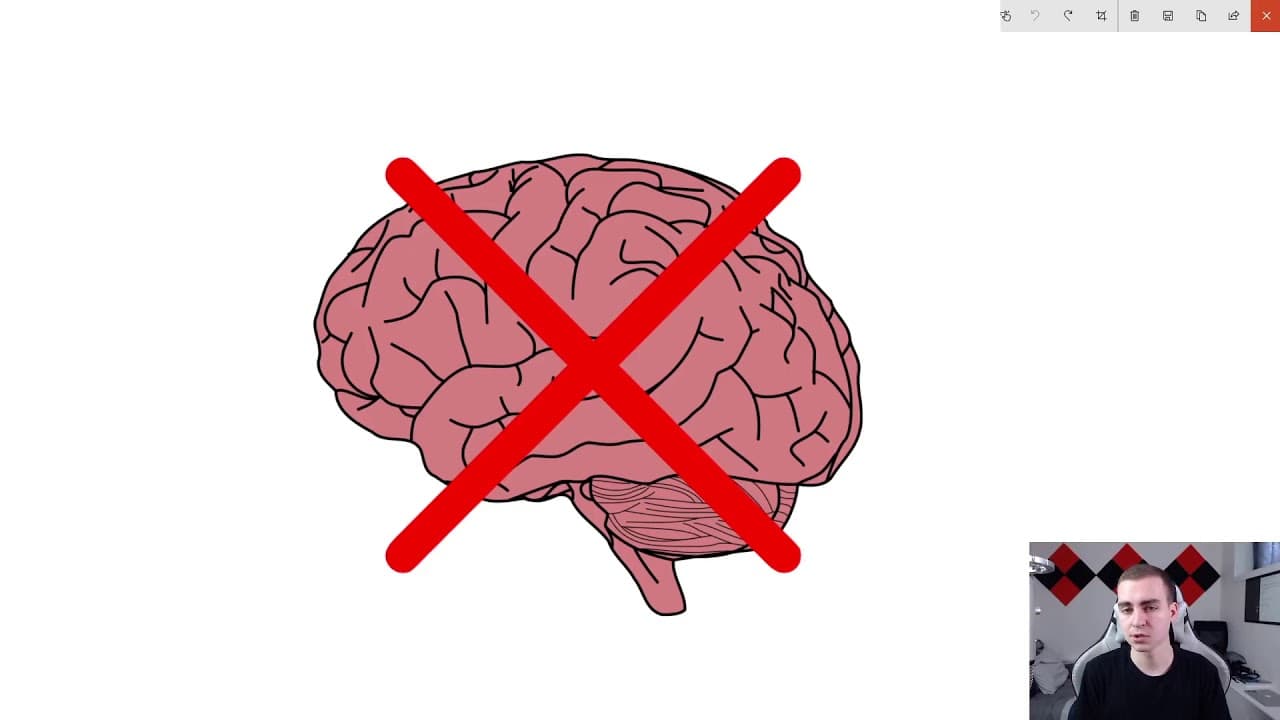
- 🧠 neural networks, also known as deep learning, are a form of machine learning that uses multiple layers to process and transform data. They are not modeled after the human brain but use layered representations of data for information extraction.
- 📊 Data is crucial in AI and machine learning, as it provides the input features and output labels for training models. Features are the input information used to predict labels, whereas labels are the output information that we are trying to predict.
- 📊 Training data is used to train the model, which consists of both features and labels. Testing data only includes the features and is used to make predictions and test the model's performance.
- 📊 Incorrect or faulty data can lead to mistakes and inaccurate predictions in AI and machine learning models. The quality and accuracy of data are crucial for the success of these models.
- 🦾 Machine learning models aim to make predictions based on patterns and rules learned from training data. The more diverse and comprehensive the training data, the better the model can make accurate predictions.
- 🦾 Different types of machine learning include supervised learning (using labeled data to train models), unsupervised learning (finding patterns in unlabeled data), and reinforcement learning (learning through feedback and rewards). Each type has its own applications and techniques.
Install to Summarize YouTube Videos and Get Transcripts
Explore YouTube Video Summarizer or Get YouTube Transcript Extractor
Questions & Answers
Q: Are neural networks modeled after the human brain?
No, although neural networks take inspiration from biological neurons, they are not precisely modeled after the brain due to the limited understanding of how the brain works.
Q: What are features and labels in machine learning?
Features are the input information used to make predictions, while labels represent the desired output or the prediction being sought.
Q: Why is data important in machine learning and AI?
Data is crucial as it is used to train models and define the rules or patterns for making predictions. Incorrect or incomplete data can result in inaccurate predictions.
Q: What is the difference between AI and machine learning?
AI involves automation of intellectual tasks, while machine learning focuses on generating rules from data to make predictions without explicit programming.
Q: Can artificial intelligence be simple, or does it have to be complex?
Artificial intelligence can range from simple predefined rule sets to complex algorithms, depending on the task it aims to simulate.
Q: How does machine learning differ from traditional programming?
In traditional programming, rules are explicitly defined by the programmer, while in machine learning, the model generates the rules based on input and output data.
Q: What is the role of data in training a machine learning model?
Data is used to train the model by providing examples of input and corresponding output, allowing the model to learn and make accurate predictions.
Q: How do neural networks differ from standard machine learning models?
Neural networks have multiple layers of data representation, allowing for more complex processing and feature extraction compared to standard machine learning models.
Summary & Key Takeaways
-
Artificial intelligence (AI) is the effort to automate intellectual tasks performed by humans, often using predefined sets of rules.
-
Machine learning is a part of AI that involves generating rules from input and output data, allowing models to make predictions without explicit programming.
-
Neural networks, also known as deep learning, are a type of machine learning that use layered representations of data to extract features and make predictions.
Read in Other Languages (beta)
Share This Summary 📚
Summarize YouTube Videos and Get Video Transcripts with 1-Click
Try YouTube Summary with ChatGPT & Claude or YouTube Transcript Generator
Explore More Summaries from freeCodeCamp Concepts 📚



Summarize YouTube Videos and Get Video Transcripts with 1-Click
Try YouTube Summary with ChatGPT & Claude or YouTube Transcript Generator