A Child-First Approach to Classroom Design
TL;DR
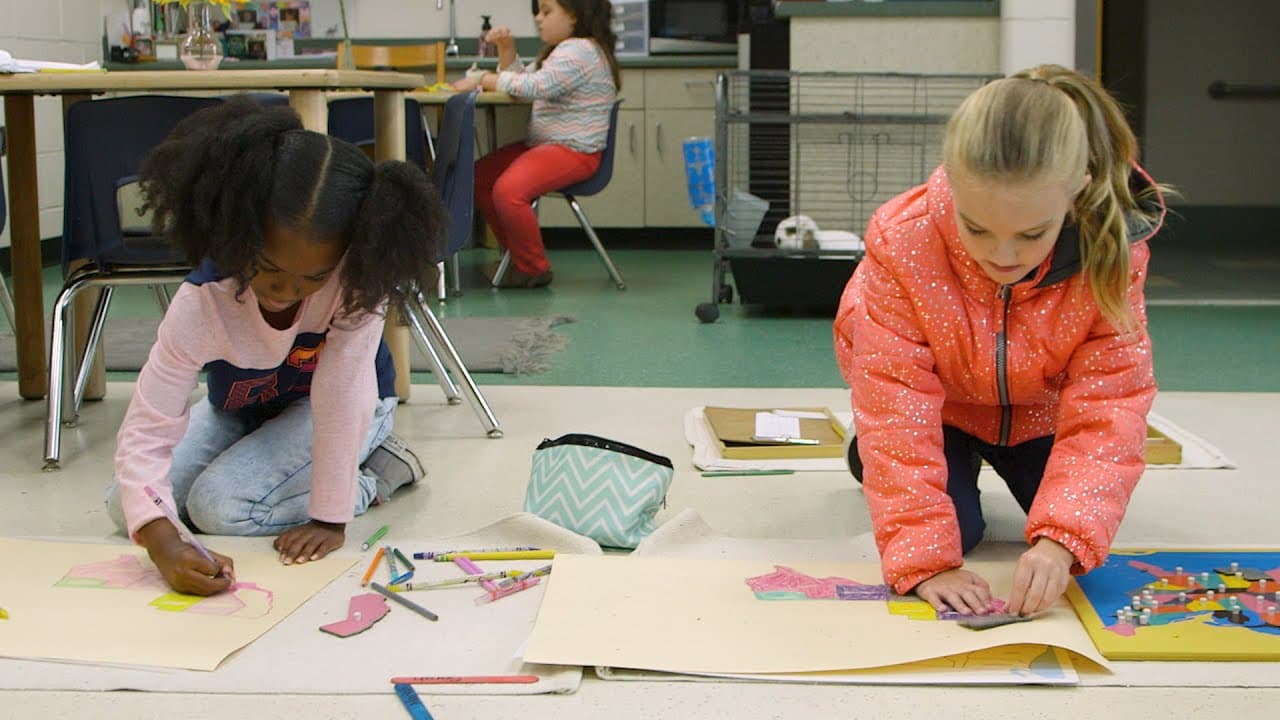
Montessori classrooms prioritize creating an environment that stimulates curiosity and allows for movement, with students engaging in individualized, uninterrupted work for extended periods.
Transcript
Dana: The use of space is a staple of Montessori philosophy. If you would walk in to a Montessori school in London or in Bangkok or any city around the world, it's going to look very similar. >>Bella: Welcome to our classroom. We have our materials set up nice and neat and I wanted to give you a tour. >>Dana: Part of our philosophy is that we des... Read More
Key Insights
- ♻️ Montessori classrooms prioritize creating a stimulating environment that promotes curiosity and independence.
- 🙂 Natural light and access to the outdoors are essential features of Montessori classrooms.
- 💦 Independent choice of work and collaborative opportunities are important aspects of the Montessori method.
- 👻 Extended periods of uninterrupted work allow for deep engagement and the development of focus and concentration.
- 🧠 Movement is encouraged in Montessori classrooms to support optimal brain activation and physical development.
- 🛟 Practical life activities play a significant role in teaching life skills and fostering a sense of responsibility.
- ❓ Montessori classrooms provide a structured progression of challenging lessons.
Install to Summarize YouTube Videos and Get Transcripts
Explore YouTube Video Summarizer or Get YouTube Transcript Extractor
Questions & Answers
Q: How does the design of Montessori classrooms facilitate curiosity and independence?
Montessori classrooms are intentionally designed to stimulate curiosity by providing organized and visually appealing materials. The large windows and access to the outdoors also expose children to natural stimuli. The children have the freedom to choose their work and set up their space, promoting independence.
Q: What is the significance of the three and a half hours of uninterrupted work in Montessori classrooms?
The extended work period allows students to fully engage in their chosen tasks and experience a state of flow. It also fosters development of focus and concentration. Research suggests that children in this age group have limited attention spans, and shorter work periods may disrupt their learning.
Q: How does movement play a role in Montessori classrooms?
Montessori recognizes the importance of movement for optimal brain activation and learning. Children are allowed to move freely within the classroom and choose different work areas. This freedom of movement supports their physical development and cognitive engagement.
Q: What is the purpose of practical life activities in Montessori classrooms?
Practical life activities, such as dishwashing, dusting, and taking care of animals and gardens, are integral to Montessori education. These activities help children develop life skills, independence, and a sense of responsibility for themselves and their environment.
Summary & Key Takeaways
-
Montessori classrooms are designed with the intention of drawing out a child's natural curiosity through the use of space and materials.
-
The classrooms feature large windows to let in natural light and provide access to the outdoors.
-
Students choose their work independently, utilizing rugs to define their workspace. They are encouraged to collaborate or work individually.
Read in Other Languages (beta)
Share This Summary 📚
Summarize YouTube Videos and Get Video Transcripts with 1-Click
Try YouTube Summary with ChatGPT & Claude or YouTube Transcript Generator
Explore More Summaries from Edutopia 📚




Summarize YouTube Videos and Get Video Transcripts with 1-Click
Try YouTube Summary with ChatGPT & Claude or YouTube Transcript Generator