WILL IT FIT... in the Museum?
TL;DR
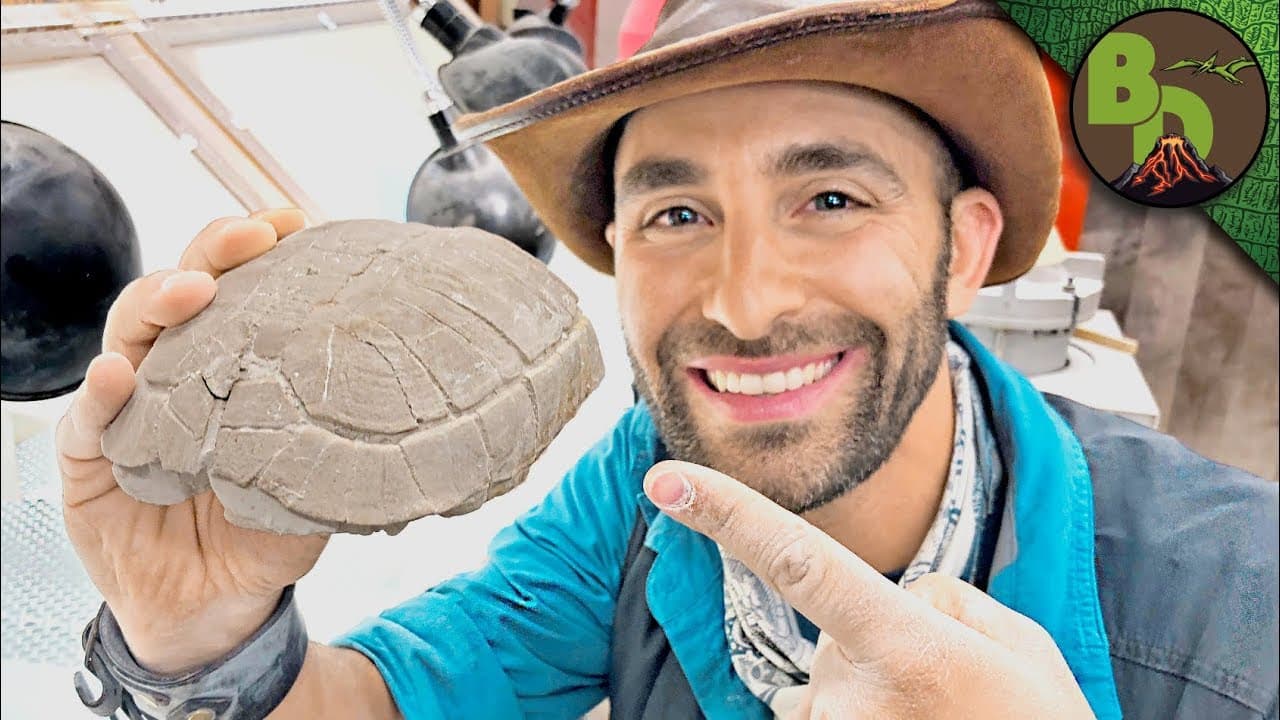
Paleontologist Pete Larson teaches Coyote Peterson how to clean a turtle fossil, showcasing the meticulous process of preparing fossils for museum presentation.
Transcript
- [Pete] What we're gonna do is we're gonna use this really cool machine over here. - [Coyote] Okay. - [Pete] Believe it or not this is going to go really fast because this is, again, this is the magic wand of paleontology. - [Coyote] Okay. (machine air hissing) - [Crew Member] Whoa. I see rocks flying. (egg breaking) (dramatic theme music) (advent... Read More
Key Insights
- 🤑 The Badlands is a rich source of fossils, with the crew finding mammal bones and a turtle shell that dates back over 25 million years.
- 🥡 Cleaning fossils requires a delicate touch, as fractures and missing pieces need to be taken into account during the preparation process.
- ✋ High-pressure cleaning with sodium bicarbonate is a powerful and efficient method to remove dirt and preserve fossils' intricate details.
- 👨🔬 Preservation and presentation of fossils are critical for educational purposes and scientific research.
- ⌛ The process of preparing fossils is time-consuming and requires expertise and patience.
- 🛟 Each fossil has a unique history that should be documented and preserved for future study.
- 💦 The meticulous work of paleontologists helps bring ancient creatures back to life in museums.
Install to Summarize YouTube Videos and Get Transcripts
Explore YouTube Video Summarizer or Get YouTube Transcript Extractor
Questions & Answers
Q: What is the main purpose of cleaning and preparing fossils?
Cleaning and preparing fossils is crucial to preserve and present them in museums. It removes dirt and debris, revealing the true details and structure of the fossil, making it suitable for educational displays and scientific research.
Q: What are some challenges faced during the cleaning process?
Fractures in the fossil can be a challenge, as they require extra care to prevent any further damage. Paleontologists need to identify missing pieces and determine if they can be reattached. Additionally, the delicate nature of fossils requires using the right pressure and tools to avoid causing harm.
Q: How does high-pressure cleaning work?
High-pressure cleaning involves using a machine that propels fine particles of sodium bicarbonate at the fossil. The pressure is carefully regulated to ensure that it does not damage the fossil. The sodium bicarbonate effectively removes dirt and debris, leaving the fossil clean and ready for display.
Q: Why is it important to document the history of each fossil specimen?
The label attached to the specimen provides vital information about its origin, including location and date of discovery. This documentation helps scientists understand the geographical and temporal distribution of fossils, contributing to their research and knowledge of prehistoric life.
Summary & Key Takeaways
-
Coyote and his crew join paleontologist Pete Larson in the Badlands to search for fossils, discovering a small turtle shell as their prized find.
-
They return to The Black Hills Institute to learn the process of cleaning and preparing fossils for exhibition.
-
Using a high-pressure machine with sodium bicarbonate, they carefully remove the dirt and debris, revealing a perfectly preserved turtle shell.
Read in Other Languages (beta)
Share This Summary 📚
Summarize YouTube Videos and Get Video Transcripts with 1-Click
Try YouTube Summary with ChatGPT & Claude or YouTube Transcript Generator
Explore More Summaries from Brave Wilderness 📚


Summarize YouTube Videos and Get Video Transcripts with 1-Click
Try YouTube Summary with ChatGPT & Claude or YouTube Transcript Generator