How to Calculate Drift Velocity and Current Density in Conductors
TL;DR
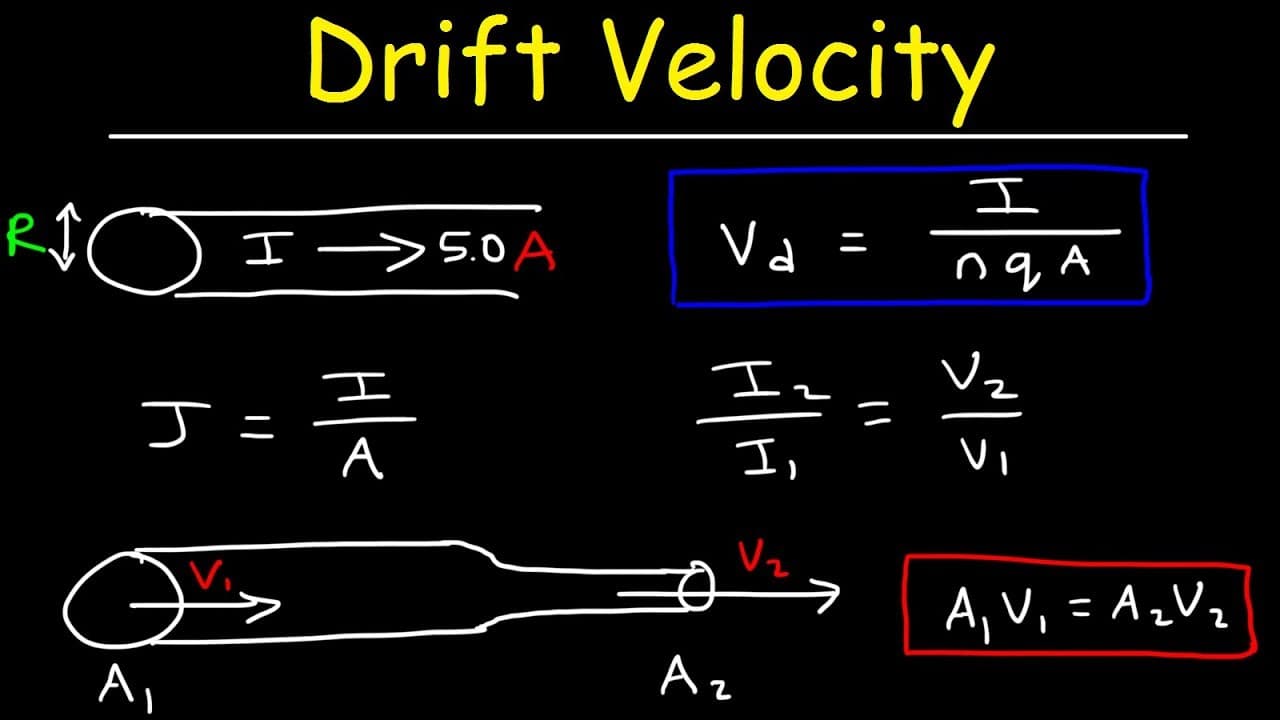
To calculate drift velocity in a conductor, use the formula: drift velocity = current / (density of free electrons × charge of an electron × area). Current density is calculated as current divided by area. Drift speed is typically very low, and both drift speed and current density are directly related — changing the cross-sectional area impacts both variables inversely.
Transcript
in this video we're going to focus on solving some basic problems associated with the drift speed of an electron in a metal and also the current density so in this example we have a silver cylindrical conductor with a radius of one centimeter and it has a current of five amps flowing through it so let's draw a picture let's say this is the cylindri... Read More
Key Insights
- 😘 The drift speed of electrons in a conductor is very low compared to their random motion.
- 🐎 The drift speed and current density in a conductor are directly related.
- 😵 Changing the cross-sectional area of a conductor affects the drift speed and current density in opposite directions.
- 🐎 The time it takes for an electron to travel a distance depends on the drift speed and can be significant even for short distances.
Install to Summarize YouTube Videos and Get Transcripts
Explore YouTube Video Summarizer or Get YouTube Transcript Extractor
Questions & Answers
Q: How can the drift velocity in a conductor be calculated?
The drift velocity can be calculated using the formula: drift velocity = current / (density of free electrons * charge of a single electron * cross-sectional area). Assign appropriate values to the variables and calculate the drift velocity.
Q: What is the relationship between the drift speed and current density in a conductor?
The drift speed and current density in a conductor are directly related. As the drift speed increases, the current density also increases.
Q: How does changing the cross-sectional area of a conductor affect the drift speed?
Decreasing the cross-sectional area of a conductor increases the drift speed, given that the current remains constant. This is due to the conservation of charge.
Q: How long does it take for an electron to travel a distance of one meter in a conductor?
The time it takes for an electron to travel one meter can be calculated using the formula: time = distance / drift speed. Assign the appropriate values and calculate the time.
Summary & Key Takeaways
-
The video focuses on solving problems related to drift speed and current density in a silver cylindrical conductor with a given radius and current.
-
The drift velocity in the conductor is calculated using the formula: drift velocity = current / (density of free electrons * charge of a single electron * cross-sectional area).
-
The current density in the conductor is calculated using the formula: current density = current / area.
-
The time it takes for an electron to travel a distance of one meter in the conductor is also calculated.
Read in Other Languages (beta)
Share This Summary 📚
Summarize YouTube Videos and Get Video Transcripts with 1-Click
Try YouTube Summary with ChatGPT & Claude or YouTube Transcript Generator
Explore More Summaries from The Organic Chemistry Tutor 📚


Summarize YouTube Videos and Get Video Transcripts with 1-Click
Try YouTube Summary with ChatGPT & Claude or YouTube Transcript Generator