How Do Birds Stop From Falling Off Branches While They Sleep?
TL;DR
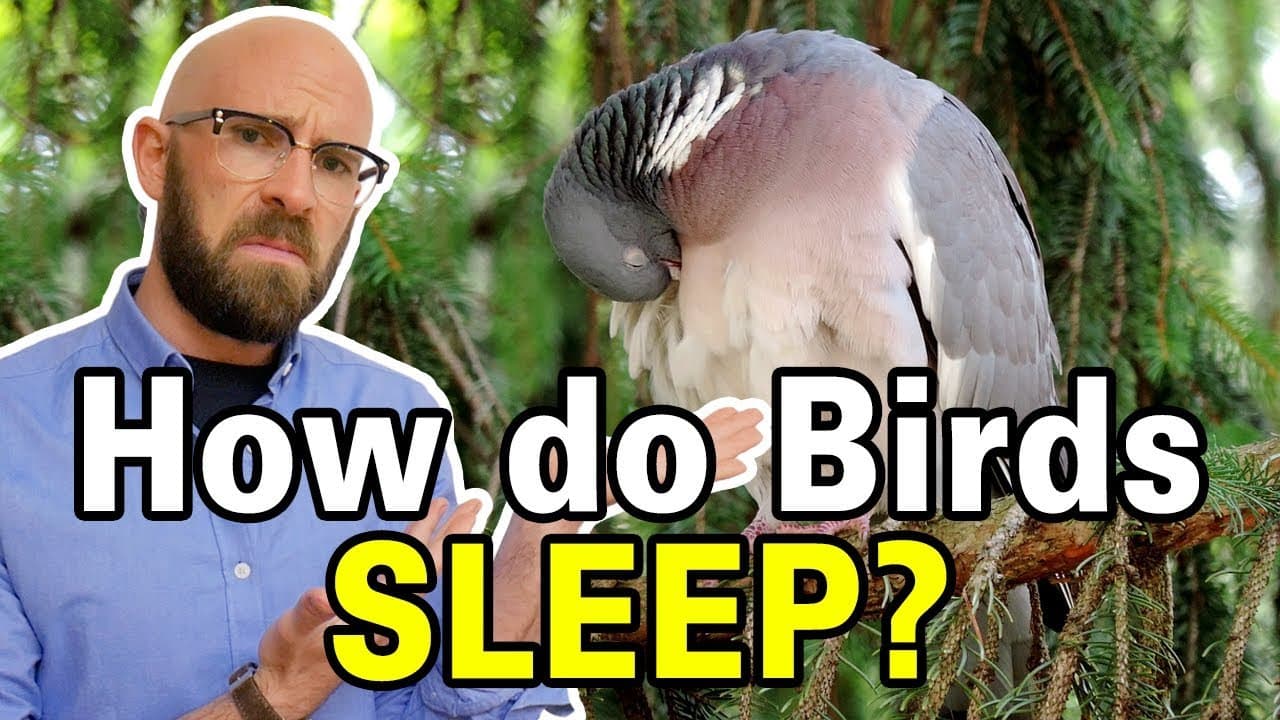
Birds use tendons in their feet to automatically clench their toes closed while sleeping, while some birds and marine mammals sleep with one eye open to remain partially conscious and alert.
Transcript
Everyone needs sleep, but for many birds, by necessity this has to happen while perched on a branch or other place that must be gripped. Anyone who has ever fallen asleep reading and found her book on the floor knows how difficult it can be to hold onto something while snoozing. So how do perching birds do it? Powered by tendons, the feet of graspi... Read More
Key Insights
- 😒 Perching birds use tendon-powered grip adaptations to maintain a secure hold while sleeping or grasping prey.
- ❓ Raptors utilize the automatic response of their tendons to clench their toes onto prey, ensuring a firm grip.
- 🫢 Birds and marine mammals like mallard ducks, dolphins, and whales sleep with one eye open to stay alert and avoid danger.
- 🫢 The ability to sleep with one eye open also allows these animals to continue getting air while asleep.
- 😚 Mallard ducks often adopt a row formation with ducks on the ends closing the eye next to their neighbors to keep one eye facing potential danger.
- 😪 Dolphins and whales alternate between sleeping brain hemispheres and stay partially conscious during their sleep periods.
Install to Summarize YouTube Videos and Get Transcripts
Explore YouTube Video Summarizer or Get YouTube Transcript Extractor
Questions & Answers
Q: How do perching birds maintain a grip while sleeping?
Perching birds have tendons in their feet that automatically clench their toes closed when their ankles bend, providing a secure grip even while sleeping. This adaptation is powered by tendons connected to deep flexor muscles in the leg.
Q: What is the purpose of the tendons and toes locking onto prey for raptors?
When raptors approach their prey, their legs are outstretched, but upon landing and bending their ankles, the tendons and toes automatically lock onto the prey. This results in a firm grip on the prey while the raptor feeds.
Q: How do birds like mallard ducks sleep with one eye open?
Mallard ducks, along with some other birds and marine mammals, can enter a state of unihemispheric slow-wave sleep where one half of their brain is asleep while the other half remains awake. This allows them to keep one eye open and remain partially conscious.
Q: How do dolphins handle sleeping with one eye open?
Dolphins put one half of their brain to sleep while the other half remains conscious and functioning. They alternate which side is sleeping periodically during their approximately eight hours of sleep, allowing them to control their breathing and periodically swim to the surface for air.
Summary & Key Takeaways
-
Perching birds use tendons in their feet to automatically clench their toes closed while sleeping, providing a dependable grip.
-
Raptors utilize this automatic response not only for perching but also for grasping prey.
-
Some birds and marine mammals, like mallard ducks and dolphins, sleep with one eye open to remain partially conscious and alert.
Read in Other Languages (beta)
Share This Summary 📚
Summarize YouTube Videos and Get Video Transcripts with 1-Click
Try YouTube Summary with ChatGPT & Claude or YouTube Transcript Generator
Explore More Summaries from Today I Found Out 📚






Summarize YouTube Videos and Get Video Transcripts with 1-Click
Try YouTube Summary with ChatGPT & Claude or YouTube Transcript Generator