How Trump's Charlottesville response emboldens white supremacy
TL;DR
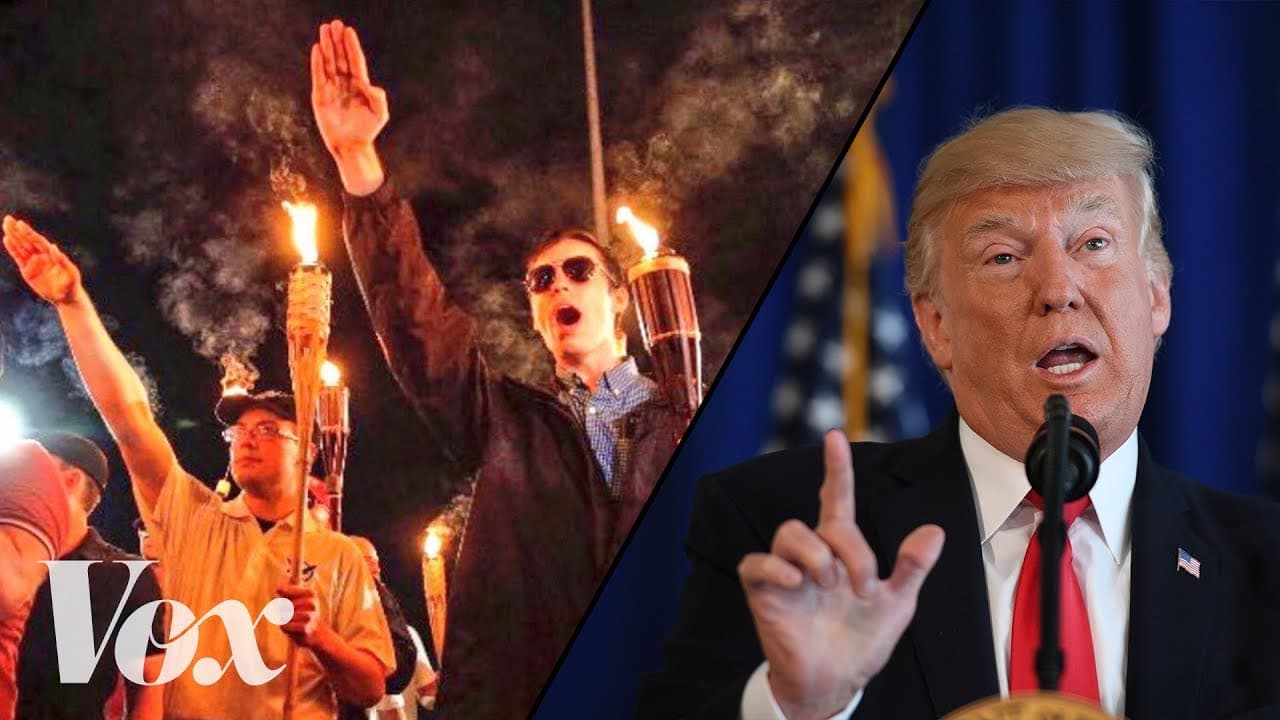
Trump's response to Charlottesville emboldens white supremacists.
Transcript
The weekend of August 12, a white nationalist rally in Charlottesville, Virginia descended into violence. On Friday night, white nationalists attacked counter-protesters. And on Saturday, a woman named Heather Heyer was killed when a man purposely drove his car into a group of counter-protesters. In response, President Trump blamed both sides. "We ... Read More
Key Insights
- President Trump's response to the Charlottesville violence was criticized for not explicitly condemning white supremacists, instead blaming both sides equally.
- The lack of direct condemnation from Trump was perceived by white nationalists as tacit approval, as noted by their positive reactions on platforms like The Daily Stormer.
- Trump's rhetoric contrasts sharply when addressing Muslim terrorists, where he is specific and condemning, unlike his vague stance on white nationalist violence.
- During his campaign, Trump did not condemn violence at his rallies, even offering to pay legal fees for supporters who attacked protesters.
- Trump's refusal to condemn the 'alt-right' and white nationalist rhetoric has allowed these groups to feel validated and emboldened.
- The President's inconsistent approach to different forms of violence suggests a bias that indirectly supports white nationalist ideologies.
- By not taking a definitive stance against white supremacists, Trump inadvertently provides them with a sense of legitimacy and support.
- The broader impact of Trump's response is a heightened fear among those targeted by white nationalist hate, feeling unsupported by their leader.
Install to Summarize YouTube Videos and Get Transcripts
Explore YouTube Video Summarizer or Get YouTube Transcript Extractor
Questions & Answers
Q: Why was Trump's response to Charlottesville criticized?
Trump's response was criticized because he did not explicitly condemn the white supremacists involved in the violence. Instead, he blamed both sides equally, which many saw as a failure to acknowledge the true nature of the events and as tacit approval of white nationalist actions.
Q: How did white nationalists react to Trump's response?
White nationalists reacted positively to Trump's response, seeing it as tacit approval of their actions. This perception was reinforced by comments on platforms like The Daily Stormer, where they praised Trump for not explicitly condemning them, interpreting his neutrality as support.
Q: How does Trump's rhetoric differ when addressing Muslim terrorists compared to white nationalists?
Trump's rhetoric is notably more specific and condemning when addressing Muslim terrorists. He uses direct language to denounce their actions, unlike his vague and neutral stance on white nationalist violence, which creates a perception of bias and indirectly supports extremist ideologies.
Q: What was Trump's stance on violence at his campaign rallies?
During his campaign, Trump did not condemn violence at his rallies. He even offered to pay legal fees for supporters who attacked protesters, suggesting a reluctance to denounce violence associated with his supporters and further validating extremist groups and their actions.
Q: What impact does Trump's response have on white nationalist groups?
Trump's response provides white nationalist groups with a sense of legitimacy and support. By not explicitly condemning their actions, he emboldens these groups, allowing them to feel validated and more confident in their extremist ideologies and activities.
Q: How does Trump's response affect those targeted by white nationalist hate?
Those targeted by white nationalist hate feel heightened fear and a lack of support from their leader. Trump's failure to take a definitive stance against white supremacists leaves these individuals feeling vulnerable and unsupported, exacerbating their concerns about safety and acceptance.
Q: What does Trump's response suggest about his bias in addressing different forms of violence?
Trump's inconsistent approach to addressing different forms of violence suggests a bias that indirectly supports white nationalist ideologies. His specific condemnation of Muslim terrorists contrasts with his vague response to white nationalist violence, indicating a potential preference or reluctance to criticize his supporters.
Q: Why is Trump's neutrality seen as taking a side?
Trump's neutrality is seen as taking a side because by not explicitly condemning white supremacists, he indirectly supports their actions. His failure to denounce their violence suggests tacit approval, emboldening these groups and undermining the safety and security of those targeted by their hate.
Summary & Key Takeaways
-
President Trump's response to the Charlottesville violence was seen as inadequate due to his failure to explicitly condemn white supremacists, instead attributing blame to both sides. This response was perceived as tacit approval by white nationalists, who praised him for not condemning their actions directly.
-
Trump's rhetoric is notably different when addressing Muslim terrorists, where he uses specific and condemning language. This inconsistency highlights a bias in his approach to different forms of violence, indirectly supporting white nationalist ideologies and emboldening such groups.
-
During his campaign, Trump did not condemn violence at his rallies, even offering to pay legal fees for supporters who attacked protesters. This pattern of behavior suggests a reluctance to denounce violence associated with his supporters, further validating extremist groups.
Read in Other Languages (beta)
Share This Summary 📚
Summarize YouTube Videos and Get Video Transcripts with 1-Click
Try YouTube Summary with ChatGPT & Claude or YouTube Transcript Generator
Explore More Summaries from Vox 📚

Summarize YouTube Videos and Get Video Transcripts with 1-Click
Try YouTube Summary with ChatGPT & Claude or YouTube Transcript Generator