Hunds Rule of Maximum Multiplicity - Structure of Atom - Chemistry Class 11
TL;DR
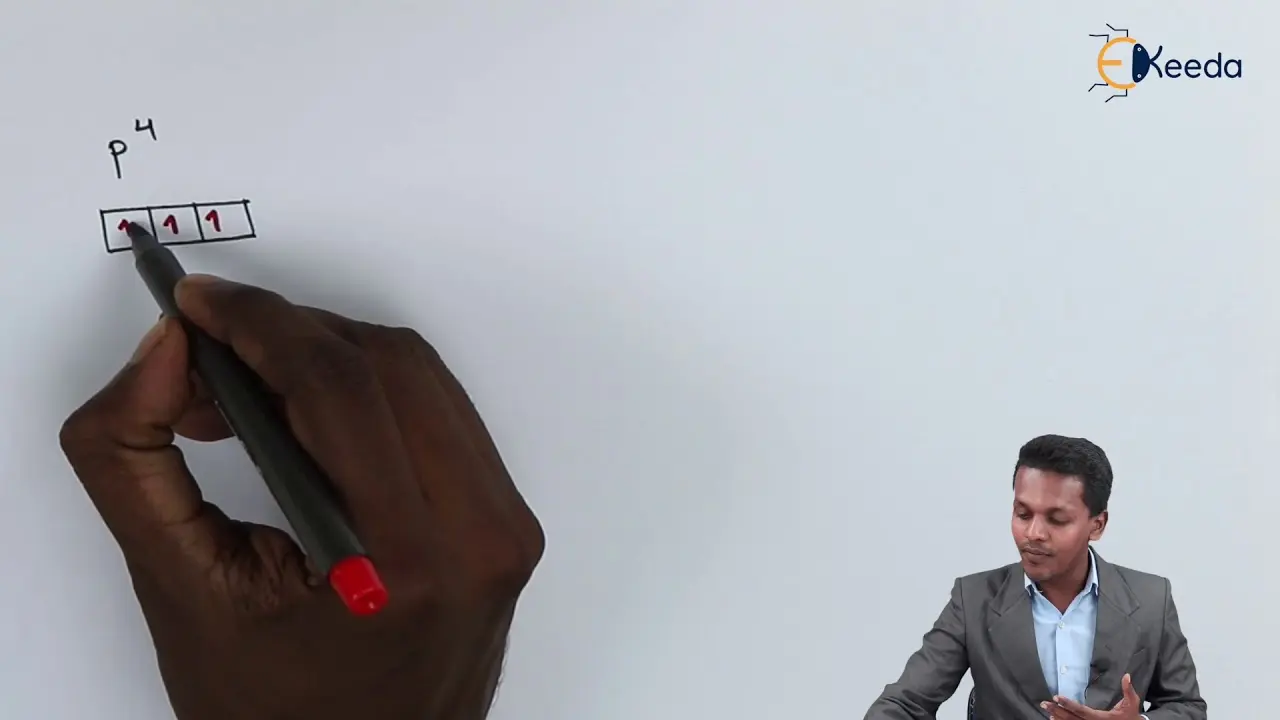
The hands rule states that electrons first enter all available orbitals singly with the same spin before pairing with electrons of opposite spin.
Transcript
click the bell icon to get latest videos from akira reference in the previous topics we have discussed about the boss principle as well as we have also discussed about the Ali's exclusion principle and now in this topic we are going to talk about the hands rule of multiplicity so what is this rule and what does it states let me talk about that so b... Read More
Key Insights
- 🤗 The hands rule of multiplicity states that electrons initially fill orbitals singly before pairing with electrons of opposite spin.
- 🤗 Applying the hands rule to filling orbitals leads to greater stability in the electron configuration.
- 📏 This rule can be followed to determine electron configurations, predict oxidation numbers, and understand valency.
- 🤗 The hands rule is applicable to various types of orbitals, including p orbitals, d orbitals, and s orbitals.
- 🤗 Half-filled subshells are a result of the hands rule and contribute to the stability of the electron configuration.
- 🤗 The hands rule ensures that electrons are distributed symmetrically in orbitals, as seen in the example of the D Phi orbital.
- 🤗 By understanding and applying the hands rule, it becomes easier to predict the behavior and properties of atoms and molecules.
Install to Summarize YouTube Videos and Get Transcripts
Explore YouTube Video Summarizer or Get YouTube Transcript Extractor
Questions & Answers
Q: What is the hands rule of multiplicity?
The hands rule states that when multiple orbitals of equivalent energy are available, electrons first enter each orbital singly with the same spin before pairing with electrons of opposite spin.
Q: How does the hands rule apply to filling p orbitals?
When filling p orbitals, each orbital should be singly filled with electrons before pairing occurs. This leads to half-filled subshells and greater stability.
Q: How does the hands rule apply to filling d orbitals?
The hands rule can be applied to filling d orbitals by filling each orbital singly before pairing. This results in symmetric distribution of electrons and greater stability.
Q: What happens when filling s orbitals according to the hands rule?
When filling s orbitals, the first electron has a positive spin and the second electron has a negative spin. This follows the hands rule and leads to greater stability.
Summary & Key Takeaways
-
The hands rule states that when multiple orbitals of equivalent energy are available, electrons first enter each orbital singly with the same spin before pairing with electrons of opposite spin.
-
This rule can be applied to examples such as filling the p orbitals, d orbitals, and s orbitals.
-
By following the hands rule, the electron configuration becomes more stable.
Read in Other Languages (beta)
Share This Summary 📚
Summarize YouTube Videos and Get Video Transcripts with 1-Click
Try YouTube Summary with ChatGPT & Claude or YouTube Transcript Generator
Explore More Summaries from Ekeeda 📚



Summarize YouTube Videos and Get Video Transcripts with 1-Click
Try YouTube Summary with ChatGPT & Claude or YouTube Transcript Generator