What Is the Facade Pattern in Software Design?
TL;DR
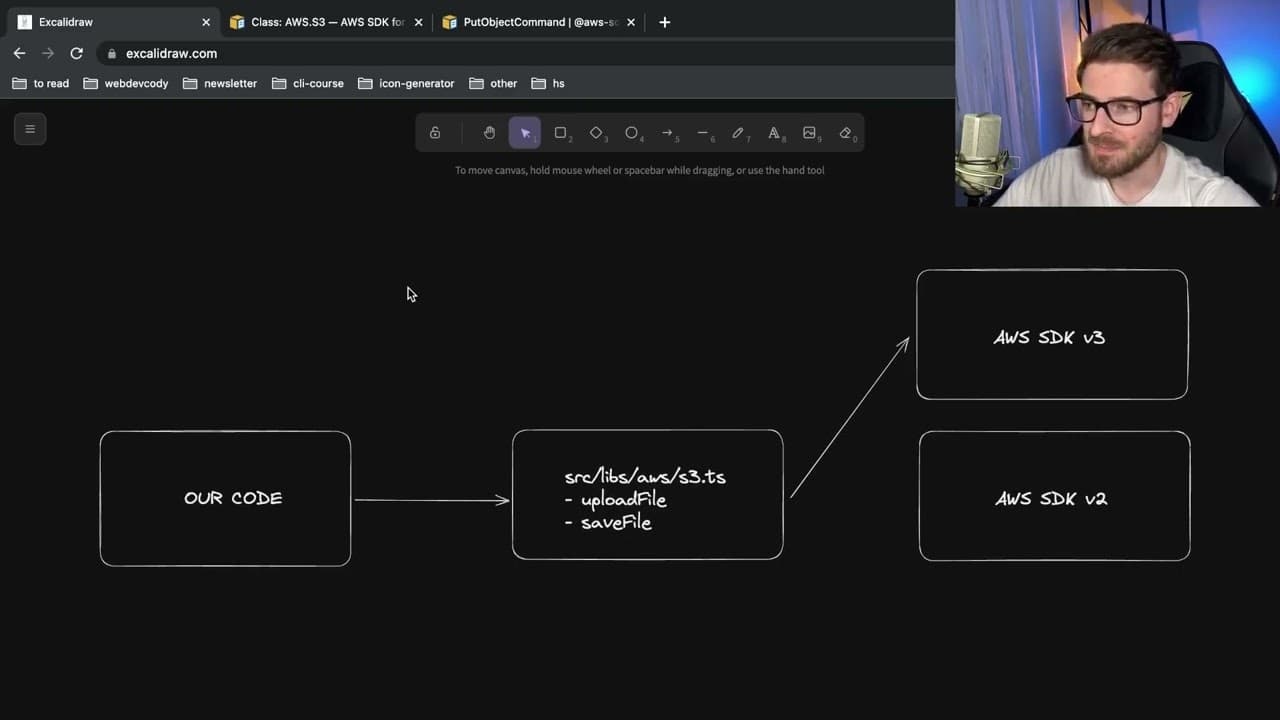
The facade pattern simplifies code management by creating a unified interface for interacting with third-party libraries, like the AWS SDK. This allows developers to make centralized updates with minimal refactoring when library interfaces change, enhancing maintainability and reducing the risk of bugs. It is especially useful for managing dependencies that may evolve or present security vulnerabilities.
Transcript
all right how's it going everyone I want to have a quick talk about the facade pattern and this is a pattern that you should actually probably be doing a lot in your code base and I'll give you a good example as to why this is something that we're actually running into at work right now so on my project we do a lot of Amazon stuff and we have a lot... Read More
Key Insights
- 🥳 The facade pattern acts as an interface for third-party libraries, simplifying code complexity and maintenance.
- 📚 It minimizes the risk and effort involved in upgrading libraries by centralizing changes within a single file or module.
- 👨💻 The pattern reduces the likelihood of introducing bugs when making significant updates, as it confines changes to a limited area of the code.
- 👨💻 Maintaining loosely-coupled code enhances the overall agility and flexibility of software development projects.
- 📚 Developers should assess the usage frequency of external libraries when deciding whether to implement the facade pattern.
- 🛟 The facade pattern serves as a protective layer for codebases against rapidly evolving library interfaces.
- 🦻 By aiding in clean architecture, this pattern contributes to creating more sustainable code that is easier to refactor and update.
Install to Summarize YouTube Videos and Get Transcripts
Explore YouTube Video Summarizer or Get YouTube Transcript Extractor
Questions & Answers
Q: What is the facade pattern, and why is it important?
The facade pattern is a design approach that creates a simplified interface to a complex system or library. It’s important because it decouples your code from third-party dependencies, making maintenance easier. When changes or updates occur to external libraries, it requires fewer modifications throughout the codebase, improving long-term maintainability and reducing developer workload.
Q: How does the facade pattern help with third-party library updates?
By implementing the facade pattern, the codebase depends on a simplified internal interface rather than directly on the external library. This allows developers to make changes in a single location, minimizing the refactoring needed across potentially hundreds of files when upgrades or structural changes to the library occur.
Q: Can you give an example of when to use the facade pattern?
An example of using the facade pattern is during the migration from AWS SDK V2 to V3. If the codebase has multiple instances interacting with the SDK, using a facade allows developers to create an upload function that abstracts away the specific changes required in the underlying SDK, leading to quicker and less error-prone migrations.
Q: What are the potential risks of not using the facade pattern?
Not using the facade pattern can lead to tightly coupled code that requires heavy refactoring during updates, which can introduce bugs and increase the potential for breaking changes. This scenario is magnified in large projects with numerous dependencies, making it more difficult for developers to manage and update their codebase efficiently.
Q: How might the facade pattern have helped with the log4j security issue?
If a project had utilized the facade pattern for the log4j library, developers would only need to update their special logging wrapper to implement changes or address vulnerabilities, instead of searching and modifying every reference to log4j across the entire codebase.
Q: Is it always necessary to use the facade pattern for every external library?
No, it is not always necessary. The decision to use the facade pattern typically depends on how widely a library is used across the codebase and its potential for changes. Libraries that are stable and infrequently updated may not necessitate the overhead of a facade, while those that are critical and subject to change would benefit greatly from this approach.
Summary & Key Takeaways
-
The facade pattern helps manage dependencies in codebases, particularly when integrating with libraries like the AWS SDK, by creating an interface that can be adapted with minimal changes in the future.
-
Migrating from AWS SDK V2 to V3 requires considerable refactoring in codebases; using the facade pattern can minimize this effort by allowing changes to occur in a centralized location.
-
Incorporating the facade pattern improves code maintainability and enhances agility to respond to updates or security vulnerabilities in third-party libraries like log4j.
Read in Other Languages (beta)
Share This Summary 📚
Summarize YouTube Videos and Get Video Transcripts with 1-Click
Try YouTube Summary with ChatGPT & Claude or YouTube Transcript Generator
Explore More Summaries from Web Dev Cody 📚




Summarize YouTube Videos and Get Video Transcripts with 1-Click
Try YouTube Summary with ChatGPT & Claude or YouTube Transcript Generator