Economic Development, Progress and Happiness
TL;DR
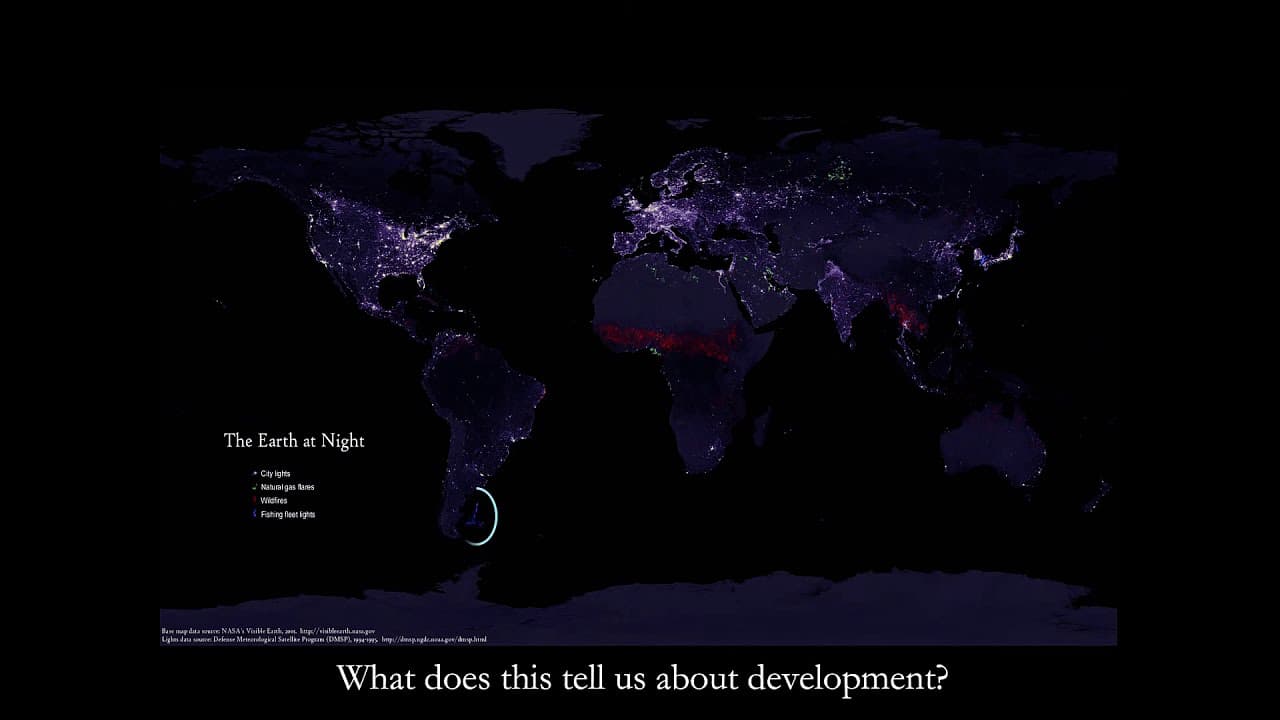
This video explores the concept of development and its relationship with progress, inequality, justice, and growth.
Transcript
Hey everyone. Noah Zerbe here. This is one of a series of short videos looking at questions of development in global politics. In this video, we're going to problematize the idea of development itself. That is, we're going to ask what do we mean when we say development? And how is that idea related to ideas of progress? Or of equality? Or... Read More
Key Insights
- 💢 Development emerged as a concept in the post-WWII era, influenced by Cold War rivalries and efforts to prevent the spread of communism.
- ⁉️ Early models of development focused on industrialization but failed to address broader questions of progress, equality, and sustainability.
- 🧑💼 The construction of the Aswan High Dam highlighted the trade-offs and uneven impacts of development projects.
- 😷 The World Bank's classifications oversimplify and mask important differences within and between countries.
- ⚧️ The Sustainable Development Goals (SDGs) represent a broader, more inclusive approach to development, addressing issues such as poverty, gender equality, environmental sustainability, and partnerships.
- 😥 Happiness and life satisfaction can be alternative measures of development, showing that economic growth beyond a certain point may not correlate strongly with happiness.
Install to Summarize YouTube Videos and Get Transcripts
Explore YouTube Video Summarizer or Get YouTube Transcript Extractor
Questions & Answers
Q: How did the Cold War influence discussions and approaches to development in the post-WWII era?
The US and USSR used the idea of development to gain allies from the global south, leading to the formation of organizations like UNCTAD and UNIDO. Development was seen as a way to prevent the spread of communism and promote economic growth.
Q: What were some of the challenges and criticisms faced by early models of development?
Early models of development focused solely on economic indicators, neglecting social, environmental, and gender-related aspects. Questions of progress, equality, sustainability, and the inclusion of marginalized sectors were raised.
Q: How did the construction of the Aswan High Dam in Egypt illustrate the complexities and trade-offs of development?
While the dam brought benefits in terms of increased sugar production and electrical supply, it also led to forced relocations, the submergence of archaeological sites, and negative impacts on small farmers. The costs and benefits were unevenly distributed.
Q: How do the World Bank's classifications of high-income, middle-income, and low-income countries obscure important distinctions?
The classifications do not capture the significant variations within each category, nor do they adequately reflect living standards. Transition countries and high-income developing countries with economies based on a single commodity, like oil, are not accurately represented.
Summary & Key Takeaways
-
Most developing countries gained independence after World War II, influenced by Cold War tensions and the advocacy of the US and USSR.
-
Early models of development focused on industrialization, but by the 1970s, it became clear that industrialization did not equate to development.
-
Development was originally conceived in economic terms, neglecting broader questions of progress, equality, sustainability, and inclusion.
Read in Other Languages (beta)
Share This Summary 📚
Summarize YouTube Videos and Get Video Transcripts with 1-Click
Try YouTube Summary with ChatGPT & Claude or YouTube Transcript Generator
Explore More Summaries from Noah Zerbe 📚


Summarize YouTube Videos and Get Video Transcripts with 1-Click
Try YouTube Summary with ChatGPT & Claude or YouTube Transcript Generator