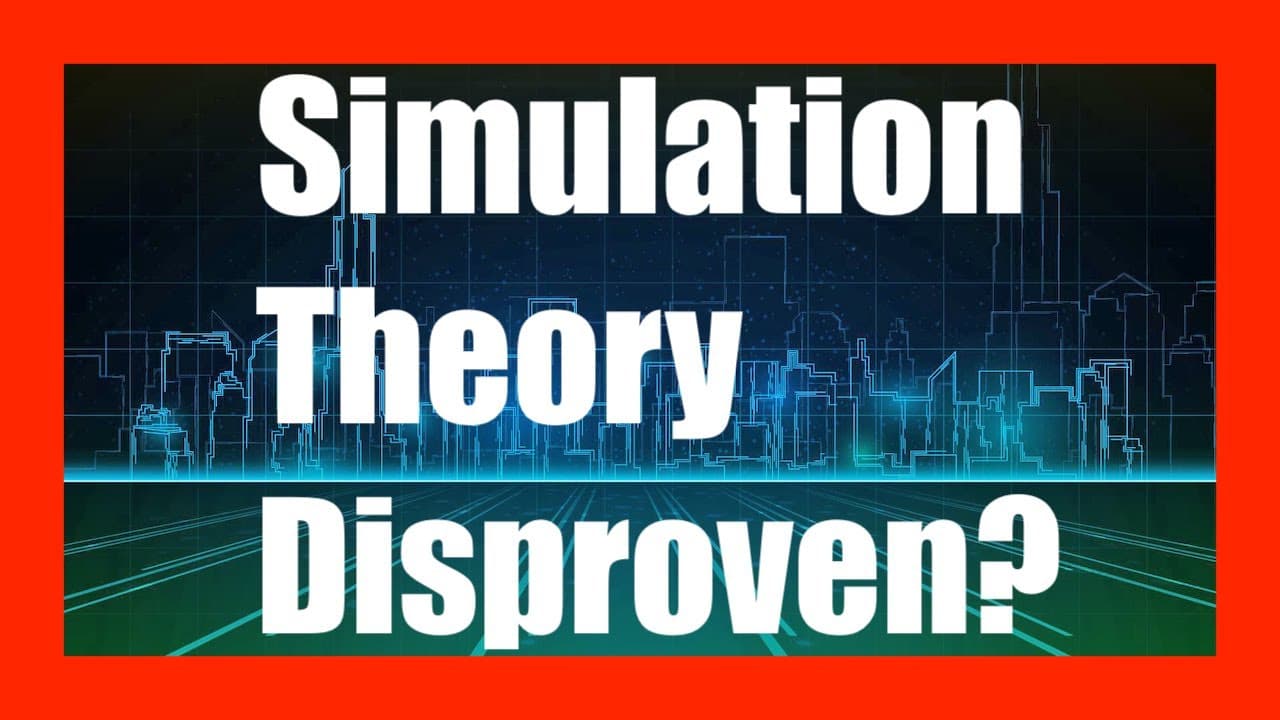
Did Neil deGrasse Tyson Disprove the Simulation Argument? | [OFFICE HOURS] #005 Highlight
TL;DR
Neil deGrasse Tyson discusses the simulation argument, suggesting that if we accept certain premises, the likelihood of us being a simulation is high. However, he also presents an argument against this theory based on the time period we live in.
Transcript
okay so I'm now Neil deGrasse Tyson hello astrophysics brought down to or whatever he says anyway your personal astrophysicist Neil here he did a recent episode about of star talk I'm covering him though that um start talk and he was talking with Chuck nice about the simulation argument so I talk about this in almost every live show because people ... Read More
Key Insights
- 🥺 Accepting the simulation argument's premises leads to a high likelihood of us being a simulation.
- 🖤 The lack of simulation technology in our current time period is used as a counterargument to the simulation theory.
Install to Summarize YouTube Videos and Get Transcripts
Explore YouTube Video Summarizer or Get YouTube Transcript Extractor
Questions & Answers
Q: What is the simulation argument?
The simulation argument proposes that if realistic simulations are possible in the future, the chances of us being a simulation become substantial.
Q: What is the first premise of the simulation argument?
The first premise is that future technology will allow for computers or AI to create simulations indistinguishable from reality.
Q: Why does Neil present a counterargument to the simulation theory?
He argues that the lack of simulation technology in our current time period decreases the probability of us being a simulation.
Q: What is the scale problem in the simulation argument?
The scale problem refers to the vast number of potential realities that could be simulated, making it highly likely that we are in a simulation, even if our specific time period is not interesting to simulate.
Summary & Key Takeaways
-
Neil explains the simulation argument, stating that if future technology allows for realistic simulations, there's a high chance we are currently living in a simulation.
-
He introduces a counterargument to the simulation theory, suggesting that the lack of simulation technology in our current time period decreases the likelihood of us being simulated.
-
Neil also mentions the scale problem, highlighting that with trillions of potential realities, even if simulating our current time is not interesting, there could still be countless other simulations.
Read in Other Languages (beta)
Share This Summary 📚
Summarize YouTube Videos and Get Video Transcripts with 1-Click
Try YouTube Summary with ChatGPT & Claude or YouTube Transcript Generator
Explore More Summaries from Kyle Hill 📚



![🔴 Viral "Hanger Reflex" Explained! | [OFFICE HOURS] Podcast 090 thumbnail](/_next/image?url=https%3A%2F%2Fi.ytimg.com%2Fvi%2F-GQPNu0erKc%2Fhqdefault.jpg&w=750&q=75)

Summarize YouTube Videos and Get Video Transcripts with 1-Click
Try YouTube Summary with ChatGPT & Claude or YouTube Transcript Generator