The Russian Revolution (1917)
TL;DR
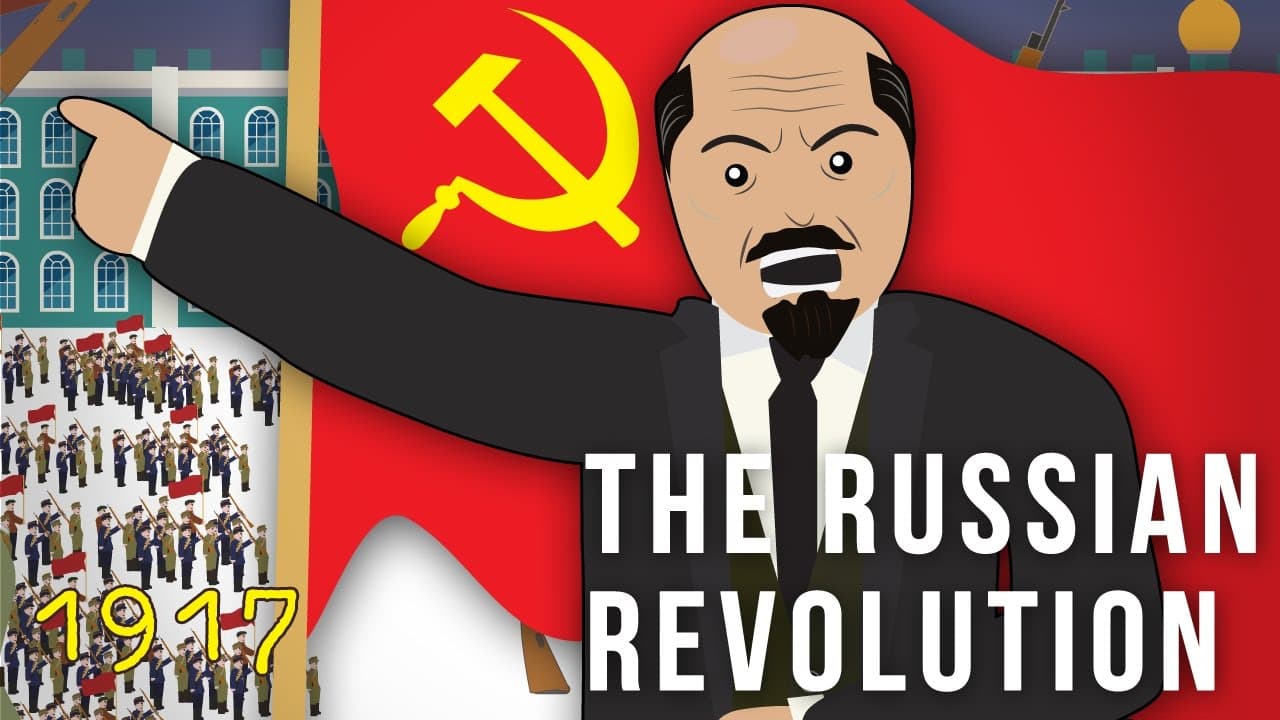
The Russian Revolution of 1917 saw the overthrow of Tsar Nicholas II and the rise of the Bolsheviks, led by Vladimir Lenin, leading to the establishment of a communist government in Russia.
Transcript
The Russian Revolution The year is 1914 World War 1 had begun and Russia was at war with Germany. The working class and the peasants make up the Russian Army. However, they are not well equipped or trained for the battles to come. The year is now 1917, millions of Russians had been either killed or wounded. The Russian people were angry at Tsar Nic... Read More
Key Insights
- 🖐️ World War I and its impact on the Russian Army played a significant role in triggering the revolution.
- 🥺 The February Revolution led to the downfall of Tsar Nicholas II and the end of the Tsarist autocracy.
- 😀 The Provisional Government and the Petrograd Soviet initially shared power but faced challenges and opposition.
- 😮 The Bolshevik Revolution, led by Lenin, marked the rise of the Communist Party and a new era in Russian governance.
Install to Summarize YouTube Videos and Get Transcripts
Explore YouTube Video Summarizer or Get YouTube Transcript Extractor
Questions & Answers
Q: What were the main reasons for the Russian people's anger towards Tsar Nicholas II?
The Russian people were angry at Tsar Nicholas II for involving Russia in World War I, the influence of Rasputin over the royal family, food shortages, political opposition, and his personal command of the army.
Q: Who led the Bolshevik Revolution and what were their main demands?
The Bolshevik Revolution was led by Vladimir Lenin. Their demands were summed up in the slogan "Peace, bread, and land," which referred to ending the war, solving food shortages, and granting land to the peasants, respectively.
Q: How did the Bolsheviks seize power during the October Revolution?
On October 25th, 1917, the Bolsheviks stormed the Winter Palace and arrested the provisional government, establishing themselves as the new leaders of Russia.
Q: What were the consequences of the Russian Revolution?
The Russian Revolution led to the establishment of a communist government, the signing of the Treaty of Brest-Litovsk to exit World War I, and a civil war between the Bolsheviks (Red Army) and their opponents (White Army).
Summary & Key Takeaways
-
In 1914, Russia entered World War I but faced challenges due to a poorly equipped and trained army.
-
By 1917, widespread dissatisfaction with the Tsar led to protests and strikes in Petrograd.
-
Tsar Nicholas II abdicated after the February Revolution, and a Provisional Government, alongside the Petrograd Soviet, took power.
Read in Other Languages (beta)
Share This Summary 📚
Summarize YouTube Videos and Get Video Transcripts with 1-Click
Try YouTube Summary with ChatGPT & Claude or YouTube Transcript Generator
Explore More Summaries from Simple History 📚
Summarize YouTube Videos and Get Video Transcripts with 1-Click
Try YouTube Summary with ChatGPT & Claude or YouTube Transcript Generator