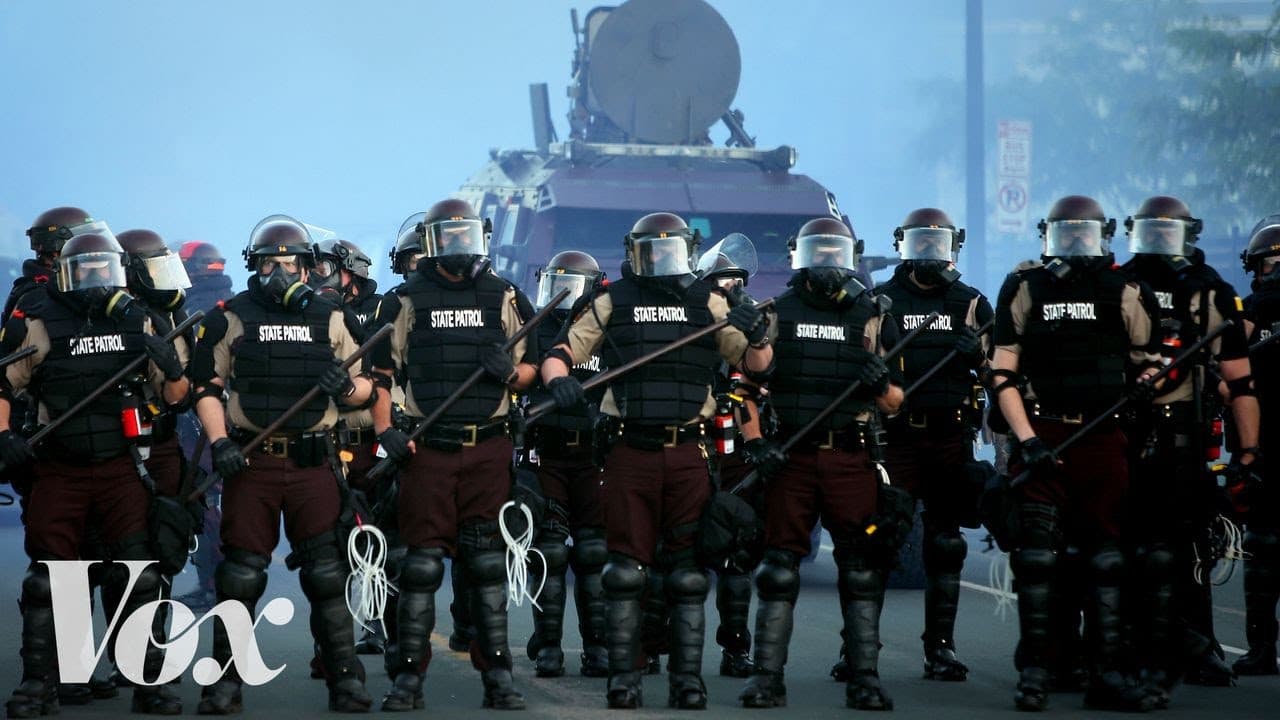
Why America's police look like soldiers
TL;DR
US police militarization stems from 1980s policies and persists today.
Transcript
This was a protest near the White House, on June 1st. "It has been an entirely peaceful protest..." It was met by forces with helmets, riot shields, rifles... and tear gas. The authorities here were a mix of police and military: There were Secret Service, Park Police, the National Guard, Prison Special Operations, and local police from a nearby cou... Read More
Key Insights
- The militarization of police in the US began in the 1980s with the War on Drugs, leading to increased collaboration between the military and police forces.
- The 1033 program allowed police departments to acquire surplus military equipment, including assault rifles and armored vehicles, significantly transforming their appearance and tactics.
- The frequency of SWAT team deployments increased dramatically from the 1980s to the 1990s, with a focus on drug-related search warrants, often executed as no-knock raids.
- Events like the North Hollywood shootout in 1997 led to widespread demands for police to be equipped with military-grade weapons, further fueling militarization.
- The withdrawal of US troops from Iraq in 2011 resulted in a surplus of military equipment, much of which was transferred to police departments through the 1033 program.
- The militarized response to protests in Ferguson, Missouri in 2014 highlighted the controversial nature of police militarization and led to temporary restrictions under the Obama administration.
- Despite the controversy, many police officers support the use of military equipment, citing increased assertiveness and aggression, though they acknowledge it can intimidate the public.
- While military equipment can be beneficial in specific situations, such as active shooter incidents, its routine use in policing can escalate tensions and alter the perceived role of police in communities.
Install to Summarize YouTube Videos and Get Transcripts
Explore YouTube Video Summarizer or Get YouTube Transcript Extractor
Questions & Answers
Q: Why do American police officers look like soldiers?
American police officers resemble soldiers due to the militarization of police forces, a process that began in the 1980s with policies aimed at combating drug-related crime. The 1033 program allowed police departments to acquire surplus military equipment, such as assault rifles and armored vehicles, significantly altering their appearance and operational tactics.
Q: What is the 1033 program?
The 1033 program is a federal initiative that allows police departments to acquire surplus military equipment from the US Department of Defense. Initially focused on drug-related enforcement, the program has expanded to provide a wide range of military gear to law enforcement agencies, contributing to the militarization of police forces across the country.
Q: How did the 1997 North Hollywood shootout influence police militarization?
The 1997 North Hollywood shootout, where heavily armed bank robbers outgunned police, highlighted the need for law enforcement to have access to military-grade weapons. This incident spurred demands for assault rifles among police departments nationwide, accelerating the trend of police militarization and prompting further expansion of the 1033 program.
Q: What impact did the withdrawal of US troops from Iraq have on police militarization?
The withdrawal of US troops from Iraq in 2011 left the military with a surplus of equipment, much of which was transferred to police departments through the 1033 program. This influx of military gear, including Mine Resistant Ambush Protected Vehicles (MRAPs), further entrenched the militarization of police forces in the United States.
Q: How did the Ferguson protests affect perceptions of police militarization?
The heavily militarized police response to the Ferguson protests in 2014, following the shooting of Michael Brown, drew national attention to the issue of police militarization. The use of military gear and tactics against protesters was widely criticized and led to temporary restrictions on the 1033 program under President Obama's administration.
Q: What are the potential dangers of police militarization?
Police militarization poses several dangers, including the potential to escalate conflicts and alter the relationship between police and communities. The use of military equipment can intimidate the public, increase aggression among officers, and shift the perceived role of police from community protectors to occupying forces, undermining trust and cooperation.
Q: Why do some police officers support the use of military equipment?
Some police officers support the use of military equipment because they believe it enhances their ability to respond to threats and maintain public safety. Military gear can provide officers with increased protection and assertiveness, although this comes with the risk of intimidating the public and escalating tensions during routine policing activities.
Q: In what situations is military equipment beneficial for police?
Military equipment can be beneficial for police in specific situations, such as active shooter incidents or high-risk operations requiring enhanced protection and firepower. However, these scenarios are relatively rare, and the routine use of military gear in everyday policing can lead to unnecessary escalation and alter the dynamic between law enforcement and the communities they serve.
Summary & Key Takeaways
-
The militarization of police in the US has its roots in the 1980s War on Drugs, when the government facilitated access to military equipment for law enforcement agencies. This policy shift has led to a significant transformation in the appearance and tactics of police forces across the country.
-
The 1033 program, which allows police departments to acquire surplus military equipment, has been a major driver of police militarization. This has resulted in the widespread use of assault rifles, armored vehicles, and other military gear by police, raising concerns about the implications for community policing.
-
Controversial incidents, such as the police response to protests in Ferguson, Missouri, have brought attention to the potential dangers of police militarization. While military equipment can be useful in certain situations, its routine use can escalate conflicts and alter the relationship between police and the communities they serve.
Read in Other Languages (beta)
Share This Summary 📚
Summarize YouTube Videos and Get Video Transcripts with 1-Click
Try YouTube Summary with ChatGPT & Claude or YouTube Transcript Generator
Explore More Summaries from Vox 📚

Summarize YouTube Videos and Get Video Transcripts with 1-Click
Try YouTube Summary with ChatGPT & Claude or YouTube Transcript Generator