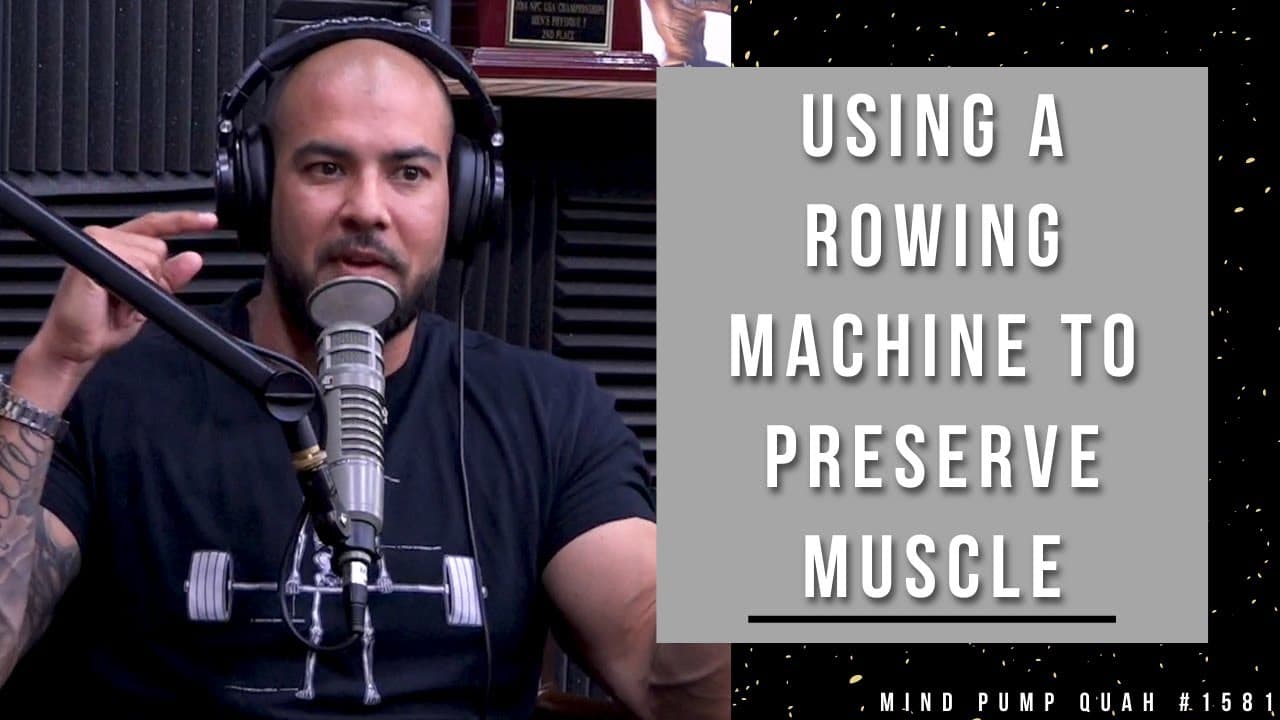
Will Using A Rowing Machine Preserve Muscle?
TL;DR
Rowing alone doesn't preserve muscle; strength training is key.
Transcript
next question is from la la opry will a rowing machine preserve muscle mass while i can't lift you know what okay i forgot to bring this up i'm glad somebody asked this question i just got this on my dms did you really yes okay so you want to go first well i mean so it wasn't pertaining to the rowing machine it was actually related to like the stai... Read More
Key Insights
- Cardio exercises, including rowing, do not effectively preserve muscle mass when in a caloric deficit. They do not send the right signals to the body to maintain muscle.
- High-intensity interval training (HIIT) with weights can be more beneficial for muscle preservation compared to steady-state cardio.
- Strength training is crucial for building and maintaining muscle. It requires significantly less volume to maintain muscle than to build it.
- The body's response to cardio versus strength training is different; cardio does not provide the same long-term muscle retention benefits.
- Maintaining muscle mass requires less effort than initially building it, highlighting the long-lasting benefits of strength training.
- Caloric intake plays a significant role in muscle preservation; being in a caloric deficit while doing cardio is not conducive to muscle retention.
- Strength training provides more permanent results compared to cardio, as it allows for muscle maintenance even with reduced volume.
- As one ages, maintaining a muscular physique becomes easier with a history of consistent strength training, even with reduced training frequency.
Install to Summarize YouTube Videos and Get Transcripts
Explore YouTube Video Summarizer or Get YouTube Transcript Extractor
Questions & Answers
Q: Can rowing help preserve muscle mass while not lifting?
Rowing, like other forms of cardio, does not effectively preserve muscle mass, especially when in a caloric deficit. It lacks the necessary signals to the body to maintain muscle. Strength training is essential for muscle retention, as it provides a more permanent result compared to cardio exercises.
Q: What type of exercise is more beneficial for muscle preservation?
High-intensity interval training (HIIT) with weights is more beneficial for muscle preservation than traditional steady-state cardio. It provides a fast-twitch muscle response similar to resistance training, which is more effective in maintaining muscle mass while also incorporating cardiovascular benefits.
Q: How does caloric intake affect muscle preservation?
Caloric intake significantly affects muscle preservation. Being in a caloric deficit while performing cardio exercises does not support muscle retention. It's crucial to manage caloric intake and incorporate strength training to send the right signals to the body for maintaining muscle mass.
Q: Why is strength training important for muscle maintenance?
Strength training is important for muscle maintenance because it requires significantly less volume to maintain muscle than to build it. It provides a more permanent result compared to cardio, allowing for muscle retention even with reduced training frequency and volume.
Q: What are the long-term benefits of strength training?
The long-term benefits of strength training include the ability to maintain muscle mass with reduced training volume and frequency. This is due to the body's efficient response to strength training, which allows for muscle retention even when training intensity decreases over time.
Q: How does aging affect muscle maintenance?
As one ages, maintaining a muscular physique becomes easier with a history of consistent strength training. The body's adaptation to strength training allows for muscle retention with less effort, making it possible to maintain a fit physique even with reduced training frequency compared to younger years.
Q: Can cardio exercises maintain muscle stamina and calorie burn?
Cardio exercises require consistent effort to maintain muscle stamina and calorie burn. Unlike strength training, cardio does not provide the same long-term muscle retention benefits, and reducing cardio volume can lead to decreased stamina and calorie burn over time.
Q: What study highlights the benefits of strength training for muscle preservation?
A study highlighted in the discussion shows that as little as 19% of the volume used to build muscle is needed to preserve it. This finding underscores the efficiency of strength training in maintaining muscle mass, as it requires significantly less effort to maintain muscle compared to building it initially.
Summary & Key Takeaways
-
Rowing and other forms of cardio are not effective for preserving muscle mass, especially when in a caloric deficit. Strength training remains the most effective method for muscle retention.
-
High-intensity interval training with weights can be more beneficial for muscle preservation compared to traditional cardio. Caloric intake also plays a crucial role in maintaining muscle mass.
-
Strength training offers long-term benefits, allowing for muscle maintenance with reduced volume. This is not the case with cardio, which requires consistent effort to maintain stamina and calorie burn.
Read in Other Languages (beta)
Share This Summary 📚
Summarize YouTube Videos and Get Video Transcripts with 1-Click
Try YouTube Summary with ChatGPT & Claude or YouTube Transcript Generator
Explore More Summaries from Mind Pump Show 📚



Summarize YouTube Videos and Get Video Transcripts with 1-Click
Try YouTube Summary with ChatGPT & Claude or YouTube Transcript Generator