一分鐘內破解魔術方塊,並非不可能! Almost Impossible: Rubik's Cube |科普長知識|GQ Taiwan
TL;DR
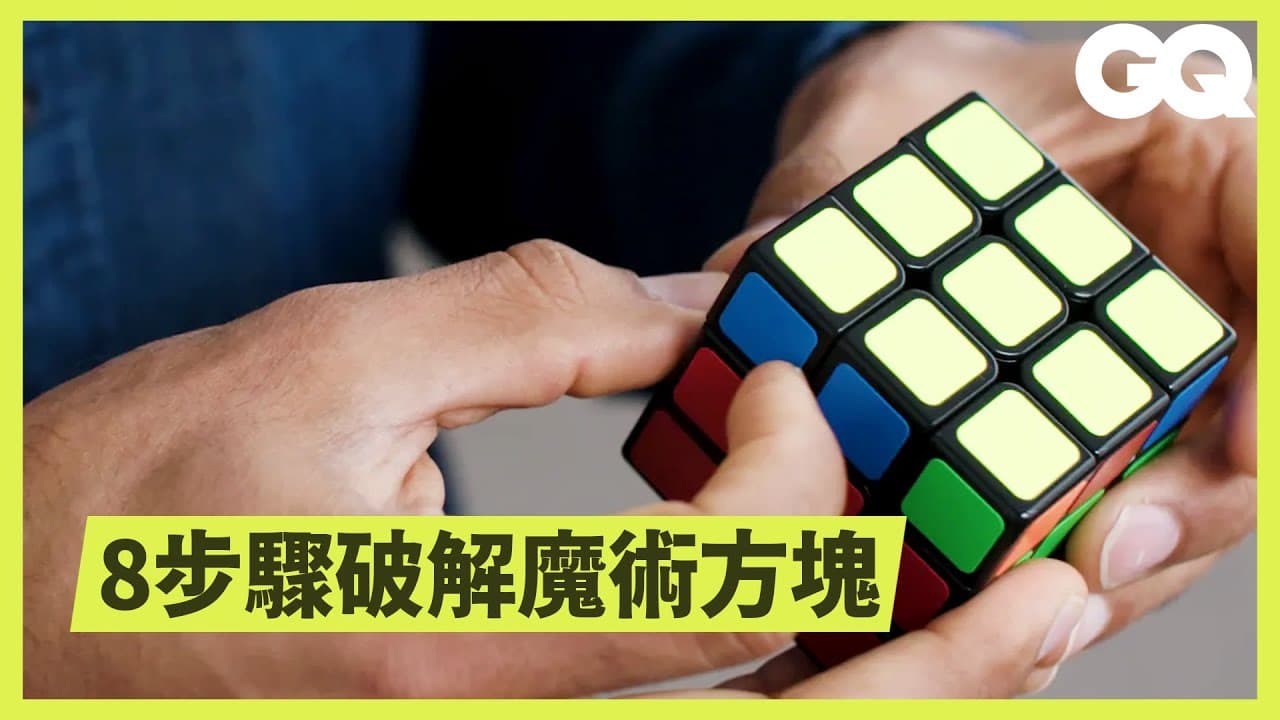
In this video, the presenter provides a step-by-step tutorial on how to solve a Rubik's cube using a specific method taught to them by a co-founder of the World Cube Association, taking the cube from a scrambled state to a solved one in eight steps.
Transcript
in a recent episode of almost impossible I looked at the limits of speed cubing an event in which people compete to solve a Rubik's Cube as fast as they possibly can and in the course of reporting that piece I actually learned to solve a Rubik's Cube myself with help from Tyson mound co-founder of the world cube Association in a little under two we... Read More
Key Insights
- ⚙️ Learning to Solve a Rubik's Cube:
- The speaker learned to solve a Rubik's Cube in under two weeks using a method taught to him by the co-founder of the World Cube Association.
- The method taught requires solving the cube one layer at a time, with step-by-step instructions provided in the video.
- Understanding the different types of pieces (edge, corner, center) and their movements is crucial for solving the cube effectively.
- The cube can be thought of as six faces or three layers (top, middle, bottom), and the method focuses on solving one layer at a time.
- Holding and manipulating the cube correctly is important, and cube notation is used to describe algorithms and moves.
- Practice is essential to improve solving times, with the speaker suggesting a budget of about an hour for the first solve.
- While the method taught is not the fastest or easiest, consistent practice can lead to faster solving times.
Install to Summarize YouTube Videos and Get Transcripts
Explore YouTube Video Summarizer or Get YouTube Transcript Extractor
Questions & Answers
Q: What are the three types of pieces on a Rubik's cube?
The three types of pieces on a Rubik's cube are edge pieces, corner pieces, and center pieces. Edge pieces have two stickers, corner pieces have three stickers, and center pieces have one sticker.
Q: Why is it important to understand that not all pieces on the cube are alike?
Understanding that not all pieces on the cube are alike is important because the center pieces dictate where all the other pieces need to go. They do not move, so their positions determine the positions of the other pieces.
Q: What are the three layers of a Rubik's cube?
The three layers of a Rubik's cube are the top, middle, and bottom layers. In this tutorial, the focus is on solving the cube one layer at a time.
Q: How long does the presenter suggest budgeting for the first solve of a Rubik's cube?
The presenter suggests budgeting about an hour plus or minus fifteen minutes for the first solve of a Rubik's cube. They also mention that with practice, solving times can significantly improve.
Q: What are the two most fundamental moves in cubing?
The two most fundamental moves in cubing are the right trigger and the left trigger. The right trigger involves rotating the right face of the cube, pulling the top face towards you, and rotating the right face back. The left trigger is the same but for the left face of the cube.
Q: How can you create a yellow cross on the top of the cube?
To create a yellow cross on the top of the cube, the presenter introduces an algorithm called the fir earth algorithm, which involves a specific sequence of moves using cube notation. Following this algorithm will result in a yellow cross on the top face of the cube.
Q: What is the goal of step 7 in solving a Rubik's cube?
The goal of step 7 is to position the corners of the cube. The presenter demonstrates an algorithm called l prime u R u prime L u R prime R u R prime u R u2 R prime to achieve this goal. Understanding cube notation is essential for executing this algorithm effectively.
Q: What is the final step in solving a Rubik's cube?
The final step in solving a Rubik's cube is to position the edges of the cube. The presenter provides two algorithms, one for clockwise rotation and one for counterclockwise rotation, to swap the edge pieces into their correct positions, resulting in a solved cube.
Summary & Key Takeaways
-
The presenter learned to solve a Rubik's cube with the help of a co-founder of the World Cube Association in just under two weeks.
-
The tutorial will cover the fundamentals of cubing, how to hold and manipulate the cube, reading cube notation, and solving the cube in eight steps.
-
The tutorial emphasizes the importance of understanding the different pieces of the cube, the concept of layers, and provides step-by-step instructions for each stage of solving the cube.
Read in Other Languages (beta)
Share This Summary 📚
Summarize YouTube Videos and Get Video Transcripts with 1-Click
Try YouTube Summary with ChatGPT & Claude or YouTube Transcript Generator
Explore More Summaries from GQ Taiwan 📚






Summarize YouTube Videos and Get Video Transcripts with 1-Click
Try YouTube Summary with ChatGPT & Claude or YouTube Transcript Generator