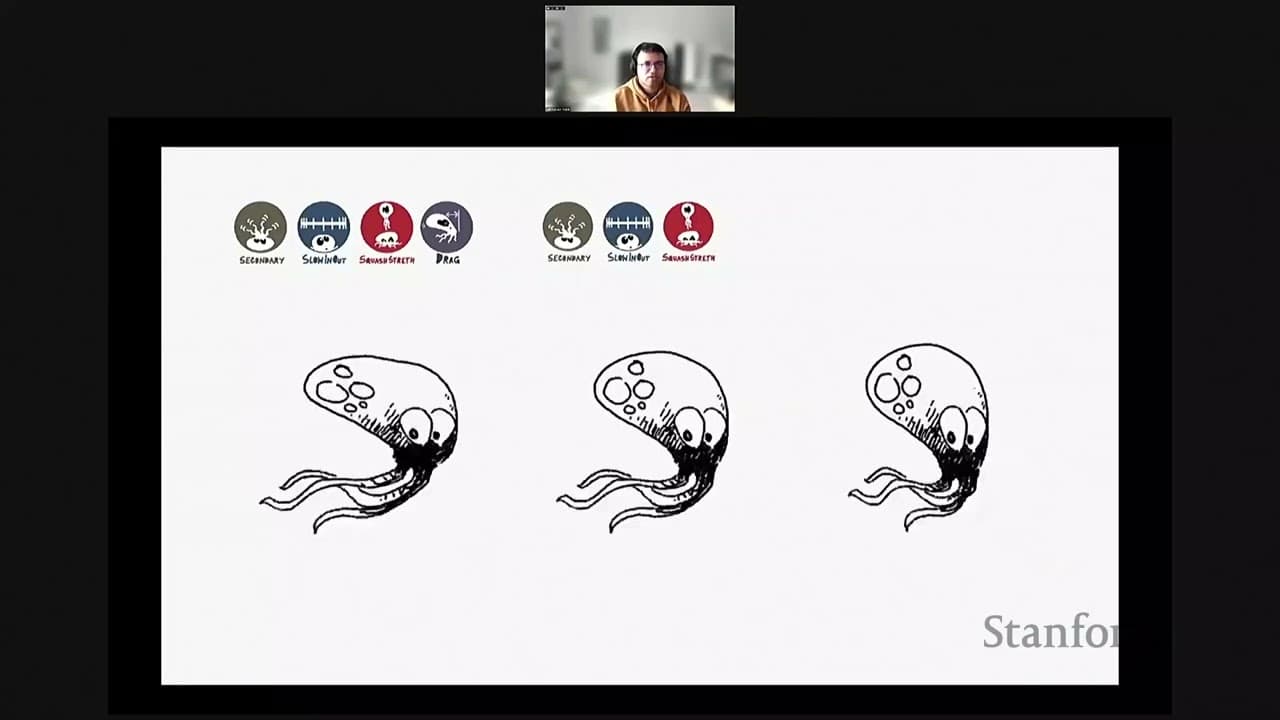
Stanford Seminar - Making dynamic visual media easy, accessible, improvisational, and powerful
TL;DR
Dynamic representations have the potential to revolutionize communication by leveraging interactivity and animation to create more engaging and expressive visual content.
Transcript
let me start with the science fiction reference okay few weeks ago i was watching a tv series in apple tv called foundation it's a it's based on a russian sci-fi novel the same name and in that tv series the protagonist terry sheldon was developing mathematical models in a tablet computer and you can see he's kind of using a dynamic media to do mat... Read More
Key Insights
- ❓ Dynamic representations have the potential to transform communication by creating more engaging and immersive experiences.
- 😒 Designing dynamic tools that are easy to use and balance expressiveness with fluidity is a challenge.
- 👤 Empowering users to create their own dynamic representations and navigate different levels of abstraction is crucial for innovation.
- 😯 Multi-modal interfaces, combining gestures, speech, and other modalities, offer new possibilities for dynamic representation and interaction.
- 🖐️ Natural language processing and machine learning can play a role in understanding and guiding the creation of dynamic representations.
- 😑 Dynamic representations can enhance the expression of emotions and feelings, potentially revolutionizing communication in this domain.
- 👶 VR and AR technologies provide new opportunities for dynamic representations, enabling more immersive and interactive experiences.
- ❓ Developing dynamic representations requires interdisciplinary collaboration and deep understanding of specific domains.
Install to Summarize YouTube Videos and Get Transcripts
Explore YouTube Video Summarizer or Get YouTube Transcript Extractor
Questions & Answers
Q: How can dynamic representations revolutionize communication?
Dynamic representations enhance communication by enabling more intuitive and engaging experiences, leveraging interactivity, animation, and augmented reality to create immersive content.
Q: What are some challenges in designing dynamic tools?
Designing dynamic tools that are easy to use is challenging due to the reliance on static media and the need for programming skills. Balancing expressiveness and fluidity is also difficult, as powerful representations can be complex. Additionally, understanding new interactions and human preferences is crucial.
Q: How do dynamic representations differ from traditional static representations?
Dynamic representations, such as interactive graphics and animations, allow for real-time manipulation and engagement, whereas static representations, like text and images, are more passive and limited in their ability to convey complex ideas.
Q: How can dynamic representations be applied in different domains?
Dynamic representations have potential applications in various domains, such as mathematics, science, arts, research, and education. By creating custom visualizations and interactive experiences, dynamic representations can enhance understanding and exploration in these fields.
Summary & Key Takeaways
-
Dynamic representations, like interactive graphics and animations, have the power to enhance communication by allowing for more intuitive and immersive experiences.
-
Traditional static representations, such as text and images, can be transformed into dynamic media by harnessing the capabilities of interactivity, animation, and augmented reality.
-
Challenges in designing dynamic tools include ease of use, finding the right balance between expressiveness and fluidity, and understanding new interactions and human preferences.
Read in Other Languages (beta)
Share This Summary 📚
Summarize YouTube Videos and Get Video Transcripts with 1-Click
Try YouTube Summary with ChatGPT & Claude or YouTube Transcript Generator
Explore More Summaries from Stanford Online 📚


Summarize YouTube Videos and Get Video Transcripts with 1-Click
Try YouTube Summary with ChatGPT & Claude or YouTube Transcript Generator