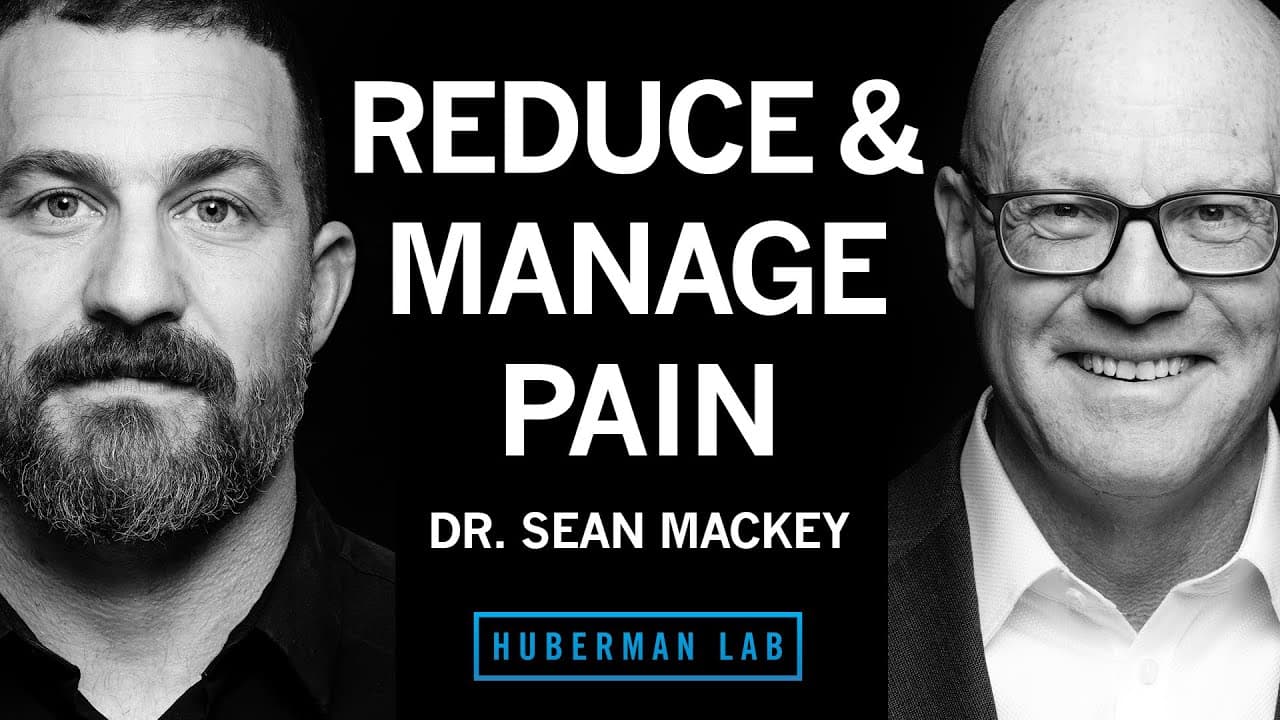
Dr. Sean Mackey: Tools to Reduce & Manage Pain
TL;DR
Pain is a complex and subjective experience that serves to protect us from harm. It involves sensory and emotional components and can be influenced by factors such as gender, past experiences, and cognitive control. Treatment options include medications, heat or cold therapies, and cognitive strategies.
Transcript
welcome to the huberman Lab podcast where we discuss science and science-based tools for everyday life I'm Andrew huberman and I'm a professor of neurobiology and Opthalmology at Stanford School of Medicine my guest today is Dr Shawn Mackey Dr Shawn Mackey is a medical doctor that is he treats patients as well as a PhD meaning he runs a laboratory ... Read More
Key Insights
- 👨🎨 Pain is a subjective and complex experience that involves both sensory and emotional components.
- 🧡 Pain thresholds can vary between individuals due to a range of factors, including genetics, past experiences, and individual differences in sensory processing.
- 🥵 Treatment options for pain include medications, heat or cold therapies, and cognitive strategies such as distraction or mindfulness.
- 👨🎨 Attentional distraction can help divert attention away from pain, while mindfulness can help individuals accept and cope with pain.
- 🧑🏭 Anxiety and other emotional factors can influence the perception of pain, making it feel more intense or distressing.
- ☺️ Heat therapy increases blood flow and relaxes muscles, while cold therapy reduces inflammation and numbs the area, providing temporary pain relief.
Install to Summarize YouTube Videos and Get Transcripts
Explore YouTube Video Summarizer or Get YouTube Transcript Extractor
Questions & Answers
Q: Is pain primarily located in the body or the brain?
Pain is experienced in the brain, although it is initiated by sensory signals from the body. The brain processes and interprets these signals to create the subjective experience of pain.
Q: Can pain thresholds be different between individuals?
Yes, pain thresholds can vary between individuals due to a variety of factors including genetics, past experiences, and individual differences in the processing of sensory signals. However, there is also significant overlap between different individuals' pain thresholds.
Q: Does anxiety increase the perception of pain?
Yes, anxiety can increase the perception of pain. When individuals are anxious, their pain thresholds may be lower, meaning they may feel pain more intensely. Anxiety can also influence the emotional component of pain, making it feel more distressing.
Q: How do heat and cold therapies work to reduce pain?
Heat therapy can increase blood flow and relax muscles, which can help alleviate pain. Cold therapy, on the other hand, can reduce inflammation and numb the area, providing temporary pain relief. Both heat and cold therapies can be effective in managing pain, depending on the individual and their specific condition.
Q: Can cognitive strategies, such as distraction or mindfulness, help in managing pain?
Yes, cognitive strategies can be effective in managing pain. Attentional distraction involves focusing on other things or engaging in activities that divert attention away from the pain. Mindfulness, on the other hand, involves accepting and non-judgmentally observing the pain without trying to change it, which can help reduce suffering associated with pain.
Summary & Key Takeaways
-
Pain is a sensory and emotional experience that alerts us to potential injury or harm. It is a complex phenomenon that involves both the nervous system and the brain.
-
The origins of pain lie in the interactions between the body and the brain, where sensory signals are processed and interpreted as pain.
-
Treatment options for pain include medications, such as nonsteroidal anti-inflammatory drugs (NSAIDs), as well as behavioral and cognitive strategies like heat or cold therapy and attentional distraction.
Read in Other Languages (beta)
Share This Summary 📚
Summarize YouTube Videos and Get Video Transcripts with 1-Click
Try YouTube Summary with ChatGPT & Claude or YouTube Transcript Generator
Explore More Summaries from Andrew Huberman 📚

Summarize YouTube Videos and Get Video Transcripts with 1-Click
Try YouTube Summary with ChatGPT & Claude or YouTube Transcript Generator