Golden age of Islam | World History | Khan Academy
TL;DR
The Islamic empires of the Abbasid Caliphate preserved and collected knowledge from various cultures, resulting in a golden age of learning and scientific advancements.
Transcript
- [Instructor] In other videos we talk about the rapid spread of Islam, and one of the interesting things about these early Islamic empires is they preserved much of what they inherited from the Byzantine and the Persian empires. The infrastructure including the roads, the bureaucracy. A lot of the culture. And they also began to collect the knowle... Read More
Key Insights
- 🛟 The Islamic empires preserved and collected knowledge from various cultures, including Indian, Greek, Chinese, and Persian.
- ❓ Baghdad became a center of learning under the Abbasid Caliphate, with the establishment of the House of Wisdom.
- 🤕 Scientific advancements in algebra, trigonometry, and optics emerged during this golden age of Islam.
Install to Summarize YouTube Videos and Get Transcripts
Explore YouTube Video Summarizer or Get YouTube Transcript Extractor
Questions & Answers
Q: How did the Islamic empires preserve and inherit knowledge from previous empires?
They retained infrastructure, culture, and bureaucracy from the Byzantine and Persian empires, and they actively collected knowledge from within the empire and neighboring regions.
Q: What role did the Abbasid Caliphate play in the development of knowledge?
The Abbasid Caliphate built Baghdad as its capital and transformed it into a center of learning. They established the House of Wisdom and sponsored translation projects, gathering knowledge from different cultures.
Q: What scientific advancements occurred during the golden age of Islam?
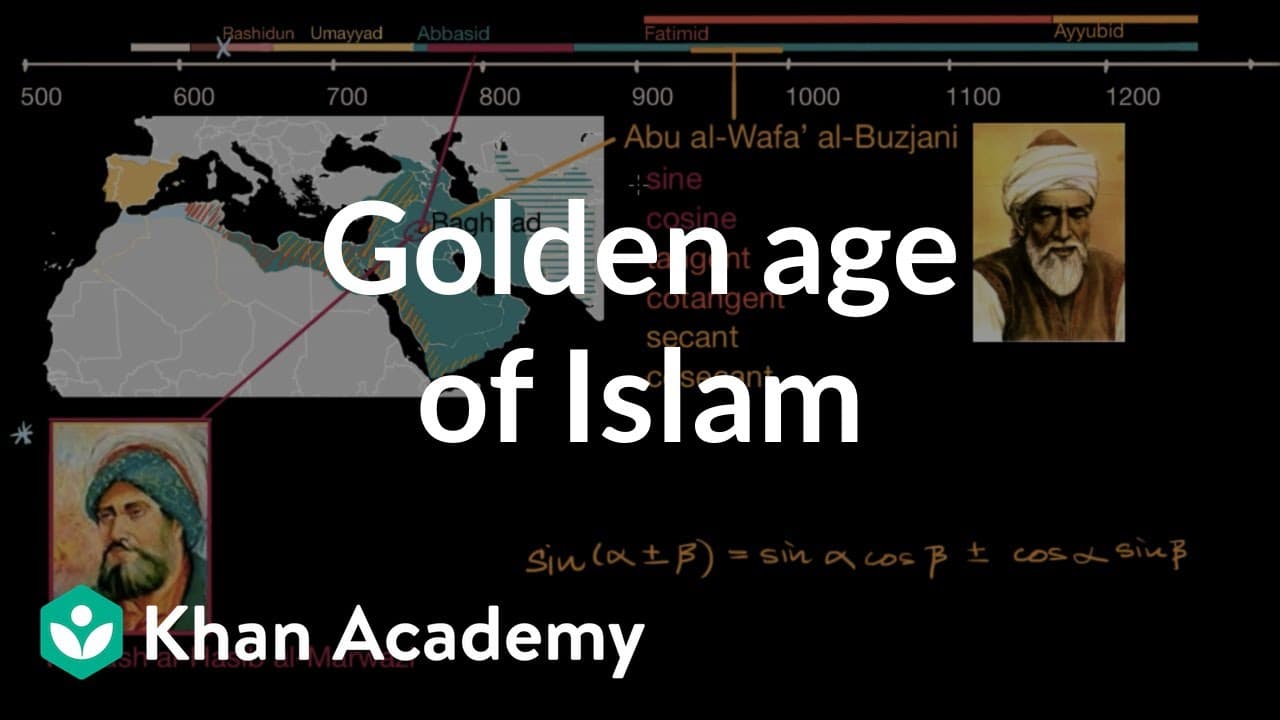
Scholars like Al-Kwarizmi contributed to the development of algebra and introduced the Indian number system to the Islamic empire. Al-Marwazi and al-Buzjani made significant contributions to trigonometry, while Alhazon advanced the understanding of light and vision.
Q: How did the Islamic empires influence the West?
The Islamic empires served as a bridge, preserving and transmitting knowledge from civilizations like India, China, and ancient Greece. Their contributions during the European Dark Ages were significant.
Summary & Key Takeaways
-
The early Islamic empires preserved and inherited infrastructure, culture, and knowledge from the Byzantine and Persian empires.
-
The Abbasid Caliphate established Baghdad as its capital and transformed it into a center of learning.
-
The House of Wisdom was created in Baghdad, where scholars translated and collected knowledge from various sources, including Indian, Greek, Chinese, and Persian texts.
Read in Other Languages (beta)
Share This Summary 📚
Summarize YouTube Videos and Get Video Transcripts with 1-Click
Try YouTube Summary with ChatGPT & Claude or YouTube Transcript Generator
Explore More Summaries from Khan Academy 📚



Summarize YouTube Videos and Get Video Transcripts with 1-Click
Try YouTube Summary with ChatGPT & Claude or YouTube Transcript Generator