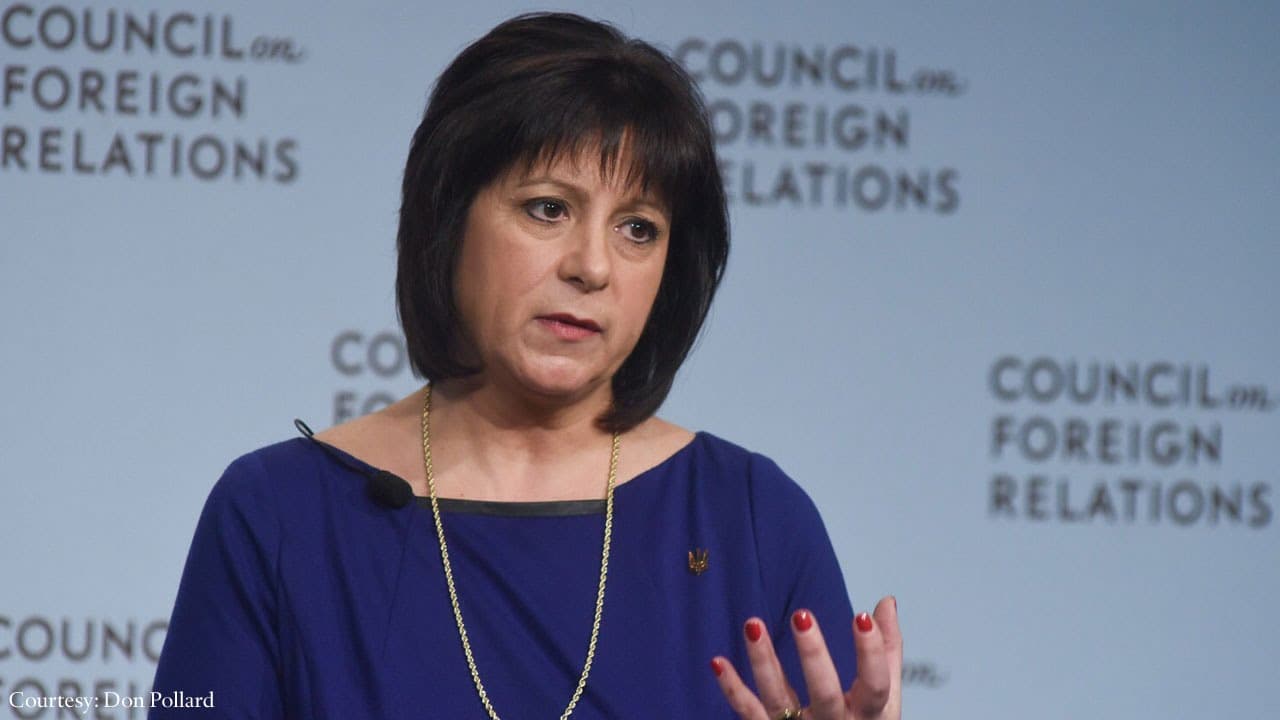
A Conversation With Natalie Jaresko
TL;DR
Natalie Jaresko discusses Ukraine's economic reforms amid ongoing conflict.
Transcript
JEFFERY: Welcome everybody. I'm Ruben Jeffery and we're privileged to have with us�really honored to have with us this morning Natalie Jaresko, Ukraine's finance minister. By way of introduction, I think you all have her biography but I think it's fair to note one of the startling things on the page is that her progression from the suburbs of Chica... Read More
Key Insights
- Natalie Jaresko's journey from the U.S. to Ukraine's finance ministry reflects a blend of American and Ukrainian values, emphasizing freedom and public service as core motivators.
- The conflict in Ukraine has resulted in a humanitarian crisis with over 5,000 deaths, 1.1 million displaced people, and significant economic disruptions, particularly in industrial sectors.
- Ukraine's debt restructuring aims to achieve $15 billion in savings through maturity extensions, coupon reductions, and principal reductions, with support from international creditors.
- Reform efforts focus on stabilizing the banking system, fostering economic growth through deregulation and tax reforms, and combating corruption, particularly in state-owned enterprises.
- Energy sector reforms have reduced dependency on Russian gas, improved efficiency, and shifted subsidies from state enterprises to vulnerable populations.
- The conflict is seen as a test of global principles and institutions established post-World War II, with implications for international security and diplomatic relations.
- Jaresko highlights agriculture, energy, infrastructure, and tourism as key sectors for Ukraine's economic growth, leveraging its resources and strategic location.
- The ongoing conflict has unified Ukrainians around European values, increasing public support for NATO and EU integration, despite the challenges posed by Russian aggression.
Install to Summarize YouTube Videos and Get Transcripts
Explore YouTube Video Summarizer or Get YouTube Transcript Extractor
Questions & Answers
Q: How has the conflict affected Ukraine's economy?
The conflict has severely impacted Ukraine's economy, creating a humanitarian crisis with over 5,000 deaths and 1.1 million displaced people. Industrial production, especially in the Donbass region, has suffered significant declines, affecting exports and leading to a vicious cycle of currency depreciation and banking instability.
Q: What are the main components of Ukraine's debt restructuring plan?
Ukraine's debt restructuring plan aims to achieve $15 billion in savings over four years through a combination of maturity extensions, coupon reductions, and principal reductions. The plan is supported by a $40 billion IMF package, including bilateral and multilateral support from various international partners.
Q: What are the key elements of Ukraine's reform agenda?
Ukraine's reform agenda focuses on stabilizing the banking and finance system, restoring economic growth by improving the business environment, and combating corruption. Key measures include reducing tax burdens, implementing anti-corruption policies, and reforming state-owned enterprises to enhance transparency and efficiency.
Q: How has Ukraine reduced its dependency on Russian gas?
Ukraine has diversified its gas imports, reducing dependency on Russian gas from 100% to 30%, with the remainder sourced from the European Union. This shift not only enhances energy independence but also results in cost savings. Additionally, Ukraine has improved energy efficiency, reducing consumption by 20%.
Q: What are the broader implications of the conflict in Ukraine?
The conflict in Ukraine is seen as a critical test of global principles and institutions established after World War II. It has implications for international security, highlighting the importance of upholding agreements like the Budapest Memorandum and ensuring collective responses to aggression to maintain global stability.
Q: What sectors are key to Ukraine's economic growth?
Key sectors for Ukraine's economic growth include agriculture, energy, infrastructure, and tourism. Ukraine is a major exporter of sunflower oil and grains, and reforms in the energy sector aim to attract foreign investment. Infrastructure improvements are needed to support transit and trade, while tourism leverages Ukraine's rich cultural heritage.
Q: How has the conflict influenced Ukrainian public opinion on NATO and the EU?
The conflict has significantly shifted Ukrainian public opinion, with increased support for NATO and EU integration. Before the conflict, support for NATO was not a majority, but now it is, reflecting a unified desire for European values and security guarantees in response to Russian aggression.
Q: What role do sanctions play in the conflict with Russia?
Sanctions are crucial in exerting psychological pressure on Russia to change its aggressive behavior. They are part of a broader strategy to maintain international unity and deter further violence. The Ukrainian government supports maintaining and potentially increasing sanctions if the conflict escalates, to encourage diplomatic resolutions.
Summary & Key Takeaways
-
Natalie Jaresko, Ukraine's Finance Minister, discusses her unexpected journey from the U.S. to Ukraine, emphasizing the blend of American and Ukrainian values in her public service. She highlights the severe humanitarian and economic impacts of the ongoing conflict, with significant losses in industrial production and displacement of people.
-
Jaresko outlines Ukraine's ambitious reform agenda, focusing on stabilizing the banking system, promoting economic growth through improved business environments, and tackling corruption. She emphasizes the importance of international support and collaboration in restructuring Ukraine's debt to achieve long-term sustainability.
-
Energy reforms have diversified Ukraine's gas imports, reduced consumption, and shifted subsidies to vulnerable populations, showcasing significant fiscal improvements. Jaresko stresses the broader implications of the conflict for global security and diplomacy, advocating for continued sanctions against Russia and highlighting Ukraine's critical role in upholding international principles.
Read in Other Languages (beta)
Share This Summary 📚
Summarize YouTube Videos and Get Video Transcripts with 1-Click
Try YouTube Summary with ChatGPT & Claude or YouTube Transcript Generator
Explore More Summaries from Council on Foreign Relations 📚
Summarize YouTube Videos and Get Video Transcripts with 1-Click
Try YouTube Summary with ChatGPT & Claude or YouTube Transcript Generator