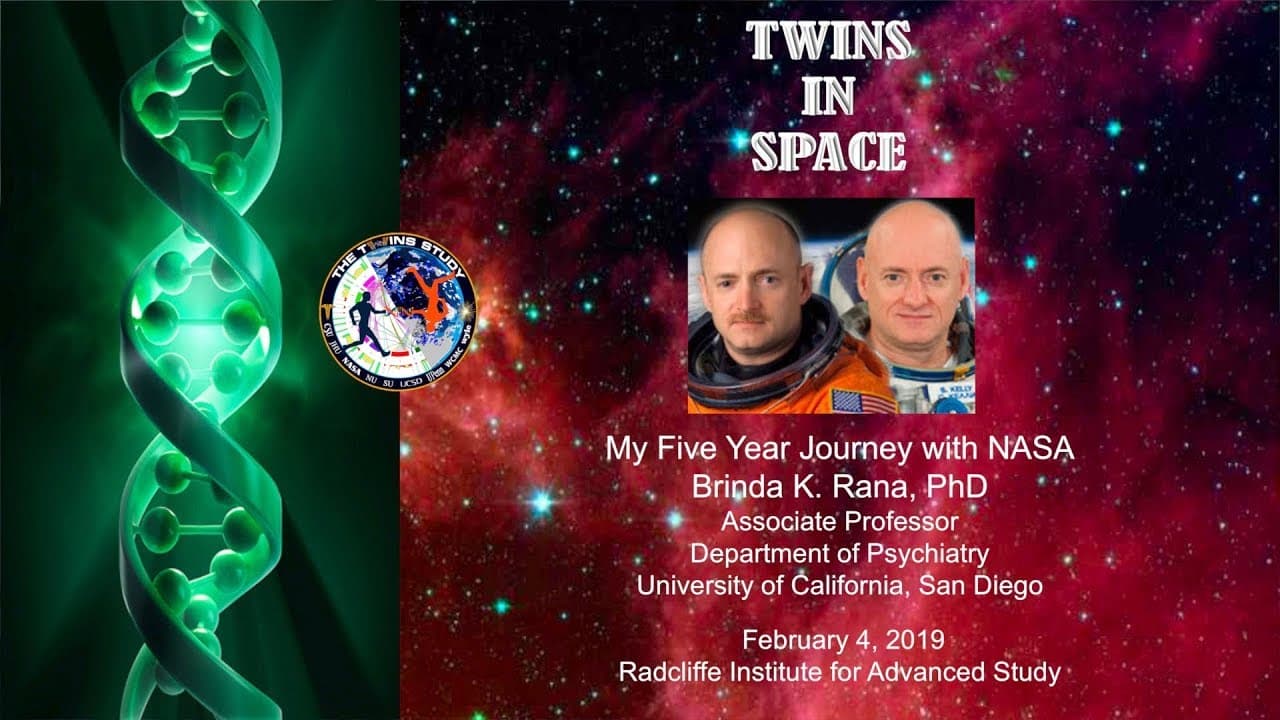
Twins in Space | Brinda Rana || Radcliffe Institute
TL;DR
The NASA twin study investigates the impact of long-duration space travel on the human body, including changes in gene expression, microbiome, physiology, and cognitive function.
Transcript
[MUSIC PLAYING] - Welcome, everyone. My name is Immaculata De Vivo. I am one of the co-directors for science programming here at Radcliffe Institute. And I have to make a comment about the weather and why wouldn't I? It's a spectacular day. And we have a speaker from San Diego, so I'd have to give a little bit of credit to our speaker for bringing ... Read More
Key Insights
- 👨🚀 Long-duration space travel can lead to significant physiological changes in astronauts, including alterations in gene expression, metabolite levels, and fluid shifts.
- 👾 The study identified potential risks and challenges associated with space travel, such as dehydration, telomere lengthening, and changes in collagen production.
- 👨🚀 The findings can inform the development of personalized countermeasures and optimize astronaut health during future space missions.
- 🤕 Gender differences and age-specific effects may exist in response to space travel, highlighting the need for further research.
Install to Summarize YouTube Videos and Get Transcripts
Explore YouTube Video Summarizer or Get YouTube Transcript Extractor
Questions & Answers
Q: What were some of the physiological changes observed in twin astronauts during space travel?
The twin study found changes in gene expression, metabolite levels, fluid shifts, cardiovascular function, telomere length, collagen production, and dehydration during space travel.
Q: Did the Earth control twin show any significant changes during the study period?
While the Earth control twin did not experience the same physiological changes as the space twin, some fluctuations were observed, possibly due to environmental and genetic factors.
Q: How do the findings of the twin study contribute to future space missions?
The study provides insights into the potential risks and challenges of long-duration space travel, helping to inform the development of personalized countermeasures and optimize astronaut health during space missions.
Q: What are the implications of the study for personalized aging therapies on Earth?
While more research is needed, the findings from the twin study could contribute to personalized aging therapies and improve our understanding of aging-related processes, such as telomere lengthening and collagen production.
Summary & Key Takeaways
-
The NASA twin study examined the effects of long-duration space travel on the human body by comparing the physiological and molecular changes in twin astronauts.
-
The study found changes in gene expression, microbiome composition, metabolite levels, and physiological functions such as fluid shifts and cardiovascular changes.
-
Astronauts experienced increased lactic acid levels, dehydration, telomere lengthening, and changes in collagen production during space flight.
-
The study provides valuable insights into the challenges and potential risks of long-duration space travel.
Read in Other Languages (beta)
Share This Summary 📚
Summarize YouTube Videos and Get Video Transcripts with 1-Click
Try YouTube Summary with ChatGPT & Claude or YouTube Transcript Generator
Explore More Summaries from Harvard University 📚


Summarize YouTube Videos and Get Video Transcripts with 1-Click
Try YouTube Summary with ChatGPT & Claude or YouTube Transcript Generator