Human impacts on ecosystems | Interactions in ecosystems | High school biology | Khan Academy
TL;DR
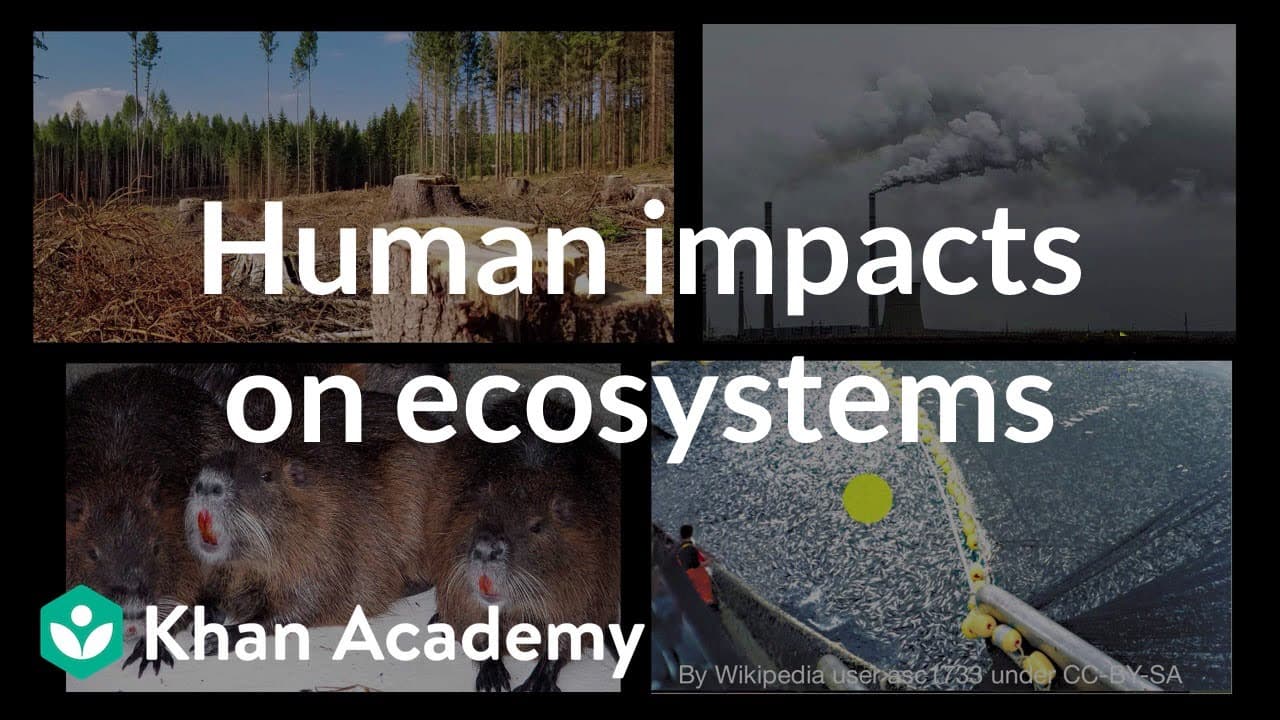
Human activity poses significant threats to ecosystems, including habitat destruction, pollution, introduction of invasive species, over-exploitation, and climate change.
Transcript
- [Instructor] What we're going to talk about in this video is how human activity creates changes in the environment. And not just any changes, but changes that can disrupt an ecosystem. And it can threaten the very existence of some species. And for the sake of this video, we'll think about it in five different dimensions. The first is habitat des... Read More
Key Insights
- 💱 Human activity affects ecosystems through habitat destruction, pollution, introduction of invasive species, over-exploitation, and climate change.
- 💦 Pollution includes not just harmful chemicals in the air, but also those in water systems and even noise pollution, which can disrupt animal behavior.
- ❓ Invasive species can overpower native species and cause significant damage to habitats and ecosystems.
- 🎣 Over-fishing and other forms of over-exploitation can lead to the depletion of fish populations and hinder their ability to reproduce.
- 🤢 Climate change, driven by greenhouse gas emissions, affects temperature, rainfall, sea ice, sea levels, and ecosystems, with significant impacts on human populations.
- 🌊 Rising sea levels due to melting ice and changes in water density have profound consequences for coastal ecosystems and humans living in close proximity to the water.
- 🌸 Human activities contribute to the loss of biodiversity and endanger the survival of many species.
Install to Summarize YouTube Videos and Get Transcripts
Explore YouTube Video Summarizer or Get YouTube Transcript Extractor
Questions & Answers
Q: How does habitat destruction impact ecosystems and species?
Habitat destruction, caused by activities like logging and land clearing, eliminates the homes and food sources of many species, leading to a loss of biodiversity and endangering their survival.
Q: How does pollution affect animals and their behavior?
Pollution, whether through harmful chemicals in the air or water, can directly harm animals and alter their biology. Noise pollution can also disrupt their behavior and raise stress levels.
Q: What problems can arise from the introduction of invasive species?
Invasive species, like nutria rats in Louisiana, can outcompete native species for resources and destroy habitats, causing erosion and a decline in biodiversity.
Q: How does over-exploitation of resources impact fish populations?
Over-fishing, such as trawling, depletes fish populations, disrupting their reproductive cycles and jeopardizing their long-term sustainability.
Summary & Key Takeaways
-
Human activities like logging and clearing land for agriculture lead to habitat destruction, which can disrupt ecosystems and threaten the survival of species.
-
Pollution caused by harmful chemicals released into the air, water, and even noise pollution can have far-reaching effects on animals and their biology.
-
The introduction of invasive species, such as nutria rats in Louisiana, can outcompete native species, destroy habitats, and cause erosion.
-
Over-exploitation, like excessive fishing, can deplete fish populations, affecting reproduction and long-term sustainability.
-
Climate change, predominantly driven by rising levels of greenhouse gases like CO2, has wide-ranging consequences on temperature, rainfall, sea ice, sea levels, and ecosystems, including human populations.
Read in Other Languages (beta)
Share This Summary 📚
Summarize YouTube Videos and Get Video Transcripts with 1-Click
Try YouTube Summary with ChatGPT & Claude or YouTube Transcript Generator
Explore More Summaries from Khan Academy 📚



Summarize YouTube Videos and Get Video Transcripts with 1-Click
Try YouTube Summary with ChatGPT & Claude or YouTube Transcript Generator