What Are the Best AI Research Tools for Finding Papers?
TL;DR
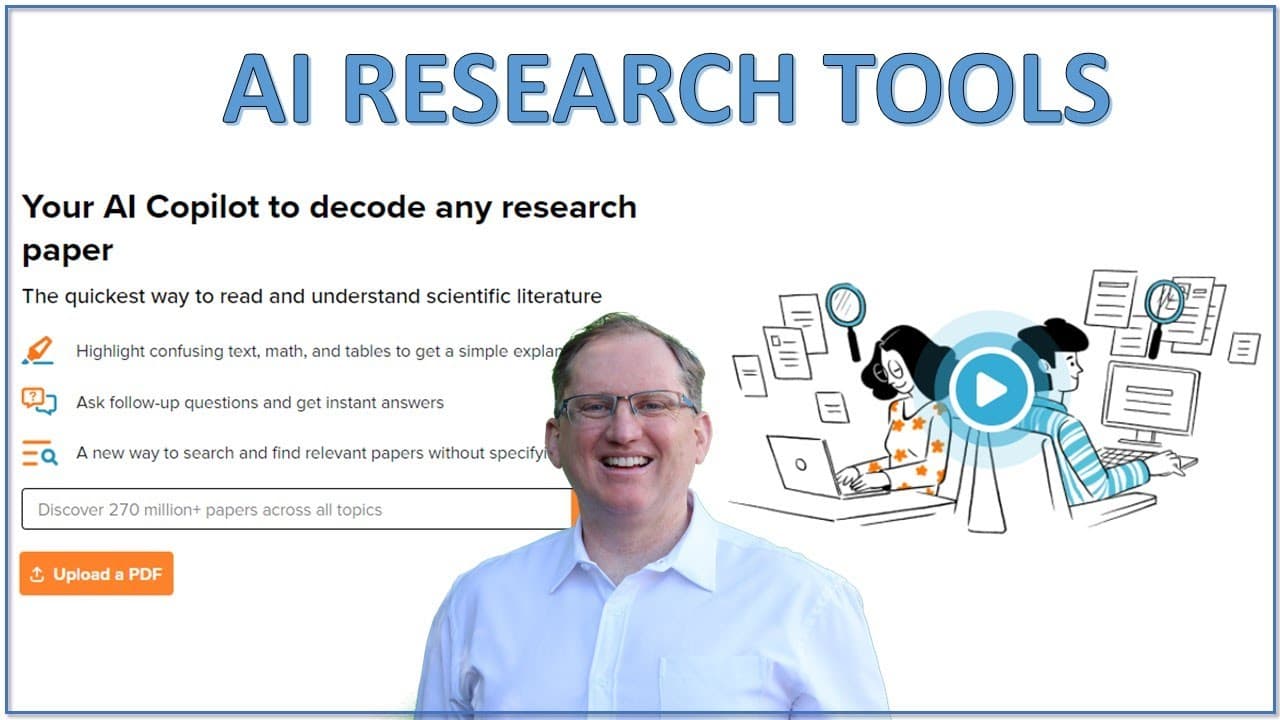
AI research tools like ChatGPT, Elicit, and SciSpace can enhance paper discovery but have distinct strengths and weaknesses. While ChatGPT offers solid definitions, it may struggle with specific queries. Elicit excels at organized literature searches, and SciSpace aids comprehension of complex terms. Traditional search engines also remain valuable, especially for broader inquiries.
Transcript
hi everyone welcome back to the channel today we are going to be looking at some AI driven research assistants so we are going to be looking at three different sites first one chat GPT has been seeing a lot of news recently it's not really a dedicated research site but I thought we would try it out the next is called illicit illicit is more focused... Read More
Key Insights
- 👨🔬 AI-driven research assistants like ChatGPT, Elicit, and SciSpace can streamline the research process but are not without limitations.
- 🖤 ChatGPT excels at providing definitions but struggles with specific research queries due to the lack of live browsing capabilities.
- 👨🔬 Elicit offers organized literature searches that can yield relevant scholarly articles, making it a good alternative for focused research.
- 👤 SciSpace's feature of explaining complex terms adds value, helping users comprehend advanced material more effectively.
- 👋 Traditional search engines like Google and Google Scholar still play an important role and can yield good results, especially with broader queries.
- 🤝 The accuracy of AI-driven tools is variable, particularly when dealing with niche topics, suggesting a need for further development in their algorithms.
- 👨🔬 Researchers may benefit from a combination of AI tools and traditional search methods to maximize the quality of their research outputs.
Install to Summarize YouTube Videos and Get Transcripts
Explore YouTube Video Summarizer or Get YouTube Transcript Extractor
Questions & Answers
Q: How do ChatGPT, Elicit, and SciSpace compare in terms of research capabilities?
ChatGPT serves as a general assistant but struggles with specific research queries. Elicit effectively conducts literature searches and organizes relevant papers. SciSpace provides additional explanations and definitions, thus aiding comprehension of complex terms, making it a versatile tool for researchers.
Q: What limitations were observed with the AI tools during the content review?
One major limitation noted was the inconsistency in the AI tools’ ability to retrieve and rank the most relevant articles, particularly for niche topics. In instances, they produced articles unrelated to the specified region or context, indicating a need for improvement in handling precise queries.
Q: Why is ChatGPT not considered a dedicated research tool?
While ChatGPT can assist with inquiries by offering general information and definitions, it lacks a browsing capability to access live data, restricting its effectiveness for academic research requiring up-to-date and specific scholarly articles compared to dedicated research platforms.
Q: What specific features make SciSpace noteworthy among the AI tools evaluated?
SciSpace stands out for its ability to explain academic concepts and terms through definitions and summaries. It allows users to highlight text for clarity, making dense or technical research content more accessible and comprehensible to a broader audience.
Q: How did Google and Google Scholar perform compared to the AI-driven assistants?
Google offered a diverse array of sources, often intersecting pop culture with academic articles, while Google Scholar primarily indexed academic content with a focus on cited work. Google performed decently in relevance, but the tools often fell short for precise queries.
Q: What is the significance of the study of Marital Homogamy in New Zealand in the context of the AI tools' testing?
This study served as a case scenario for evaluating the AI tools’ ability to search within specific geographic and demographic parameters. The varying results indicated the challenges AI tools face in accessing niche research topics, which is crucial for developing better research protocols.
Q: What is the overall takeaway regarding the future of research tools?
The exploration of these AI tools highlights their potential to revolutionize research methods, but there's a clear need for enhancement in accuracy and retrieving relevant information. As AI and machine learning evolve, these tools could become indispensable resources for researchers.
Summary & Key Takeaways
-
The content evaluates three AI-driven research assistants—ChatGPT, Elicit, and SciSpace—against traditional search engines like Google and Google Scholar.
-
Each AI tool's ability to interpret research queries, locate relevant papers, and provide summaries or definitions was explored through specific search examples, including the Reynolds adolescent depression scale.
-
The findings indicate that while AI tools vary in effectiveness, they offer innovative ways to enhance research processes compared to conventional search methods.
Read in Other Languages (beta)
Share This Summary 📚
Summarize YouTube Videos and Get Video Transcripts with 1-Click
Try YouTube Summary with ChatGPT & Claude or YouTube Transcript Generator
Explore More Summaries from Dr Lyndon Walker 📚


Summarize YouTube Videos and Get Video Transcripts with 1-Click
Try YouTube Summary with ChatGPT & Claude or YouTube Transcript Generator