How Urban Infrastructure Makes Extreme Heat Deadlier | WSJ
TL;DR
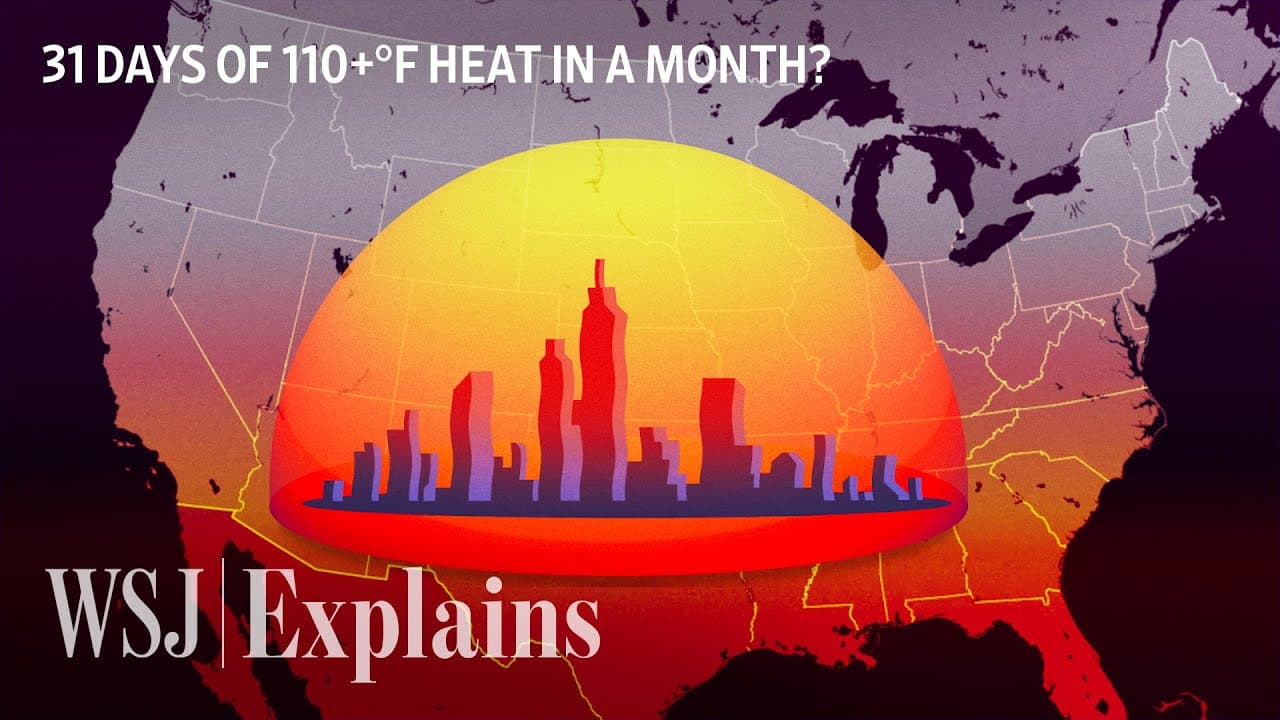
Heat domes and urban growth have led to record-breaking temperatures in cities like Phoenix and Las Vegas, posing risks to vulnerable populations and necessitating future-focused design and planning to mitigate the effects of climate change.
Transcript
(upbeat music) - [Narrator] Land west of Phoenix looked like this in 2002. Now it's covered in buildings. Phoenix, along with Las Vegas, is experiencing a stretch of triple digit temperatures made worse by a heat dome. - [Reporter] Record level temperatures shows no signs of letting up. - [Reporter] Unrelenting grip on the country. - A lot of our c... Read More
Key Insights
- 🌡️ The cities of Phoenix and Las Vegas are experiencing extreme heat due to a heat dome, with temperatures reaching record levels and showing no signs of letting up.
- 📈 Urban growth and development contribute to the intensity of the heat, as highly developed areas can be up to 20 degrees warmer than surrounding vegetated areas.
- 🌆 The expansion of cities like Phoenix and Las Vegas has paralleled their economic growth, but the increase in infrastructure has intensified the heat and created heat islands.
- 🌳 Growing trees in arid areas can be challenging, and the lack of shade and vegetation exacerbates the buildup of heat in urban corridors.
- 💦 Vegetation, grass, and trees help cycle moisture from the ground into the air and provide some cooling effect in cities, but their absence in arid regions contributes to the heat.
- 🔥 A heat dome is a weather phenomenon that intensifies temperatures by trapping hot air underneath it, lasting for extended periods and further worsening the heat.
- 🌡️ The combination of a heat dome on top of a heat island poses increased risks for people, including burn injuries from touching hot surfaces and exacerbated vulnerability for groups like the elderly and homeless.
- 🌍 Architects, planners, and engineers need to consider the effects of climate change and rising temperatures in their designs, incorporating technologies like green roofs and building shapes that provide shade and resiliency for a warming climate.
Install to Summarize YouTube Videos and Get Transcripts
Explore YouTube Video Summarizer or Get YouTube Transcript Extractor
Questions & Answers
Q: How does urban development contribute to the formation of heat islands?
Urban development, with its abundance of pavement, glass, and steel surfaces, leads to the reflection of sunlight and heat energy back into the air, resulting in higher midday temperatures in highly developed areas compared to surrounding vegetated regions.
Q: What is a heat dome, and how does it worsen the already high temperatures in cities?
A heat dome is a large ridge of high pressure in the atmosphere that traps hot air underneath it. When a heat dome forms above a city with a heat island, it intensifies the temperatures, drying out the land further and making the hot air increasingly oppressive.
Q: Who are the most vulnerable populations in cities experiencing triple-digit temperatures and heat domes?
Homeless individuals, the elderly, and those who work outside are particularly vulnerable to the dangers of extreme heat. These groups face increased risks and exposure to the intense temperatures, which can have severe health consequences.
Q: How are architects and engineers adapting to the challenges posed by heat domes and heat islands?
Architects and engineers are incorporating technologies such as green roofs, which can absorb and cool buildings, and designing structures that provide more shade. These design and planning efforts aim to create more resilient urban spaces that can withstand the increasing temperatures associated with climate change.
Summary & Key Takeaways
-
Urban growth and development in cities like Phoenix and Las Vegas have contributed to the formation of heat islands, where temperatures can be up to 20 degrees warmer than surrounding vegetated areas.
-
Heat domes, large ridges of high pressure in the atmosphere, intensify the already high temperatures in urban areas, creating dangerous conditions for residents.
-
The combination of heat domes and heat islands poses significant risks to vulnerable populations, such as homeless individuals and the elderly. To address these challenges, architects and engineers are incorporating new technologies and design approaches to create more resilient and cooler urban spaces.
Read in Other Languages (beta)
Share This Summary 📚
Summarize YouTube Videos and Get Video Transcripts with 1-Click
Try YouTube Summary with ChatGPT & Claude or YouTube Transcript Generator
Explore More Summaries from The Wall Street Journal 📚






Summarize YouTube Videos and Get Video Transcripts with 1-Click
Try YouTube Summary with ChatGPT & Claude or YouTube Transcript Generator