Preparation of Amines From Alkyl Halides
TL;DR
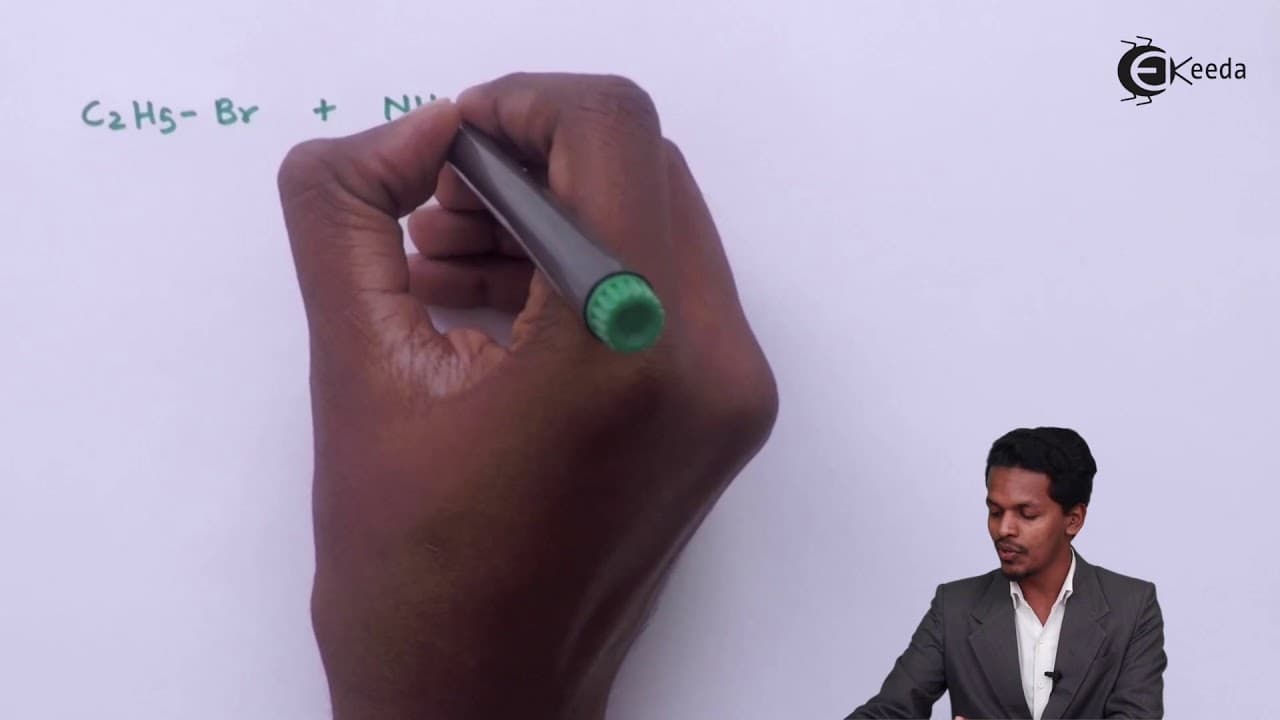
Alkyl halides can be converted into amines through a reaction with ammonia, resulting in the formation of primary, secondary, and tertiary amines.
Transcript
click the bell icon to get latest videos from akira hello friends in the previous lecture we have discussed about that is bio medias method we can easily prepare amides and about that the one method is preparation of a wine from alkyl halide so now let us talk about this topic very clearly so finally this probably be able to talk about that is how ... Read More
Key Insights
- ❓ Alkyl halides can be converted into amines through ammonolysis, a reaction with ammonia.
- 🫀 The resulting product depends on the number of alkyl groups attached to the nitrogen atom.
- 💁 The primary amine product can react with excess alkyl halides to form secondary and tertiary amines.
- ⛔ Aromatic halides do not undergo ammonolysis, limiting the reaction to alkyl halides.
- ✋ The reaction can be conducted at high temperatures to favor the formation of tertiary amines.
- ❓ The reaction can be used to prepare mixtures of amines, but obtaining pure primary amines is challenging.
- ❓ This method is not suitable for tertiary alkyl halides, as they are less reactive towards ammonolysis.
Install to Summarize YouTube Videos and Get Transcripts
Explore YouTube Video Summarizer or Get YouTube Transcript Extractor
Questions & Answers
Q: What is the process called when alkyl halides react with ammonia?
The process is called ammonolysis, where the alkyl halide reacts with ammonia to form amines.
Q: What determines the type of amine formed in the reaction?
The type of amine formed depends on the number of alkyl groups attached to the nitrogen atom in the product.
Q: Can alkyl halides react with other amines to form more complex products?
Yes, the primary amine formed in the reaction can react with other alkyl halides, leading to the formation of secondary and tertiary amines.
Q: Are all alkyl halides reactive with ammonia?
Alkyl halides are reactive with ammonia, but aromatic halides such as chlorobenzene do not undergo ammonolysis.
Summary & Key Takeaways
-
Alkyl halides can react with ammonia to form amines through a process called ammonolysis.
-
The reaction involves breaking the bond between the carbon and halogen atoms in the alkyl halide and replacing it with an NH2 group from ammonia.
-
The reaction can result in the formation of primary, secondary, and tertiary amines, depending on the number of alkyl groups present.
Read in Other Languages (beta)
Share This Summary 📚
Summarize YouTube Videos and Get Video Transcripts with 1-Click
Try YouTube Summary with ChatGPT & Claude or YouTube Transcript Generator
Explore More Summaries from Ekeeda 📚





Summarize YouTube Videos and Get Video Transcripts with 1-Click
Try YouTube Summary with ChatGPT & Claude or YouTube Transcript Generator