AP US history multiple choice example 1 | US History | Khan Academy
TL;DR
The multiple choice section of the AP U.S. history exam requires intuition and understanding of major historical players and ideas.
Transcript
- [Kim] So this video is about the multiple choice section on the AP U.S. history exam. And now I know you're thinking Whoa, Kim, this is a multiple choice section. How much help could we possibly need with this? Either you know the answer or you don't. Au contraire mon ami. Thankfully the multiple choice section on this exam is not just a laundry ... Read More
Key Insights
- 🧑🎓 The multiple choice section evaluates students' understanding of major historical players and ideas.
- ⚾ Questions are based on provided quotes, charts, or political cartoons that relate to specific historical periods.
- 📜 Careful reading and analysis of the documents is crucial for answering the questions accurately.
- 💁 Assumptions can be made about historical figures based on the information provided in the quotes or documents.
- 💁 The exam does not typically include tricks or unexpected information about historical figures.
- 🧑🎓 The section tests students' ability to apply their knowledge of American history to different contexts and scenarios.
- 📼 Intuition and a general understanding of major players and ideas are valuable assets in this section.
Install to Summarize YouTube Videos and Get Transcripts
Explore YouTube Video Summarizer or Get YouTube Transcript Extractor
Questions & Answers
Q: How does the multiple choice section of the AP U.S. history exam differ from simply memorizing facts?
The multiple choice section goes beyond mere memorization by testing students' intuition and understanding of historical periods, rewarding those who can apply their knowledge to different contexts and scenarios.
Q: How are the questions in the multiple choice section related to the provided quotes or documents?
Each set of questions is directly related to a specific quote, chart, or political cartoon. It is important to thoroughly understand the provided documents before attempting to answer the questions.
Q: Can assumptions be made about the historical figures mentioned in the quotes?
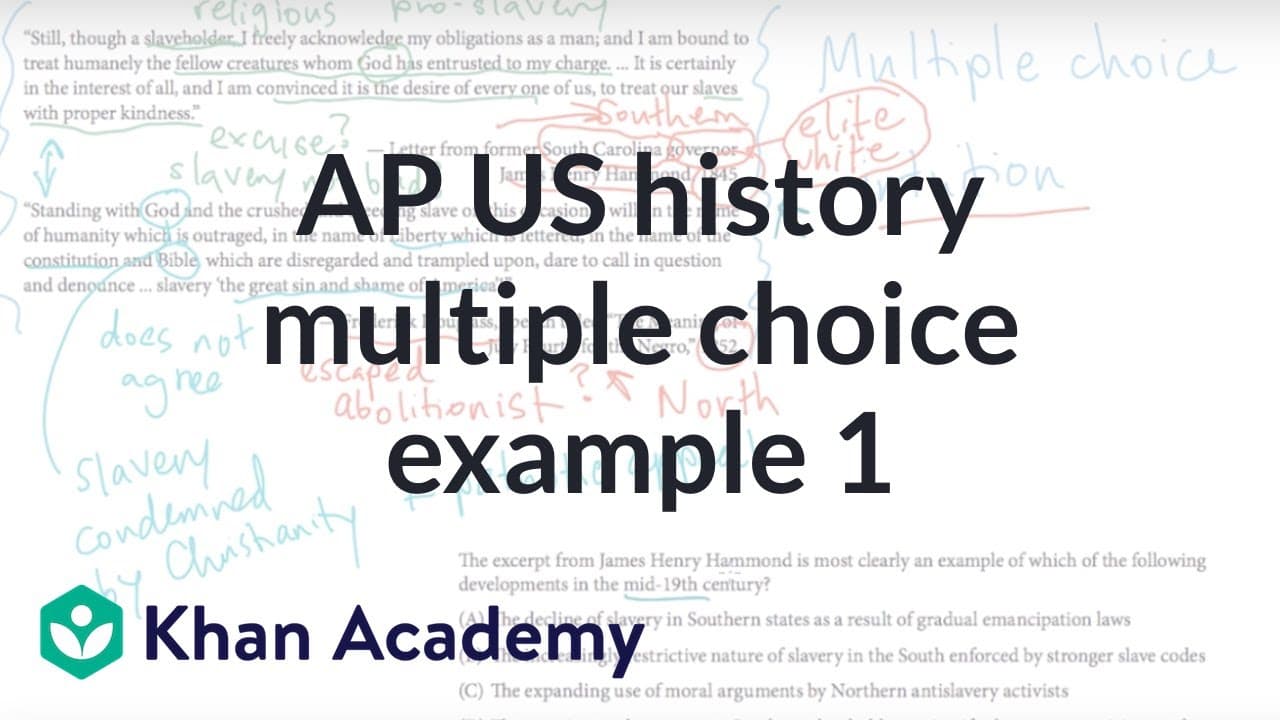
Yes, assumptions can be made based on the information provided. For example, in the given practice question, it can be inferred that James Henry Hammond is a wealthy white person who owns slaves in the South, while Frederick Douglass is a former enslaved person and abolitionist from the North.
Q: Is it possible for the AP U.S. history exam to trick students with unexpected information about historical figures?
Generally, the exam does not try to trick students with obscure exceptions to historical norms. The goal is to develop students' intuition and ability to analyze historical information within the broader context of American history.
Summary & Key Takeaways
-
The multiple choice section of the AP U.S. history exam rewards students for having intuition about American history rather than just memorizing facts.
-
Questions in this section are based on quotes, charts, or political cartoons, and are designed to test students' understanding of historical periods.
-
It is important to carefully read and analyze the provided documents before attempting to answer the questions.
Read in Other Languages (beta)
Share This Summary 📚
Summarize YouTube Videos and Get Video Transcripts with 1-Click
Try YouTube Summary with ChatGPT & Claude or YouTube Transcript Generator
Explore More Summaries from Khan Academy 📚



Summarize YouTube Videos and Get Video Transcripts with 1-Click
Try YouTube Summary with ChatGPT & Claude or YouTube Transcript Generator