Case Study
TL;DR
This video discusses two case studies on risk management in the real estate and infrastructure sectors, highlighting the steps involved in risk assessment and mitigation.
Transcript
hi friends in this video we are going to study a risk management case studies we will be specifically discussing two case studies one on the real estate sector and second on infrastructure or government sector so far we have learned the various steps involved in risk management that is to identify the different types of risk analyze them quantitati... Read More
Key Insights
- ✳️ Risk management plays a crucial role in both the real estate and infrastructure sectors, as it helps identify, analyze, and mitigate potential risks.
- 🏝️ Delays in land registration, finance availability, and obtaining necessary clearances are common risks in real estate projects.
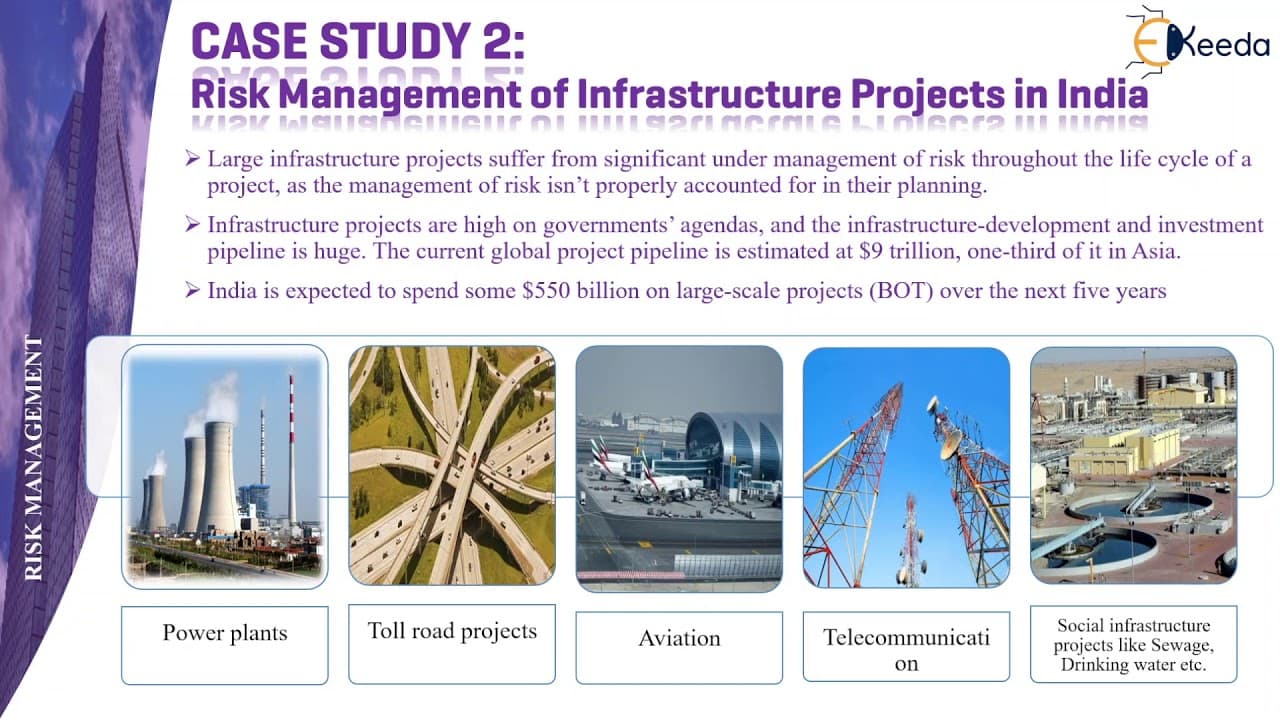
- 🌥️ Large infrastructure projects in India are prone to risks such as delays in approvals, cost overruns, and environmental concerns.
- 📽️ Risk mitigation strategies include transference, reduction, avoidance, and acceptance, depending on the specific project requirements.
- 🤗 Open communication, early actions, and contingency planning are vital for successful risk management in both sectors.
- 📽️ Stakeholder involvement and expert consultation are essential for effectively managing risks in complex projects.
- ✳️ Insurance and performance bonds are frequently used in risk transference strategies in the infrastructure sector.
Install to Summarize YouTube Videos and Get Transcripts
Explore YouTube Video Summarizer or Get YouTube Transcript Extractor
Questions & Answers
Q: What are the key risks identified in the real estate case study?
The key risks identified in the real estate case study include delayed land registration, availability of finance, tree removal, shifting of underground drainage system, and delayed obtaining of permanent electricity and water connections.
Q: How can the risk of delayed land registration be mitigated?
To mitigate the risk of delayed land registration, the recommended action is to apply to the government authority to begin the registration process immediately, seek alternative ways for legal possession and financing, and involve legal and finance divisions in the process.
Q: What are the risks associated with large infrastructure projects in India?
Risks associated with large infrastructure projects in India include delays in approvals, changes in laws, cost overruns, dispatch constraints, land acquisition problems, subcontractor enforceability, construction schedule, financial closing, tariff adjustment, and environmental risks.
Q: How can risk mitigation be achieved in infrastructure projects?
Risk mitigation in infrastructure projects can be achieved through risk transference (using insurance and performance bonds), risk reduction (taking early actions to reduce risk probability), risk avoidance (changing project plans to eliminate risks or protect objectives), and risk acceptance (preparing contingency plans and dealing with risks as they occur).
Summary & Key Takeaways
-
The video presents two case studies on risk management in the real estate and infrastructure sectors, focusing on the steps involved in risk assessment and mitigation.
-
The first case study explores the risks associated with delayed land registration, finance availability, tree removal, shifting of underground drainage system, and obtaining permanent electricity and water connections.
-
The second case study discusses the risks involved in large infrastructure projects in India, such as delays in approvals, changes in laws, cost overruns, and environmental risks.
Read in Other Languages (beta)
Share This Summary 📚
Summarize YouTube Videos and Get Video Transcripts with 1-Click
Try YouTube Summary with ChatGPT & Claude or YouTube Transcript Generator
Explore More Summaries from Ekeeda 📚






Summarize YouTube Videos and Get Video Transcripts with 1-Click
Try YouTube Summary with ChatGPT & Claude or YouTube Transcript Generator