Why is It Called The Bends When There is No Bending, and the Most Gruesome Accident
TL;DR
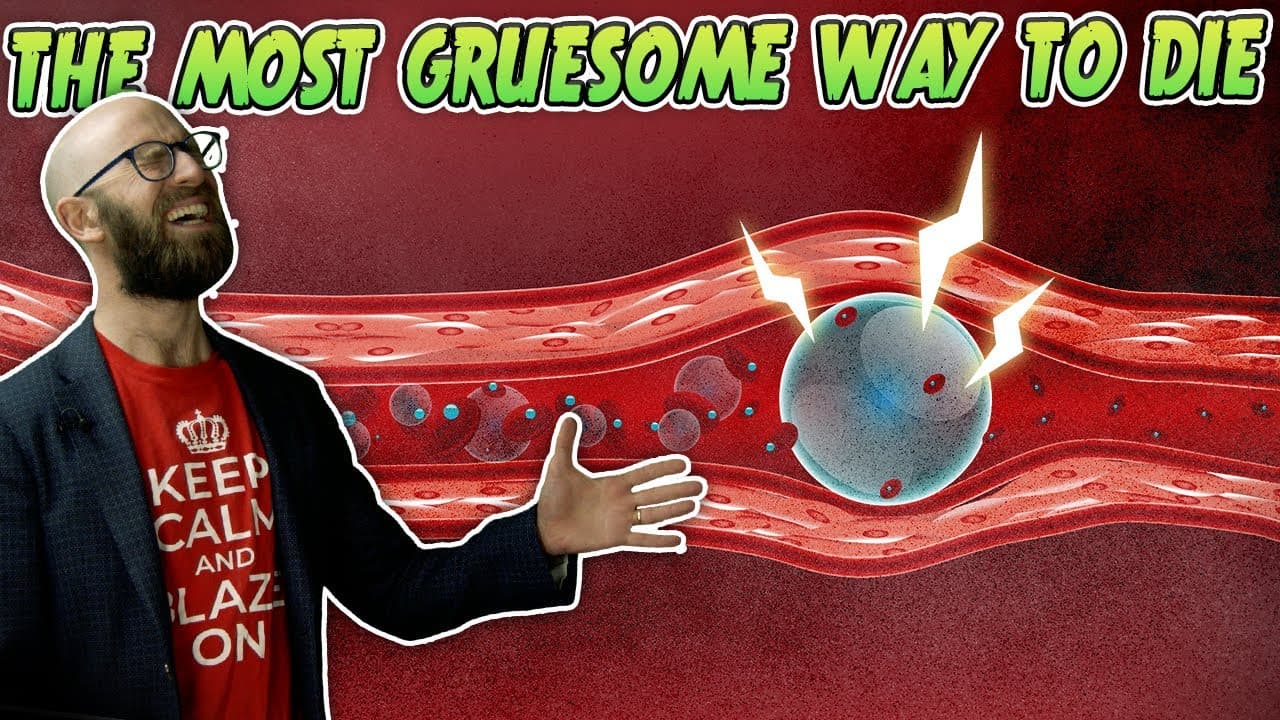
Deep sea diving poses serious risks, including decompression sickness and the need for saturation diving, which allows divers to maintain pressure levels during long shifts.
Transcript
before we dive into today's video I do want to talk to you about something that has enriched my life and that's none other than today's sponsor one dream one dream is a video subscription service that's like a museum for your mind an Institute for your imagination a gallery of your personal genius look personally I love learning new things no surpr... Read More
Key Insights
- 👁️🗨️ Decompression sickness, known as the bends, can be life-threatening and is caused by the release of nitrogen bubbles in the body due to rapid pressure changes.
- 👻 Saturation diving allows for longer working periods at extreme depths without the need for multiple decompression stops.
- ☠️ Safety measures and accident rates have improved in the diving industry, but extreme caution is still required when working in high-pressure environments.
- ✳️ The usage of specific breathing mixtures, such as heliox and trimix, can help reduce the risk of decompression sickness and nitrogen narcosis.
Install to Summarize YouTube Videos and Get Transcripts
Explore YouTube Video Summarizer or Get YouTube Transcript Extractor
Questions & Answers
Q: What is decompression sickness and why does it occur?
Decompression sickness, also known as the bends, occurs when nitrogen bubbles form in the body due to a rapid decrease in pressure. Breathing air at high pressure causes nitrogen to dissolve in tissues, and ascending too quickly leads to the release of nitrogen bubbles.
Q: How is decompression sickness treated?
Recompression chambers, which simulate the original work pressure and gradually expel the nitrogen bubbles, are used to treat decompression sickness. Victims are returned to their original work pressure, allowing the nitrogen bubbles to be reabsorbed into the tissues.
Q: What is saturation diving?
Saturation diving is a technique used in the offshore oil industry where divers live in pressurized habitats and are carried down to their working depths using a diving bell. The divers' bodies become fully saturated with nitrogen, allowing them to work for extended periods without needing multiple decompression stops.
Q: What were the causes of the Byford Dolphin accident?
The Byford Dolphin accident in 1983 was caused by human error and a lack of safety features in the saturation diving system. A miscommunication and equipment failure resulted in the capsule disconnecting from the pressurized chamber, leading to immediate decompression and the death of four divers.
Summary & Key Takeaways
-
The Eads Bridge construction in the 1800s led to the discovery of decompression sickness, known as the bends, as workers experienced severe symptoms after working in high-pressure environments.
-
Decompression sickness, caused by the rapid release of nitrogen bubbles in the body, affects not only divers but also mountaineers, pilots, and astronauts.
-
Techniques such as timing dives, decompression stops, and saturation diving are used to prevent and treat decompression sickness, with saturation diving being widely used in the offshore oil industry.
Read in Other Languages (beta)
Share This Summary 📚
Summarize YouTube Videos and Get Video Transcripts with 1-Click
Try YouTube Summary with ChatGPT & Claude or YouTube Transcript Generator
Explore More Summaries from Today I Found Out 📚






Summarize YouTube Videos and Get Video Transcripts with 1-Click
Try YouTube Summary with ChatGPT & Claude or YouTube Transcript Generator