What Is the History of Electricity?
TL;DR
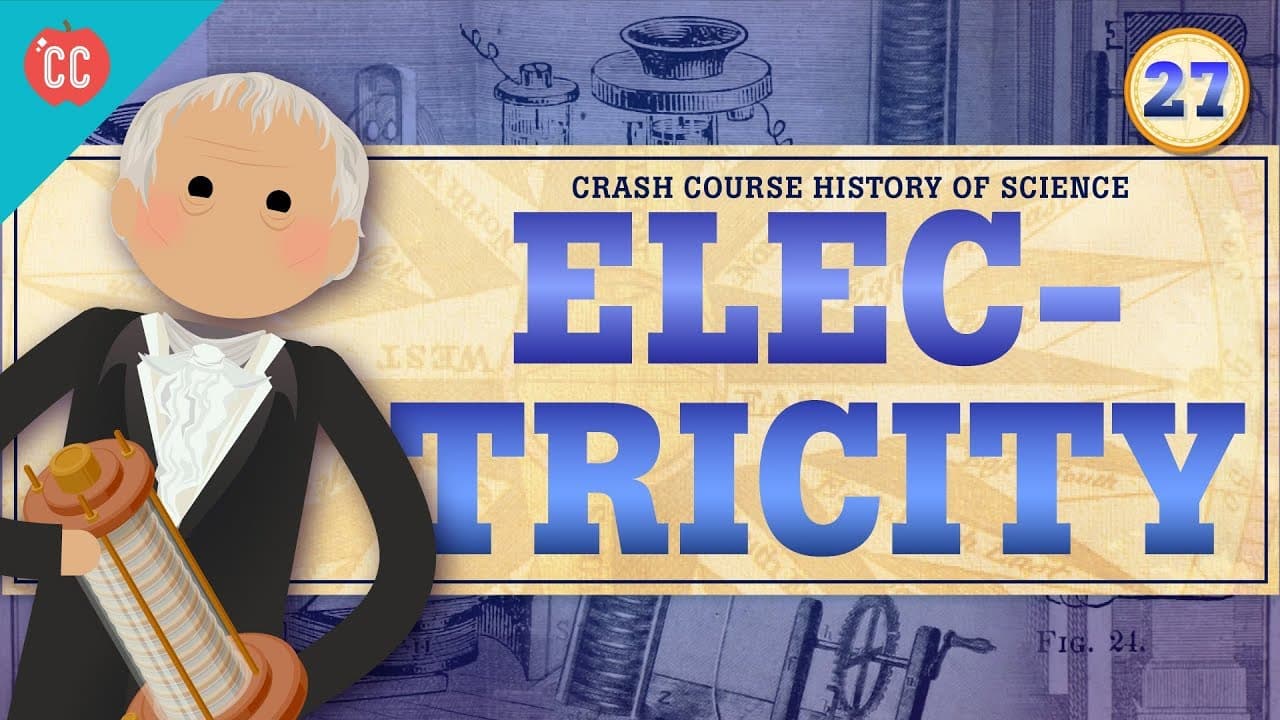
Electricity's journey from ancient static electricity observations to modern applications involved key figures like Volta, Faraday, and Edison. Volta created the first battery, Faraday developed electromagnetic induction, and Edison revolutionized industrial electricity use. These discoveries laid the foundation for today's electrical technologies, transforming global industries and daily life.
Transcript
Like thermodynamics, the history of electrical physics has its roots in pre-industrial questions that converged in the nineteenth century. These questions became a research paradigm, driven by a whole crew of researchers… And they led to a power system that reshaped the world. Time to get tingly! [Intro Music Plays] The study of electricity goes al... Read More
Key Insights
- Electricity's study dates back to antiquity, with early observations of static electricity.
- Alessandro Volta created the first practical battery, known as the voltaic pile, in 1800.
- Michael Faraday's work on electromagnetic induction paved the way for modern electrical technologies.
- Thomas Edison, with financial backing, developed a practical electrical grid and improved light bulbs.
- Edison's electrification of Manhattan marked a significant shift in industrial and social practices.
- The Current War between Edison's DC and Westinghouse's AC shaped the future of electrical distribution.
- James Clerk Maxwell's equations connected electricity, magnetism, and light, influencing modern physics.
- The development of electricity as an industry transformed global work patterns and technological advancement.
Install to Summarize YouTube Videos and Get Transcripts
Explore YouTube Video Summarizer or Get YouTube Transcript Extractor
Questions & Answers
Q: How did Alessandro Volta contribute to electricity?
Alessandro Volta invented the voltaic pile in 1800, which was the first practical battery. This device consisted of alternating discs of copper and zinc separated by brine-soaked cardboard, generating a steady electric current. Volta's invention provided a reliable source of electricity, fulfilling the electrical needs of the First Industrial Revolution until around 1870.
Q: What was Michael Faraday's major discovery?
Michael Faraday discovered electromagnetic induction in 1831, which is the generation of electricity in one wire due to the changing magnetic field created by the current in another wire. This principle became the foundation for modern electrical technologies, including motors, generators, and transformers, allowing electricity to be harnessed for practical use.
Q: How did Thomas Edison impact the use of electricity?
Thomas Edison significantly impacted the use of electricity by developing a practical electrical grid and improving incandescent light bulbs. With financial backing, he electrified downtown Manhattan, showcasing electricity's potential to revolutionize industries and daily life. Edison's work laid the foundation for the widespread industrial and domestic use of electricity.
Q: What was the Current War?
The Current War was a public battle between Thomas Edison's direct current (DC) and George Westinghouse's alternating current (AC) systems. Edison promoted DC, while Westinghouse advocated for AC, which proved to be more practical for long-distance transmission. The conflict determined the future of electrical distribution, with AC ultimately becoming the standard due to its efficiency and lower cost.
Q: How did James Clerk Maxwell contribute to electromagnetism?
James Clerk Maxwell contributed to electromagnetism by formulating equations that connected electricity, magnetism, and light. His work showed that electromagnetic waves travel at the speed of light, suggesting that light is a form of electromagnetic energy. Maxwell's equations laid the groundwork for modern physics and greatly influenced future scientific advancements, including Einstein's theories.
Q: What role did financial backing play in Edison's success?
Financial backing played a crucial role in Thomas Edison's success by providing the resources needed to develop and demonstrate his electrical innovations. With support from financier J.P. Morgan, Edison was able to conduct extensive experiments, showcase his technology globally, and electrify Manhattan. This backing allowed Edison to transform electricity from a scientific curiosity into a practical, widely-used technology.
Q: Why was the electrification of Manhattan significant?
The electrification of Manhattan was significant because it demonstrated the transformative potential of electricity on a large scale. Before this, cities relied on gas lamps, which were inefficient and dangerous. Edison's electrification project showcased how electricity could improve lighting, extend productive hours, and drive industrial and social changes. It marked the beginning of widespread urban electrification and modern city life.
Q: How did early electrical discoveries influence modern technology?
Early electrical discoveries, such as Volta's battery and Faraday's electromagnetic induction, laid the foundation for modern technology by providing reliable methods to generate and harness electricity. These advancements enabled the development of essential technologies like motors, generators, and transformers, which are integral to today's electrical systems. The work of pioneers like Edison and Maxwell further propelled these discoveries into practical applications, transforming industries and daily life.
Summary & Key Takeaways
-
Electricity has been studied since ancient times, but significant advances occurred in the 18th and 19th centuries. Alessandro Volta's invention of the voltaic pile in 1800 provided the first practical method for generating electricity. Michael Faraday's discovery of electromagnetic induction in 1831 further advanced the field, leading to modern electrical technologies.
-
Thomas Edison played a crucial role in the industrial application of electricity. He developed a practical electrical grid and improved light bulbs, transforming how electricity was used in society. Edison's electrification of Manhattan demonstrated the potential of electricity to revolutionize industries and daily life.
-
The Current War between Edison's direct current (DC) and Westinghouse's alternating current (AC) determined the future of electrical distribution. James Clerk Maxwell's equations connected electricity, magnetism, and light, laying the groundwork for modern physics. These developments collectively transformed global work patterns and technological advancement.
Read in Other Languages (beta)
Share This Summary 📚
Summarize YouTube Videos and Get Video Transcripts with 1-Click
Try YouTube Summary with ChatGPT & Claude or YouTube Transcript Generator
Explore More Summaries from CrashCourse 📚

Summarize YouTube Videos and Get Video Transcripts with 1-Click
Try YouTube Summary with ChatGPT & Claude or YouTube Transcript Generator