The hallucinogens that might have sparked the Salem witch trials
TL;DR
Ergotism may have caused hallucinations during Salem witch trials.
Transcript
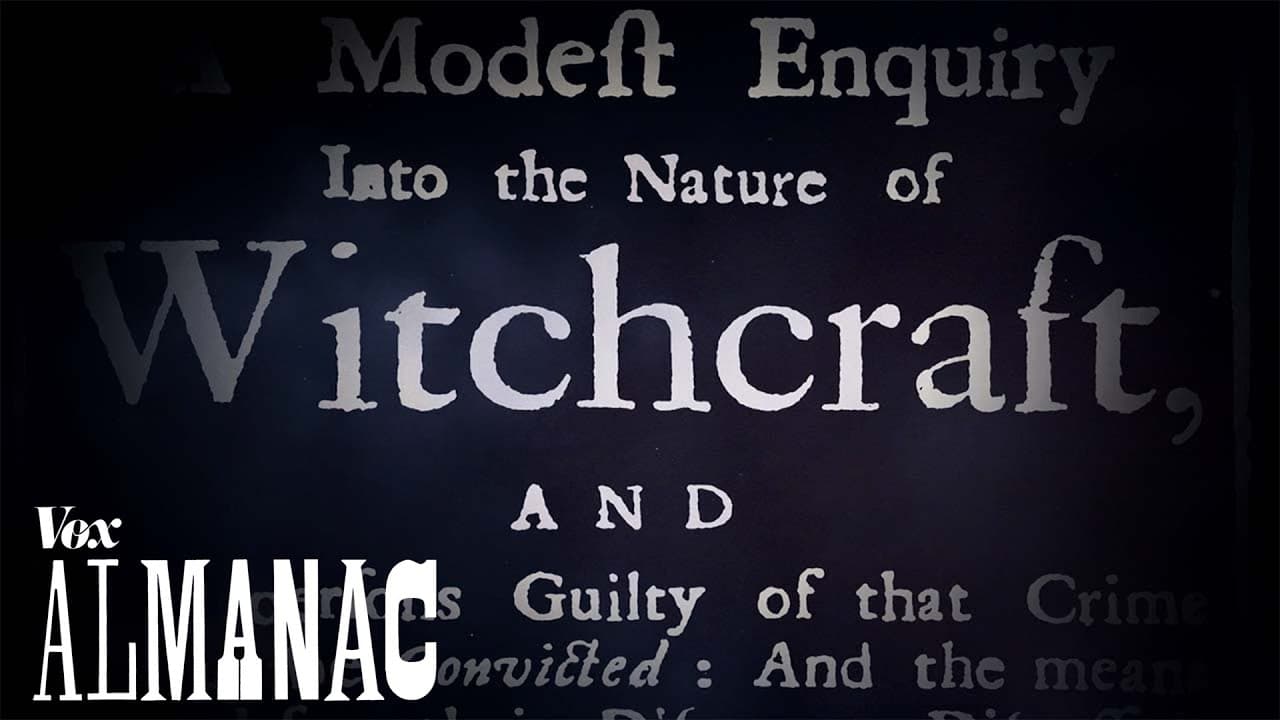
This is a story of witches – and LSD. So you might know what happened during the Salem Witch Trials. From February 1692 to May 1693, the Puritan community in Salem, Massachusetts was overtaken by a witch hunt that resulted in the execution of 19 people. We have an idea how it started: two girls, the daughter and niece of the town’s reverend, report... Read More
Key Insights
- The Salem Witch Trials occurred from February 1692 to May 1693, resulting in the execution of 19 people due to alleged witchcraft.
- Traditional explanations for the trials include mass hysteria, political conflicts, and extreme Puritan beliefs, but alternative theories exist.
- Psychologist Linnda Caporael proposed in the 1970s that ergotism, caused by the fungus Claviceps purpurea on rye, could explain the symptoms reported during the trials.
- Ergotism can cause convulsive symptoms and hallucinations, potentially explaining the bizarre behaviors and visions described by Salem residents.
- The summer of 1692 had ideal conditions for fungal growth, possibly leading to contamination in the Western area of Salem where many accusers resided.
- Critics of the ergotism theory argue that the symptoms and health conditions of Salem's residents do not fully align with known effects of ergotism.
- Theories suggest that ergotism may have initiated the panic, but societal factors ultimately drove the trials to escalate.
- The mystery of the Salem witch trials remains unresolved, with uncertainty being the only certainty acknowledged by researchers.
Install to Summarize YouTube Videos and Get Transcripts
Explore YouTube Video Summarizer or Get YouTube Transcript Extractor
Questions & Answers
Q: What were the Salem Witch Trials?
The Salem Witch Trials were a series of events that took place between February 1692 and May 1693 in Salem, Massachusetts. During this period, the Puritan community was overtaken by a witch hunt that led to the execution of 19 people accused of witchcraft. The trials have been historically explained as a result of mass hysteria and religious extremism.
Q: What is ergotism and how might it relate to the trials?
Ergotism is a condition caused by consuming grains infected with the fungus Claviceps purpurea, commonly found on rye. It can lead to convulsive symptoms and hallucinations. Psychologist Linnda Caporael theorized that ergotism might explain some of the bizarre behaviors and visions reported during the Salem Witch Trials, suggesting the fungus could have contributed to the hysteria.
Q: What conditions were present in Salem that may have allowed ergot to thrive?
The summer of 1692 in Salem was stormy, creating ideal conditions for the growth of the Claviceps purpurea fungus on rye. This environmental factor, combined with the presence of the fungus in the Western area of Salem where many accusers lived, may have contributed to the alleged symptoms of ergotism during the witch trials.
Q: What criticisms exist regarding the ergotism theory?
Critics of the ergotism theory argue that the symptoms exhibited by Salem residents do not entirely align with those of ergotism. They point out that the people of Salem appeared too healthy to suffer from the vitamin deficiencies associated with the condition, and some key symptoms were missing, challenging the validity of the ergotism explanation.
Q: How did societal factors contribute to the escalation of the trials?
Societal factors played a significant role in the escalation of the Salem Witch Trials. While ergotism may have initiated the panic, the trials were driven by underlying tensions within the community, including political conflicts, religious extremism, and social dynamics. These factors created an environment where accusations could spiral out of control, leading to the tragic outcomes.
Q: What alternative explanations exist for the Salem Witch Trials?
Besides ergotism, other explanations for the Salem Witch Trials include mass hysteria, political sniping, and Puritanism gone amok. Some theories suggest that a slave introduced the girls to witchcraft, while others propose that social infection, akin to a 'Mean Girls' scenario, played a role. Each theory attempts to explain the complex social and psychological dynamics at play during the trials.
Q: What role did the weather play in the Salem Witch Trials?
The weather in the summer of 1692 was particularly stormy, creating conditions conducive to the growth of the Claviceps purpurea fungus on rye. This environmental factor may have led to the contamination of grain supplies, potentially causing ergotism symptoms among the Salem residents. The following year's drought likely prevented further fungal growth, coinciding with the end of the trials.
Q: Why is uncertainty embraced in the analysis of the Salem Witch Trials?
Uncertainty is embraced in the analysis of the Salem Witch Trials because the events are shrouded in mystery, with no definitive explanation for what truly happened. Researchers acknowledge that while various theories provide insights, none can fully account for the complexity of the trials. Accepting uncertainty allows for a more nuanced understanding of the historical and social context.
Summary & Key Takeaways
-
The Salem Witch Trials were a series of events between 1692 and 1693 where 19 people were executed due to accusations of witchcraft. Traditional explanations include mass hysteria and Puritan extremism, but alternative theories suggest other causes.
-
Linnda Caporael's theory suggests that ergotism, caused by a fungus on rye, may have contributed to the symptoms and hallucinations reported during the trials. The fungus thrives in certain weather conditions, which were present in Salem at the time.
-
Despite the compelling nature of the ergotism theory, critics argue that the symptoms in Salem do not fully match those of ergotism. The true cause of the trials remains a mystery, with researchers acknowledging the role of societal factors in escalating the events.
Read in Other Languages (beta)
Share This Summary 📚
Summarize YouTube Videos and Get Video Transcripts with 1-Click
Try YouTube Summary with ChatGPT & Claude or YouTube Transcript Generator
Explore More Summaries from Vox 📚



Summarize YouTube Videos and Get Video Transcripts with 1-Click
Try YouTube Summary with ChatGPT & Claude or YouTube Transcript Generator