Intergalactic scale | Scale of the universe | Cosmology & Astronomy | Khan Academy
TL;DR
The video explores the vastness of the universe, from the Milky Way to superclusters, and highlights the limitations of our understanding due to its incomprehensible size.
Transcript
Where we left off in the last video, we were just kind of staring, amazed, at this Earth's view of the Milky Way galaxy, just making sure we understood how enormous and how many stars we were looking at. And even if each of these dots were a star, this is a huge amount of stars. But a lot of these dots are thousands of stars. So our mind was alread... Read More
Key Insights
- 🛰️ The Milky Way is just one of many galaxies in the Local Group, which also includes satellite galaxies influenced by its gravitational pull.
- 🤩 Andromeda, the nearest large galaxy to the Milky Way, has an incredibly high number of stars, estimated to be around 1 trillion.
- 🤩 The Virgo Super Cluster is a massive collection of galaxies, each containing billions to trillions of stars.
- 🫥 The visible universe, though vast, is only a small fraction of the entire universe, and its true size and extent remain unknown.
- 🙂 Observing objects in the universe means looking into their past, as light takes billions of years to travel to us.
Install to Summarize YouTube Videos and Get Transcripts
Explore YouTube Video Summarizer or Get YouTube Transcript Extractor
Questions & Answers
Q: How far away is the Milky Way from the center of the Local Group?
The Milky Way is approximately 25,000 light years away from the center of the Local Group.
Q: How many stars does Andromeda have?
Andromeda is estimated to have about 1 trillion stars, much more than the 200 to 400 billion stars in the Milky Way.
Q: What is the size of the Virgo Super Cluster?
The Virgo Super Cluster has a diameter of 150 million light years and consists of multiple clusters of galaxies.
Q: What is the visible universe?
The visible universe is a small portion of the entire universe that we can observe. It is estimated to be about a billion light years across.
Summary & Key Takeaways
-
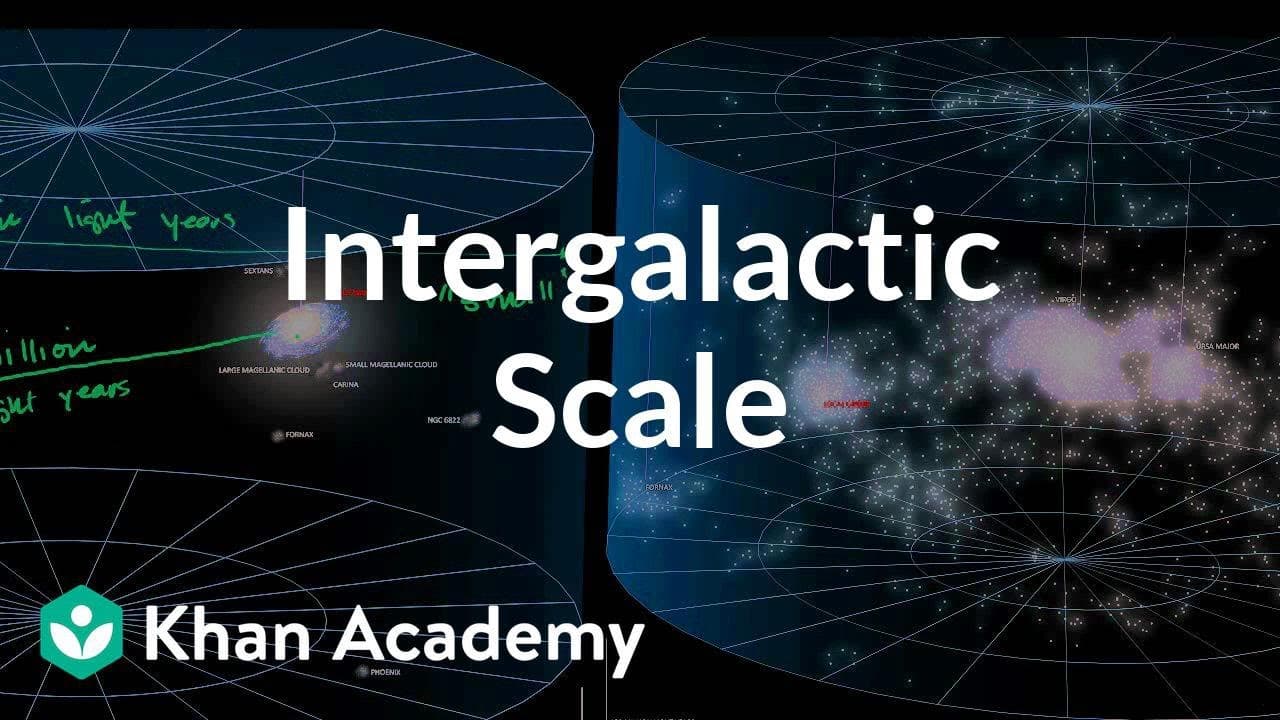
The Milky Way, with 100,000 light years in diameter, is just a small part of the Local Group, which includes satellite galaxies influenced by the Milky Way. The nearest large galaxy, Andromeda, is 2.5 million light years away and believed to have 1 trillion stars.
-
The Local Group is part of the Virgo Super Cluster, with a diameter of 150 million light years, consisting of multiple clusters of galaxies. Each dot in the diagram represents a cluster of galaxies, each with hundreds of billions to trillions of stars.
-
The visible universe, estimated to be about a billion light years across, is an incredibly small part of the entire universe. The true size of the universe and what lies beyond it is still unknown.
Read in Other Languages (beta)
Share This Summary 📚
Summarize YouTube Videos and Get Video Transcripts with 1-Click
Try YouTube Summary with ChatGPT & Claude or YouTube Transcript Generator
Explore More Summaries from Khan Academy 📚



Summarize YouTube Videos and Get Video Transcripts with 1-Click
Try YouTube Summary with ChatGPT & Claude or YouTube Transcript Generator